
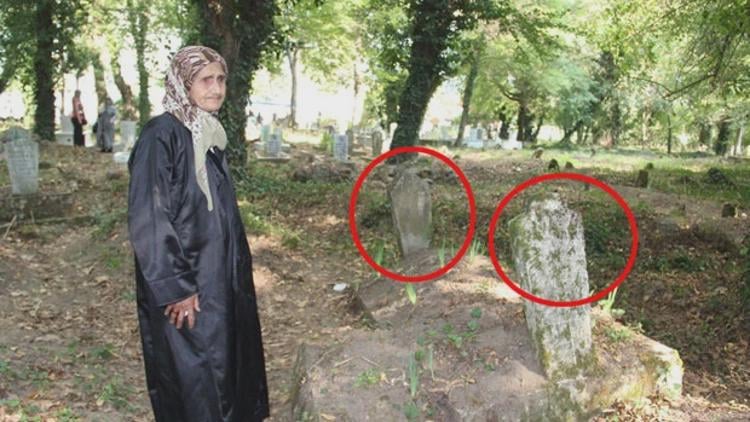
I have spent a significant amount of time documenting the most unsettling and historically grounded paranormal phenomena in Turkey. Some cases are mere folklore, but others possess a physical reality that challenges our understanding of the natural world. This is perhaps one of the most chilling anomalies I have encountered: the story of the "Issız Cuma" (Solitary Friday) cemetery.
In the remote landscape of Çanakkale, between the villages of Seyvan and Çakıroba, stands a structure from the year 1335. The mosque itself is an architectural anomaly—a looming, manor-like building that feels entirely detached from its surroundings. However, it is the 680-year-old graveyard encircling it that serves as the focal point for a phenomenon that defies the laws of soil, decay, and death.
Here is the forensic and witness-backed reality of what has been occurring at this site:
1. The Graves That Move In 1967, a woman named Hatice died shortly after giving birth to her daughter, Ayşe. The infant followed her mother into the dark only 20 days later. They were buried in separate graves, several yards apart, as per tradition.
But the earth at Issız Cuma had other plans. When the family returned, they didn't find two separate plots; they found a single, merged mound. The soil had literally migrated across the ground to fuse the two graves together. Suspecting a landslide or human interference, the family separated them and rebuilt the mounds.
Within days, the graves had reunited again. This cycle repeated several times until the village elders intervened, stating: “Leave them. The dead have made their choice.” To this day, witnesses claim the distance between the headstones is still shrinking, as if a mother’s embrace is tightening from beneath the shroud, even after fifty years.
2. The String That Refused to Rot This is the part that gets me. Another mother in the same village buried her 4-year-old daughter there. In her grief, she tied a small bead from the girl's hair braid to the wooden grave marker with a simple string.
47 years later—nearly half a century—the family finally raised the money to build a proper stone monument. When they opened the site, they were stunned. The heavy wooden marker had rotted into a crumbling stick. Every piece of clothing and organic matter was dust.
But the string and the bead were perfect.
The thread hadn't frayed, hadn't faded, and hadn't rotted in the damp, acidic soil that ate everything else. It was like that specific object was "locked in time" by some force we don’t understand.
The "Thin Place" Theory Researchers often call places like this "Thin Places." It’s where our reality and the 'other' dimension are practically touching. Whether it’s the mother’s love physically pulling the soil or some entity mimicking human emotions, one thing is clear: In this cemetery, the dead don’t stay where you put them.
This case actually inspired the famous Turkish horror movie Siccin 2, but the real-life accounts from the villagers are honestly much scarier than any movie.
Has anyone else ever heard of soil or graves physically moving like this? Or objects that should have rotted decades ago staying "new"? Let’s talk about it.
Source (Mainstream news report with photos of the graves):https://www.hurriyet.com.tr/kelebek/hayat/canakkalede-yer-degistiren-mezar-28800044(Note: The link is in Turkish, but you can see the merged graves and the mother in the photos.)
by bortakci34
3 Comments
None of these sound very “sinister.” These sort of legends are pretty comforting if you’re trying to cope with the deaths of mothers and children.
AI slop
Lies, fairy tails and bologna!