
Sign up for our newsletter and get our latest content in your inbox.
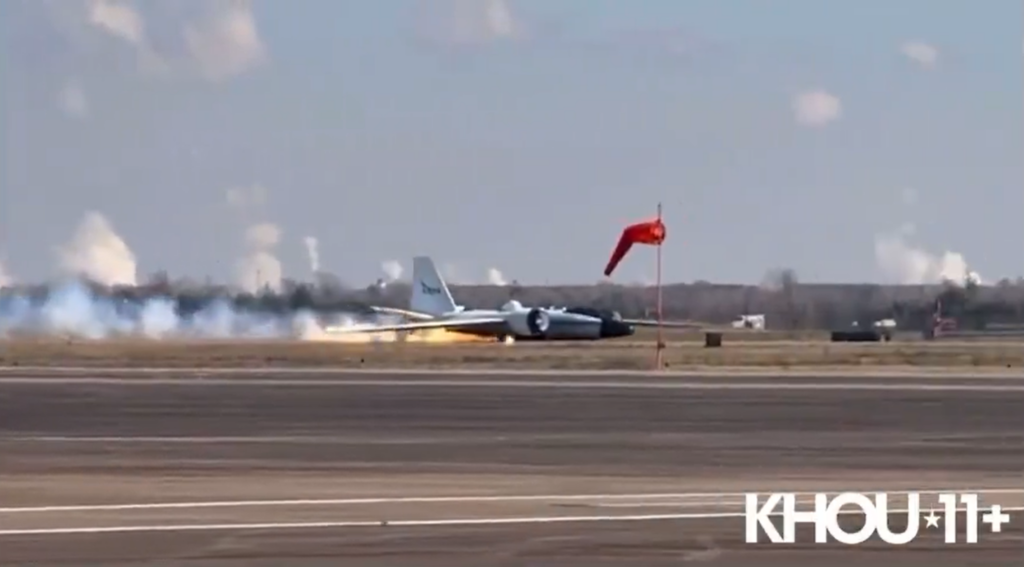
One of NASA’s three WB-57 Canberras was forced to make a gear-up landing at Houston’s Ellington Field, where the fleet is based. Videos emerged online showing it skidding down the runway on its belly.
NASA WB-57 makes belly landing in Texas
On January 28th, KHOU 11 News in Houston posted a video showing the NASA WB-57 skidding down Runway 17R–35L. Sparks and smoke are visible as the aircraft makes its touchdown.
Today, a mechanical issue with one of NASA’s WB-57s resulted in a gear-up landing at Ellington Field. Response to the incident is ongoing, and all crew are safe at this time. As with any incident, a thorough investigation will be conducted by NASA into the cause. NASA will…
— NASA (@NASA) January 27, 2026
NASA replied to the video, “Today, a mechanical issue with one of NASA’s WB-57s resulted in a gear-up landing at Ellington Field, where the Johnson Space Center is located. Response to the incident is ongoing, and all crew are safe at this time.”
NASA added, ” As with any incident, a thorough investigation will be conducted by NASA into the cause. NASA will transparently update the public as we gather more information.”
According to KHOU, the incident occurred at around 11:30 am local time.
Get the latest aerospace defence news here on AGN.
No fatalities in the forced landing
Another video shows the pilot safely exiting the stricken aircraft with the help of first responders. The aircraft typically carries two crew, a pilot and a sensor equipment operator.
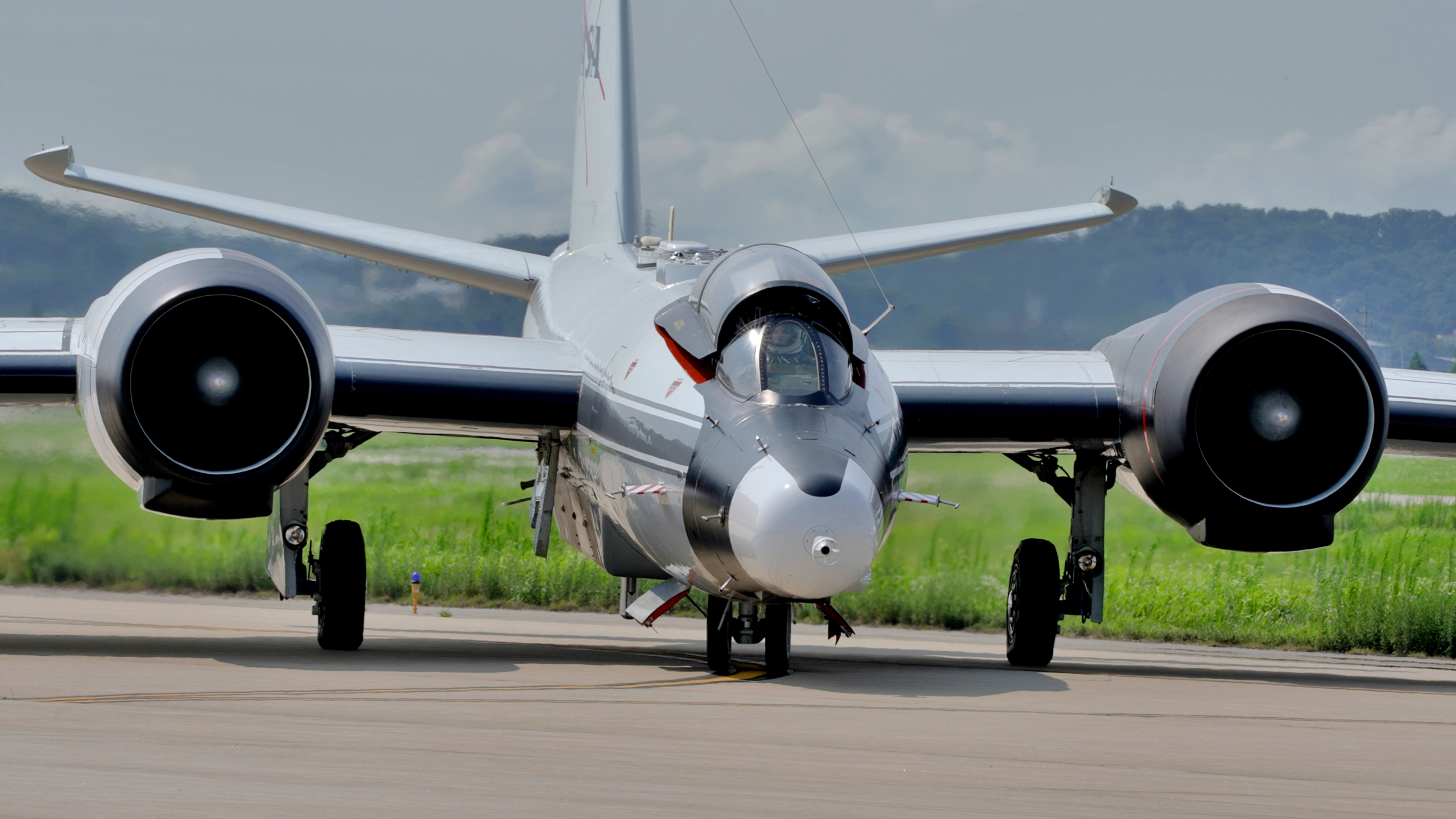 Photo: NASA
The video clearly shows one pilot getting out of the aircraft, seemingly unharmed. A cut in the video makes it unclear if it shows one or two crew members exiting the aircraft.
The news agency reported, “NASA confirmed that all crew members are safe. No additional details about the mechanical issue have been released.”
As of the time of writing, it appears that NASA’s calendar lists its WB-57 fleet as “Major Inspection On Indefinite Hold” for the year. The three WB-57s in NASA’s service are designated #926, #928, and #927. These are the only flying WB-57s in the world today.
The War Zone reported in 2024 that one of these NASA WB-57Fs was used to respond to weeks of unexplained drone incursions over Langley Air Force Base in Virginia in December 2023.
NASA’s WB-57
NASA says, “The WB-57 is a mid-wing, long-range aircraft capable of operation for extended periods of time from sea level to altitudes in excess of 63,000 feet.” Many of the aerial videos of space launches were taken by WB-57s. It is unclear if there will now be any WB-57s available to observe the upcoming Artemis II launch.
The WB-57 brought for the supposed hypersonic test last week is back up, while a pair of VX-30 P-3C AIP research aircraft linger nearby (probably not related).
N927NA is NASA WB-57 #ACD958
BH300 is P-3C AIP 162999 #AE1D7C
_163291 is P-3C AIP+ ARTR 163291 #AE1D85 pic.twitter.com/n87DudOdVD
— Evergreen Intel (@vcdgf555) April 5, 2021
WB-57s can carry various sensors and other modular payloads and are somewhat similar to the Air Force’s Lockheed U-2 Dragon Ladies. NASA also operates a pair of U-2s, designated the ER-2.
NASA’s WB-57s are based on the Martin B-57 Canberra twin-engined tactical bomber and reconnaissance aircraft, a licensed-built version of the British English Electric Canberra.
403 B-57 Canberras were built, and they have all long since been retired, except for those in NASA service. The “WB-57” designation adds “W” for “Weather Reconnaissance” to the original “B” for bomber. Besides its bomber role, the USAF also used them as high-flying intelligence-gathering aircraft.
No spacesuit required 👩🚀
Time is running out to submit your name to be flown aboard the Artemis II mission. Be sure to submit before Jan. 21 in order to be included.
Grab your boarding pass and join the mission around the Moon! https://t.co/vyLCuDWQtq pic.twitter.com/muLsJXg1cS
— NASA Artemis (@NASAArtemis) January 14, 2026
The aircraft is one of the oldest types still in operational service. NASA says the inception of the aircraft began in 1944, with the first flight in 1949.
In 2013, at the 50th anniversary of the WB-57F model, NASA added a third aircraft (#927) to its fleet of two. That aircraft had been in long-term storage in the boneyard at Davis-Monthan and hadn’t flown in over 41 years. It took two years of regeneration to restore it to flight status.
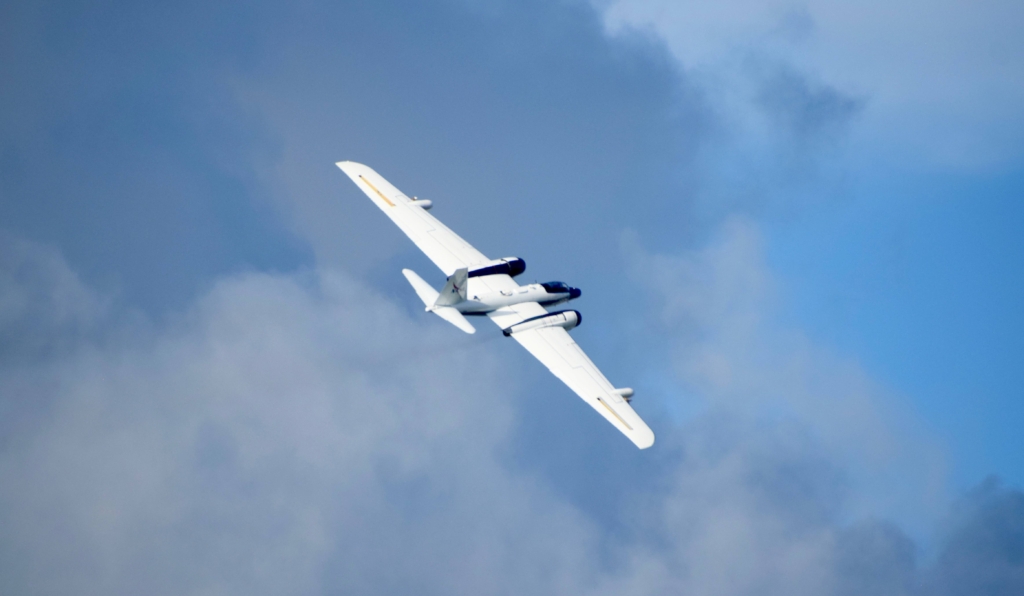 Photo: NASA
NASA notes, “NASA 927 holds the aircraft record for the longest time in extended storage before being returned to flying status.”
Featured Image: Khou
Sign up for our newsletter and get our latest content in your
inbox.