

The lunar heat-flow probe is the brainchild of Texas Tech geophysicist Seiichi Nagihara.
CREATORS


In the wee hours of Jan. 15, 2025, Texas Tech University geophysicist Seiichi Nagihara watched as the rocket carrying his life’s work launched to the Moon, beginning its
journey to further our understanding of the environment below the lunar surface. One
year and five days later, he learned he’ll get to repeat the experience at least two
more times.
On Jan. 20, NASA announced that Nagihara’s instrument – the Lunar Instrumentation for Subsurface Thermal Exploration
with Rapidity (LISTER) – has been selected to go to the Moon for a third time aboard
an upcoming mission to strengthen humanity’s understanding and exploration of the
Moon. The selection brings with it a $5.4 million grant over the next four years to
build and test the instrument.
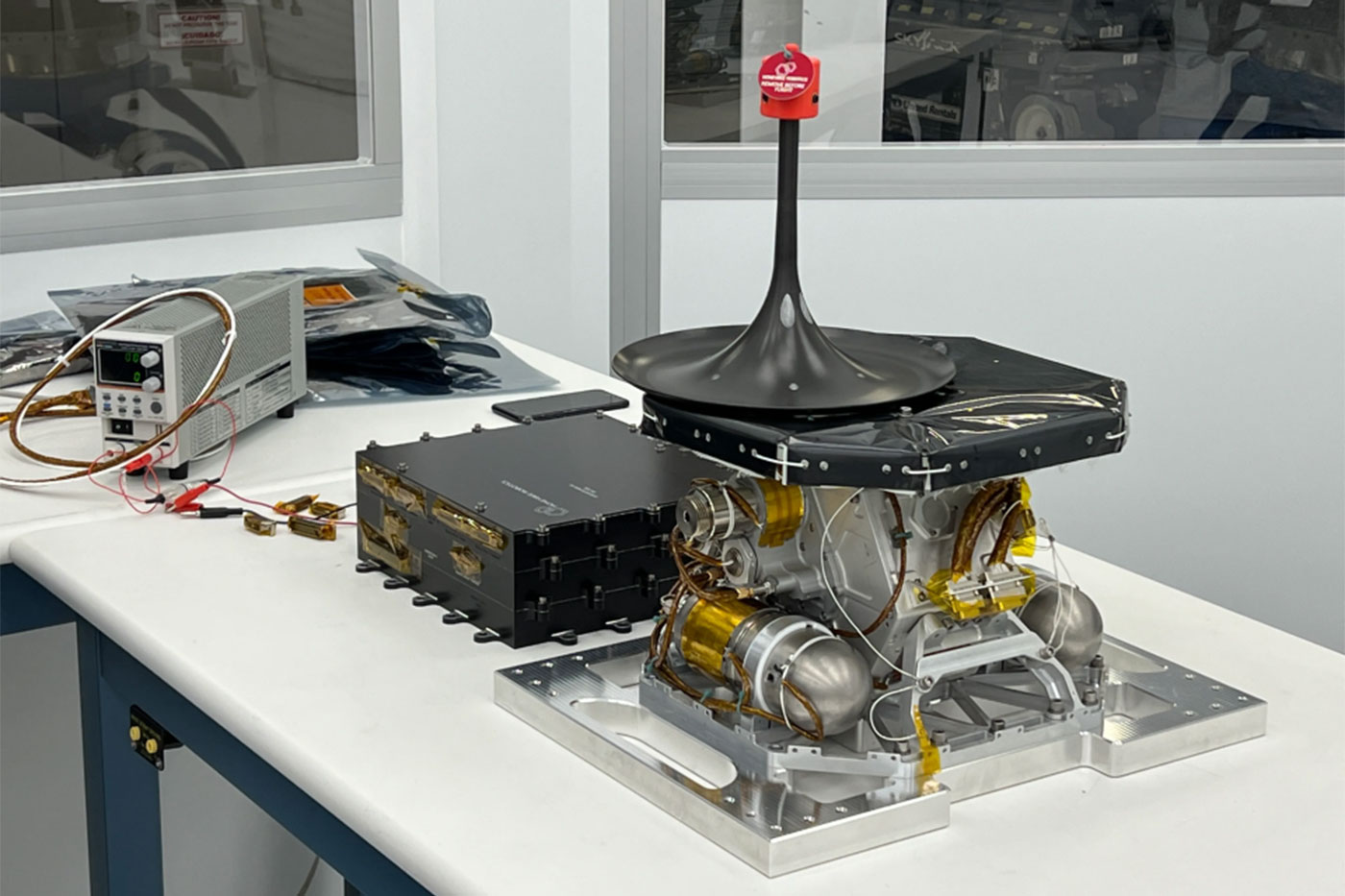
LISTER measures the heat flow of the Moon’s interior by drilling beneath the lunar
surface, pausing at intervals to measure temperature changes and the ability of the
subsurface material to conduct heat. As part of Blue Ghost Mission 1, LISTER 1 took eight temperature and thermal conductivity measurements and drilled
down to about three feet beneath the lunar surface.
“We expect that the heat released from the surface of the Moon varies from one place
to another; in other words, some parts of the Moon are hotter than others,” Nagihara
said. “To get the big picture for the whole Moon, we need to measure heat flow at
a number of different places on the Moon. LISTER 1 went to Mare Crisium. LISTER 2
is headed for the Schrödinger crater in late 2027. We do not know where on the Moon
LISTER 3 is going yet. I plan to have a discussion with NASA on the matter in the
near future.”
As part of NASA’s Commercial Lunar Payload Services (CLPS) initiative and Artemis
campaign, a yet-to-be-determined American spaceflight company will deliver LISTER
3 to the lunar surface no earlier than 2028.
“With CLPS, NASA has been taking a new approach to lunar science, relying on U.S.
industry innovation to travel to the surface of the Moon and enable scientific discovery,”
said Joel Kearns, deputy associate administrator for exploration, Science Mission
Directorate, NASA Headquarters in Washington. “These selections continue this pipeline
of lunar exploration, through research that will not only expand our knowledge about
the Moon’s history and environment but also inform future human safety and navigation
on the Moon and beyond.”
LISTER is the product of a 15-plus-year collaboration between Nagihara and Honeybee
Robotics, a California-based aerospace company. The full story of LISTER’s history
and successful first mission aboard the Blue Ghost 1 lander was published in the most
recent issue of Texas Tech’s Evermore magazine.
“The one thing different about LISTER 3 is that it was selected after LISTER 1 successfully
operated on the Moon on the Blue Ghost mission,” Nagihara said. “LISTER 2 was funded
well before the Blue Ghost mission. Back then, there was no guarantee that LISTER
would work as intended, because it had not flown before. But now, having seen how
LISTER 1 did on the Moon, there is increased confidence that LISTER will successfully
operate again.
“When the NASA people called me to inform me of their selection of LISTER 3, they
told me they were pleased with how LISTER 1 worked. So the selection of LISTER 3 makes
my team very proud. Our LISTER research and development effort for the last 15 years
is paying off.”