
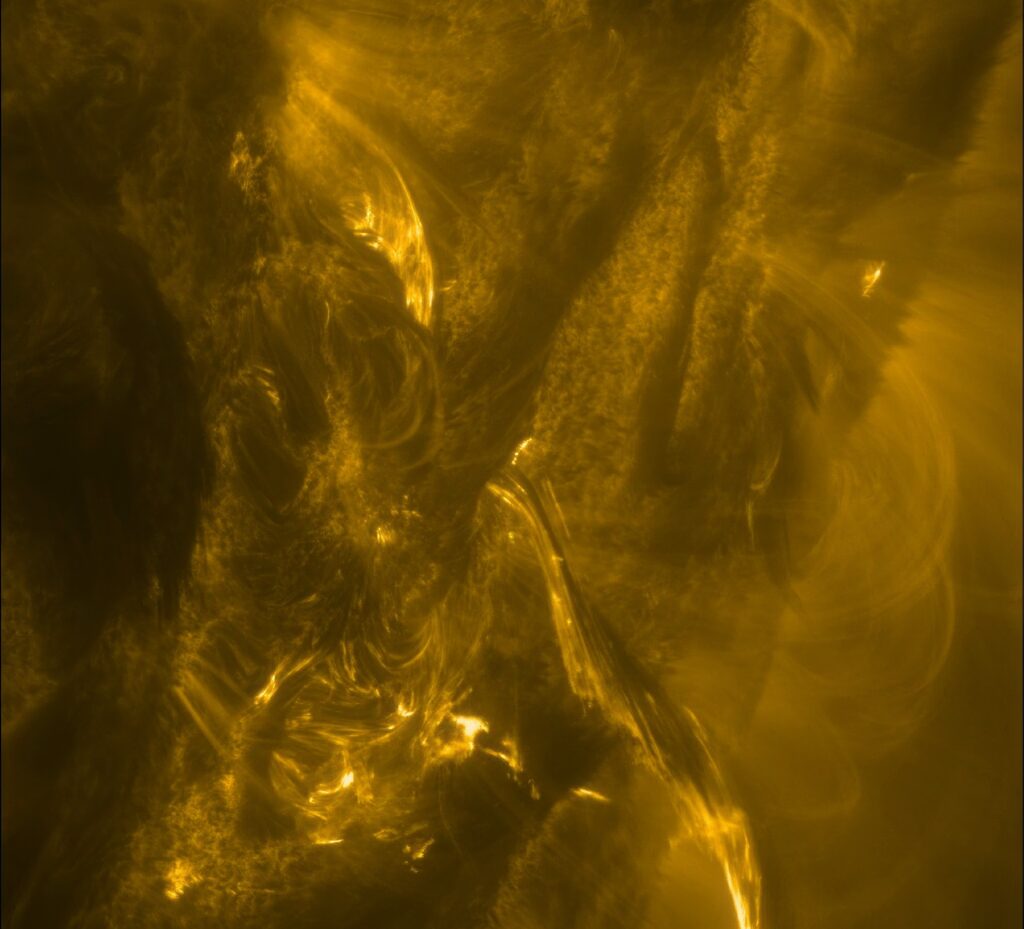
For the first time in history, the European Solar Orbiter probe has recorded how a series of tiny magnetic disturbances on the Sun develop into a powerful flare. This discovery reveals the “avalanche-like” mechanism of energy release in our star and brings scientists closer to being able to more accurately predict solar storms that are dangerous for Earth. The study, published in the journal Astronomy & Astrophysics, significantly deepens our understanding of “space weather” and opens up new horizons for studying stellar activity.
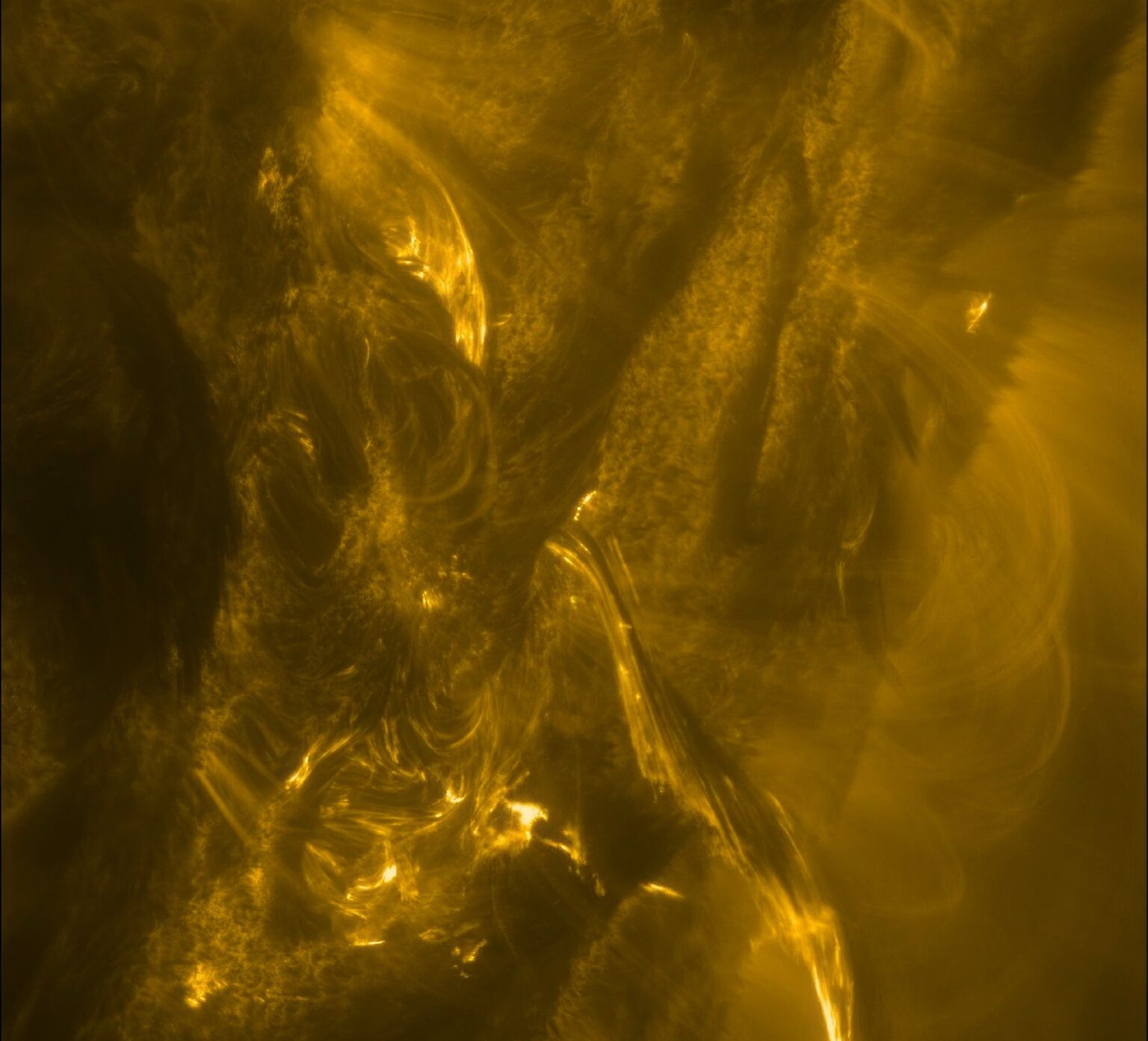 An image taken one second before a powerful M-class solar flare occurred on September 30, 2024, which was recorded in unprecedented detail as part of the ESA-led Solar Orbiter mission. The image is a fragment of a video created from images taken every two seconds with an extreme ultraviolet imager (EUI) on the eve of the solar flare.
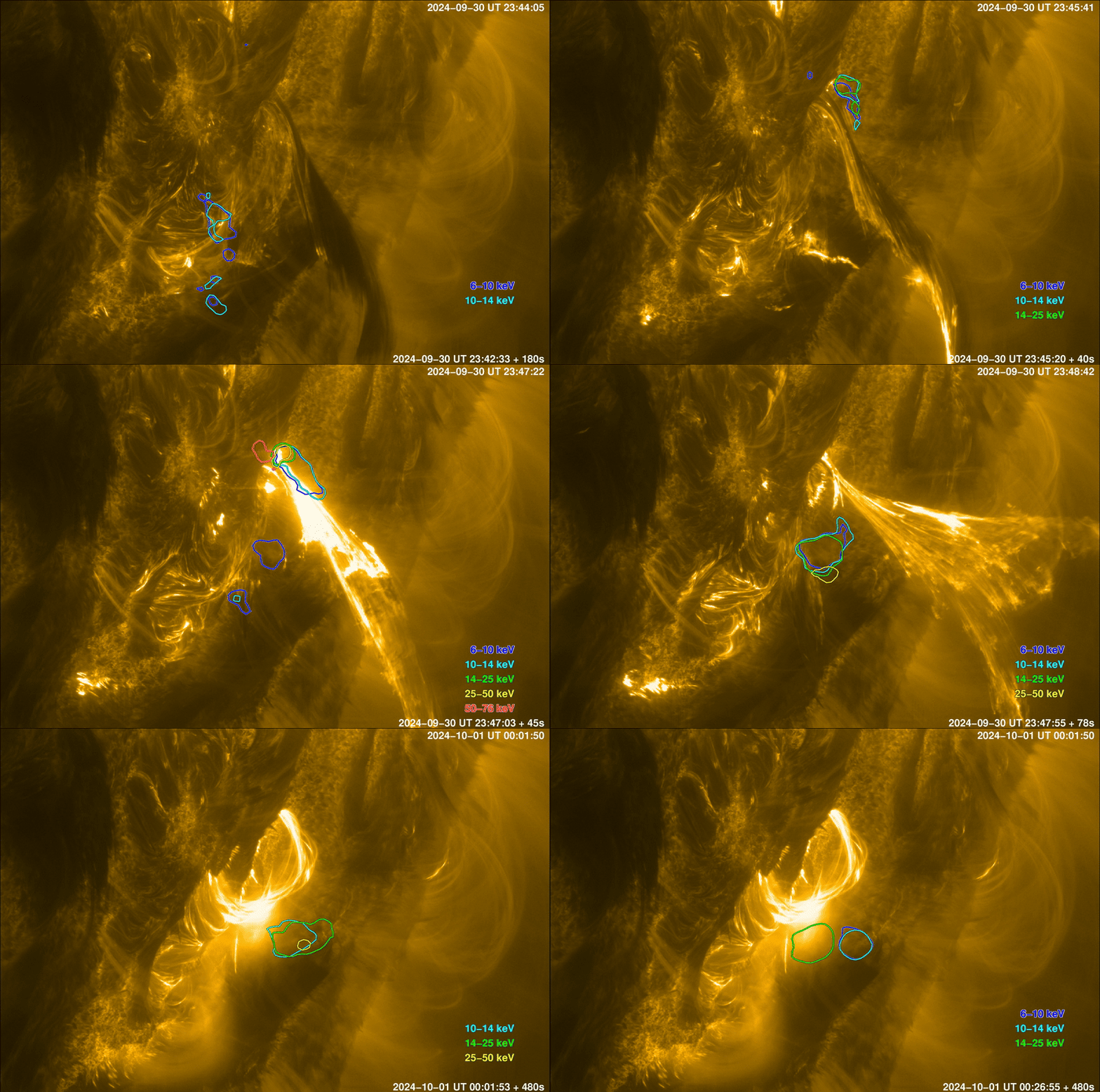
On September 30, 2024, an ESA spacecraft flew just 43 million kilometers from the Sun. Its instruments witnessed a medium-power flare, but the main discovery was not the flare itself, but what happened immediately before it. Four instruments on the probe coordinated their measurements and recorded how the cascade reaction began.
“We were really very lucky to witness the precursor events of this large flare in such beautiful detail. We really were in the right place at the right time to catch the fine details of this flare,” says Pradeep Chitta, lead author of the study.
Avalanche effect
Solar flares are the result of magnetic reconnection, when the magnetic field lines break and reconnect, releasing enormous amounts of energy. But is this one giant event, or the result of many smaller ones? Data from Solar Orbiter has provided a clear answer.
The Extreme Ultraviolet Imager (EUI) instrument observed the arc-shaped plasma structure for 40 minutes. It became increasingly unstable: magnetic lines began to break and reconnect, creating bright spots. This was the beginning of an uncontrolled process.
“We saw from the front rows where this cascade of events began,” explains Chitta. A series of small reconnections gained strength and momentum until it culminated in a full-blown flare. Like an avalanche triggered by a single snowflake.
Key to predicting space weather
Other probe instruments (SPICE, STIX, PHI) confirmed the observations, recording how plasma waves cascaded down through the solar atmosphere even before the main eruption. The most important discovery was the acceleration of particles during the process to 40-50% of the speed of light.

“The most surprising thing is that this avalanche-like process is capable of accelerating particles to such enormous speeds,” notes the scientist.
This discovery changes our understanding of the mechanisms behind flares. “What we have observed calls existing theories into question,” says David Pontin of Newcastle University.
From the Sun to other stars
The next step will be to determine whether all flares are avalanche-like in nature. This is critical for predicting powerful coronal mass ejections, which, when they reach Earth, can cause geomagnetic storms that threaten satellites and power grids.
Moreover, this mechanism may be universal. “An interesting prospect is whether this mechanism happens in all flares, and on other flaring stars” notes Miho Janvier of ESA.
Earlier, we reported on how the Solar Orbiter mission obtained a unique portrait of the Sun.
According to ESA