
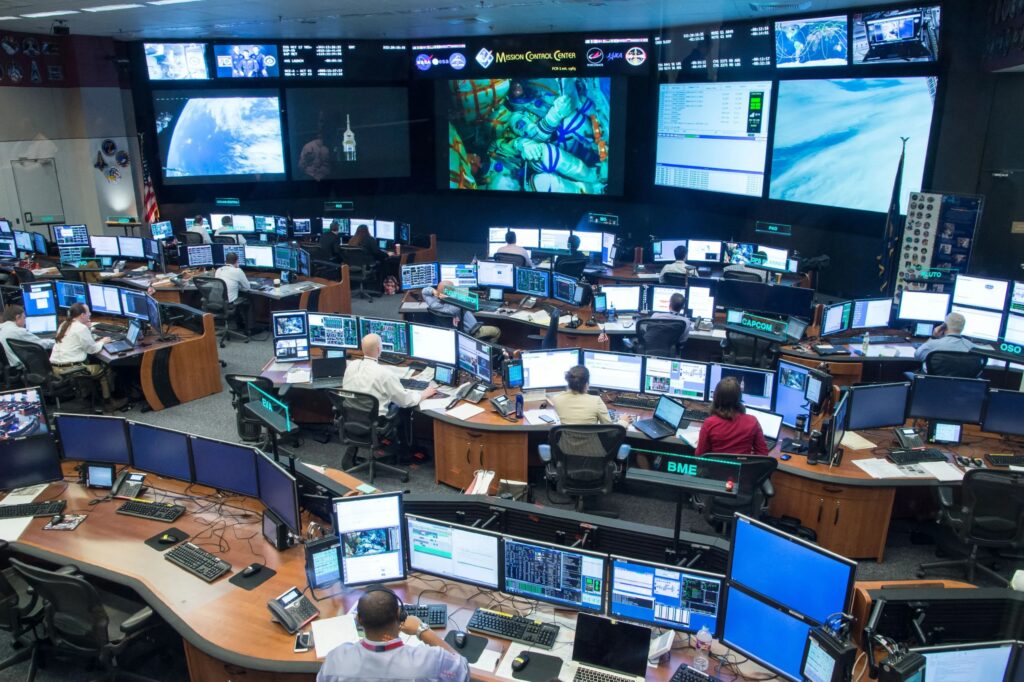
Tributes to fallen astronauts dwell throughout NASA.
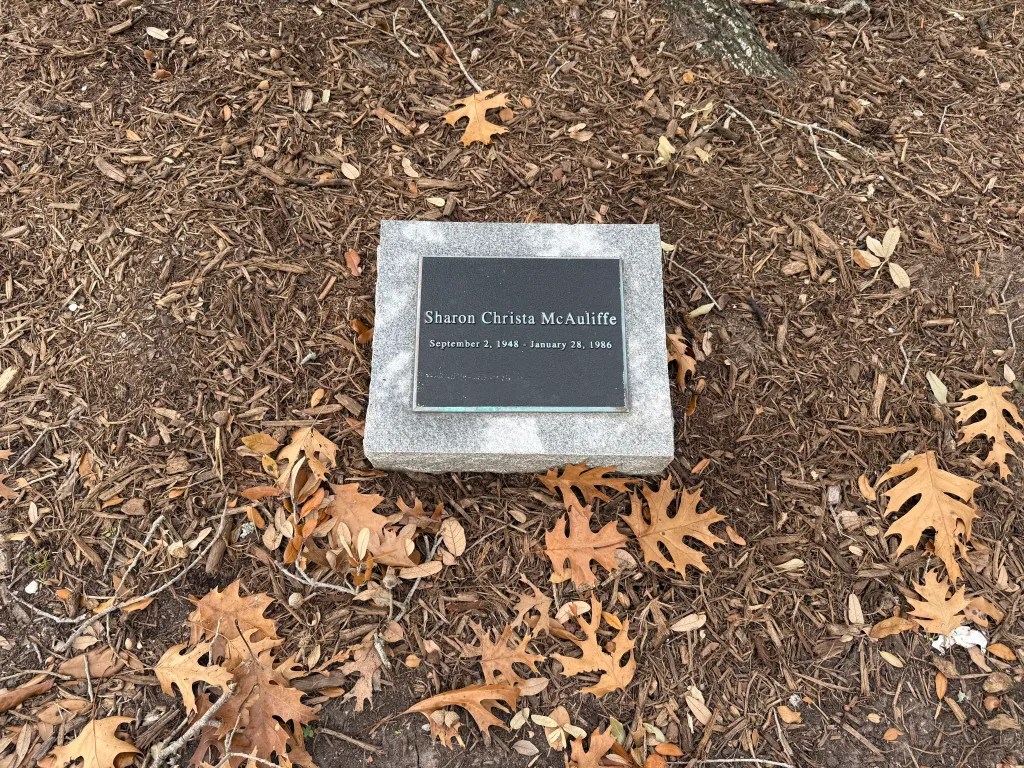
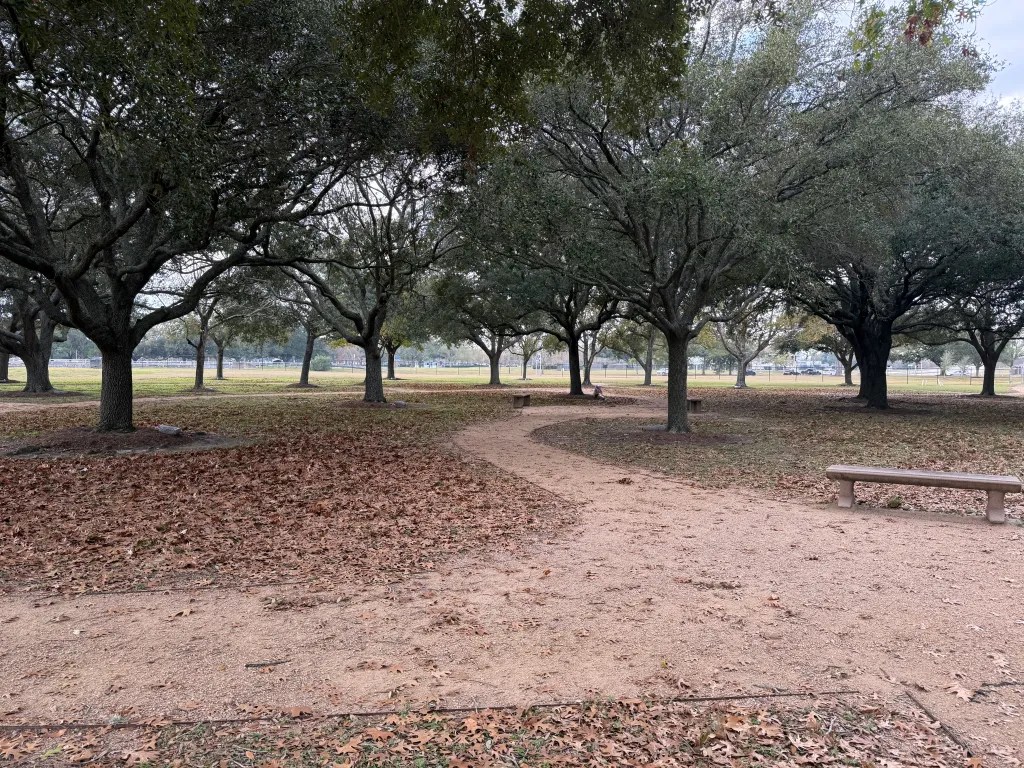
Trees bear names of the dead outside the Johnson Space Center in Houston. Inscribed plaques of missions that met tragedy hang on the walls inside conference rooms. At Cape Canaveral, a mirrored monument elevates into the sky the name of every astronaut who died venturing into space.
Even after decades, these astronauts’ presences linger, along with the lessons that their deaths taught the organization about the eternal importance of prioritizing safety in everything it does. Each tribute to a lost crew member carries the weight of a life lost and, collectively, represents the repercussions of decision-making that led to disaster.
Apollo 1, Challenger, Columbia
Preceding the nationally televised Challenger tragedy by nearly two decades, a fire in the cabin of Apollo 1 ignited during a pre-flight test in 1967. By the time NASA officials got the hatch open to rescue the three astronauts inside, it was too late. Then, nearly twenty years after Challenger, the space shuttle Columbia exploded upon re-entry to the Earth’s atmosphere in 2003, killing all seven crew members.
Several other astronauts have been killed over the decades in different training accidents.
Retired NASA astronaut Cady Coleman, who has logged over 4,300 hours in space, holds these tragedies close to her heart.
“We all know that we could have accidents, but when they really happen, they happen to real people, and it touches a part of us that was just so hopeful that anything is possible,” said Coleman.
Over time, NASA has implemented new communications protocols and safety procedures to reduce the risks of future accidents. But what hindsight and investigations into these tragedies have shown is that each one, in its own way, was preventable.
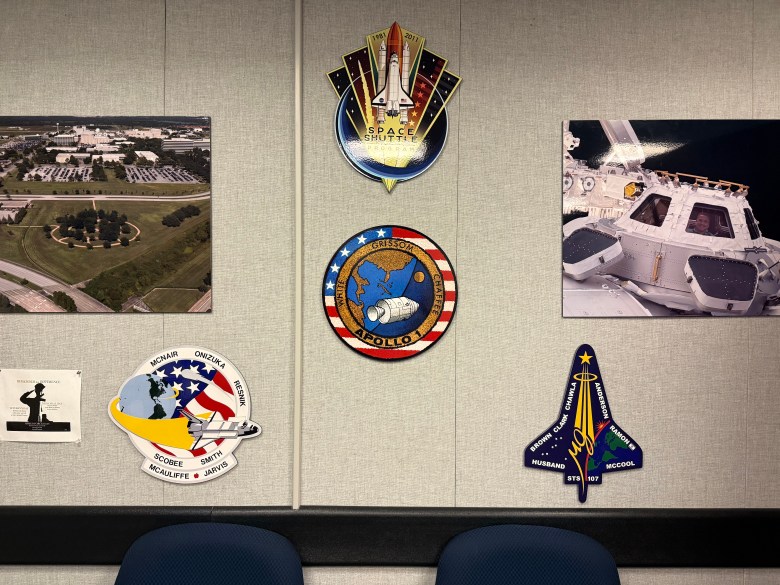 A conference room at the Johnson Space Center displays the badges of Apollo 1, Challenger and Columbia. Credit: NASA / Courtesy
Lessons from disaster
A few common factors have led to spaceflight accidents over the decades, according to NASA historian John Uri. He cited launching under the pressure of a schedule, a general acceptance of danger that had not yet caused harm, and a hierarchical structure that was not conducive to people speaking up about unseen risks.
After Challenger exploded 73 seconds into its flight, information surfaced about pre-existing concerns related to the O-rings in the solid rocket boosters, designed to launch the shuttle into space.
“We should have learned the lesson when we had a non-fatal burn through the O-rings,” he said. “But you know how it is, right? There’s a bad intersection, everybody says, ‘We need a stop sign,’ and the city says, ‘No, we can’t afford it.’ And then somebody gets killed, and they said, ‘Oh, okay, now we’ll put up a stop sign, right?’ That’s kind of a weird human way of thinking. Until something bad happens, no one’s going to take action.”
Engineers at Morton Thiokol, the corporation producing the solid rocket boosters, had flagged the O-rings as presenting problems even a year prior, when they began returning from flights singed and with holes burnt through them. But, before Challenger’s launch, when they brought their findings up the chain of command and to NASA, they were overridden.
“It was frustrating that even though we understood we could have a catastrophic failure, NASA wanted to have an increased number of launches, and so every launch became nerve-wracking to me,” said Morton Thiokol engineer Brian Russell in an interview with Netflix.”
Many of his colleagues shared the same fears.
There was “schedule pressure,” as Uri called it, with a dozen and a half launches slated for that year. And the Challenger launch, the second of 1986, had already been pushed back multiple times for weather and a mechanical problem with the hatch door.
So when the morning of January 28 rolled around — six days after the initial scheduled launch — Challenger’s flight would coincide with President Ronald Reagan’s State of the Union address.
Given the unseasonably frigid temperatures that morning, the shuttle had to be de-iced before launch. They pushed the flight back a couple hours, and then it was go time. But the O-rings, made of a rubbery material, had never been used for a launch in such low temperatures. In that environment, they became brittle, losing their seal and allowing hot gases to escape and fire to ignite.
“The other thing was kind of this acceptance of deviance, you know, the normalization of deviance that we know we had these O-ring problems before, but they didn’t result in an accident, so we accepted it as well,” Uri said.
Following the tragedy, President Reagan created the Rogers Commission to investigate the causes. It quickly became apparent that the culture of NASA had to shift.
One effort to this end was the establishment of an independent safety organization to help mitigate risk. This body did not answer to the shuttle program.
“They were able to make decisions in isolation of these programmatic pressures to launch into whatever else was going on, they could just say, ‘Stop. It’s not safe for X, Y and Z reasons. Go fix those. Come back and talk to us again, and then we’ll see if we can fly,’” Uri said.
Beyond that, chairs of different boards and committees within NASA were encouraged to give anyone in the room — regardless of rank — a chance to speak up, something Uri described as “a dramatic change.” A representative from the Astronaut Office began attending meetings with different branches of NASA to keep the astronauts informed and safety at the forefront.
The organization instituted mandatory safety training, something which continues to this day.
“But again, over the years, you get complacent, and that’s how we ended up with Columbia. A lot of similar factors were in play there,” Uri said.
‘We all have some responsibility’
Judith Hayes, who started working at NASA in her 20s prior to Challenger and is now the Chief Science Officer of Human Health & Performance, said she has seen the organization more fully emphasize the importance of every single person’s role in the overall mission.
“We all have a way of contributing, and we all have some responsibility to make sure that everything we do every day is safe, whether it’s launching people on rockets, but even just when we’re testing them or training them. It’s important every day,” she said.
For Coleman, as an astronaut, the risks were always present. But, she said, she trusted that the people around her were doing all they could to mitigate danger.
“I think that people did their best with the tools that they had, but I think they learned more about what the definition of safe could mean,” Coleman said. “And if there’s anything that I think can comfort people from any of these accidents, it’s that by paying a lot of attention after something goes wrong, we’ve learned things that keep other astronauts safe.”
Astronaut Richard “Ricky” Arnold had a similar experience when he joined the organization in 2004, a year after Columbia.
“With Challenger, with Columbia, when I arrived, there was a lot of a lot more transparency about some of the shortcomings of some of the decisions made in the institutional shortcomings that NASA and the contractors involved with the space program,” he said. “Certainly a lot more transparency about the culture that resulted in those two accidents, and how dangerous it was that we were actually able to lose two vehicles with similar cultural issues.”
When an accident occurs, Coleman said it wakes people up to “underline the fact that space flight will never be safe.”
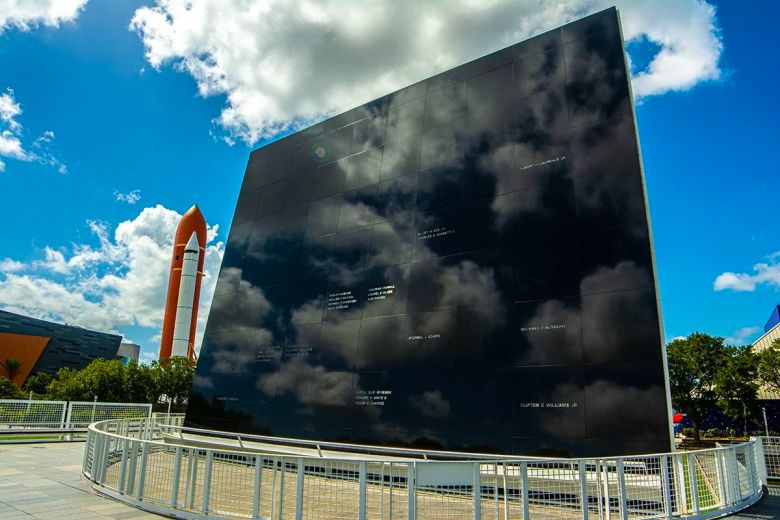 A space mirror wall carries the names of fallen astronauts and crew members outside the Kennedy Space Center in Florida. Credit: Astronauts Memorial Foundation / Courtesy
Each January, NASA holds an annual Day of Remembrance to honor the crew members lost in Apollo 1, Challenger and Columbia. But for decades-long NASA employees like Hayes and Uri, the lessons learned from the tragedies commemorated then hold true every single day, from the moment they walk into their office in the morning to the moment they leave at night.
Educator Astronaut Joseph Acaba, who has served as chief of the Astronaut Office, among other roles at NASA, feels these ever-present reminders around him. The Day of Remembrance and all the other ways fallen crews are commemorated play a large role in NASA culture, he added.
“It’s not just pictures on a wall; it is something that we talk about on a regular basis here,” he said. “And when you get new employees that come in, or when we work with our commercial partners, they don’t have that history. And we feel it’s important to share it with them as well.”
With the commercialization of spaceflight and NASA’s collaboration with private for-profit companies, safety will continue to be at the forefront of the conversation, especially given the potential for financial pressures to lead to launch pressure. NASA remains committed to maintaining its safety standards in these partnerships, Hayes said, and continually improving upon them.
Still, the human cost of spaceflight accidents far outweighs anything else. For Apollo 1, Challenger and Columbia, these safety improvements are too little too late.
“It’s a dangerous business,” said Hayes. “And I think most folks would say accidents in spite of everything we do, they’re the unknowns, and we’re trying to address all of those risks. But you know, I suspect at some point we will see another accident, and I even hate saying that, but I believe that NASA is trying to do everything that we can do to prevent that.”