
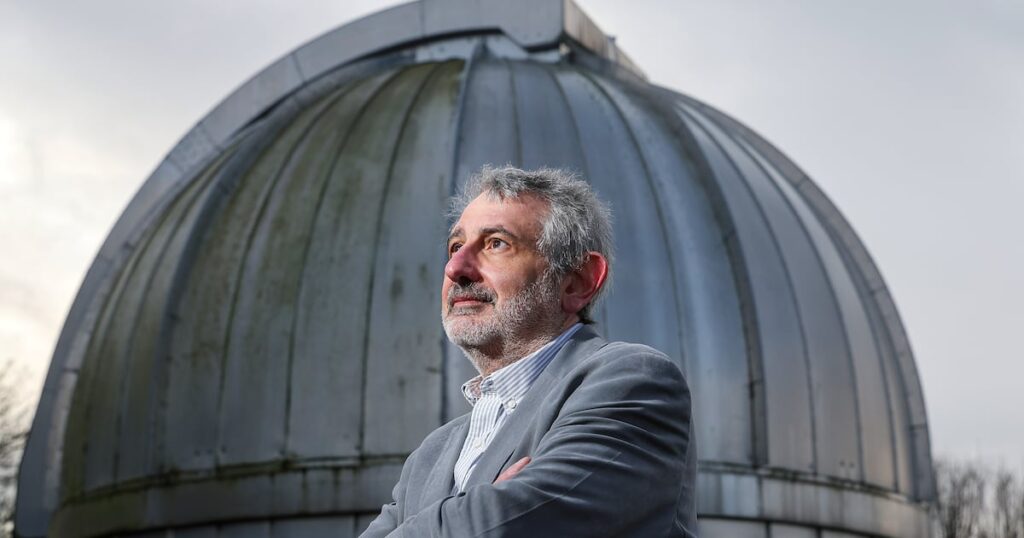
From earliest times, the skies have inspired both wonder and practical knowledge. Ancient seafarers navigated by the stars, farmers read the heavens for signs of seasonal change, and celestial bodies were often worshipped as gods.
Centuries later, astronomy continued to shape discovery, exemplified by Captain James Cook’s 1769 voyage to observe the transit of Venus and help calculate the distance between the Earth and the Sun.
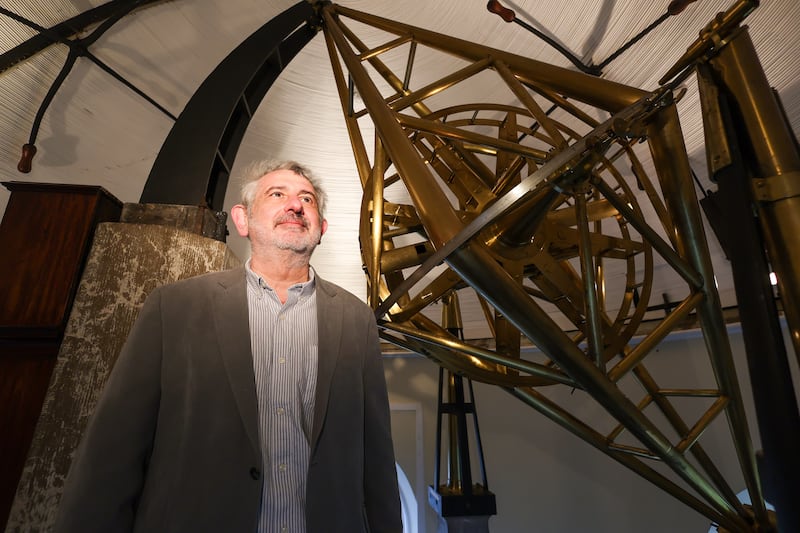 Dr Stefano Bagnulo, astronomer at the Armagh Observatory. PICTURE: MAL MCCANN
Today, professional astronomers continue to study the skies at Armagh Observatory. Among them is Dr Stefano Bagnulo, who took time from a busy schedule to share his passion for astronomy, his love of Northern Ireland, and his insight into life as a professional astronomer.
Read more: Armagh Observatory scientists appointed to leading global astronomy roles – The Irish News


Originally from Italy, Stefano recalls his early fascination with science.
“As a child, growing up in Florence, Italy, I was always interested in science, although, like many children, I liked dinosaurs too! Later, as a young teenager, I began attending public meetings, where professional astronomers came to give talks about the subject but in terms that lay people could understand.
Considering the complexity and vastness of the universe, it’s reasonable to assume there may be some form of life elsewhere.
— Dr. Stefano Bagnulo
“My interest grew, and by the time I went to university to study physics, I was drawn to astrophysics, and it became my specific field of study. I did my PhD solely in astrophysics.”
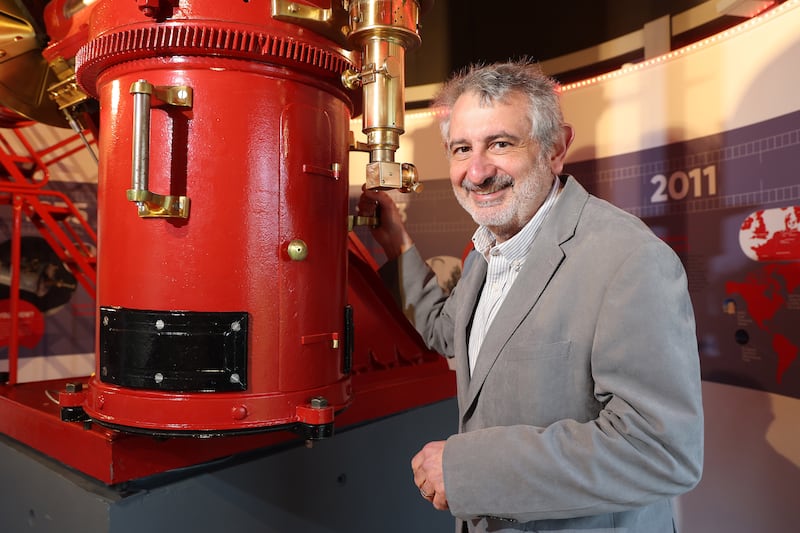 Astronomer Dr Stefano Bagnulo beside a large telescope at the Armagh Observatory. PICTURE: MAL MCCANN
For Stefano, a career in astronomy requires more than academic qualifications.
“Well, you need to have a passion for astronomy as well as science in general, especially subjects like physics, mathematics, and chemistry. You also need to be prepared to work very hard!”
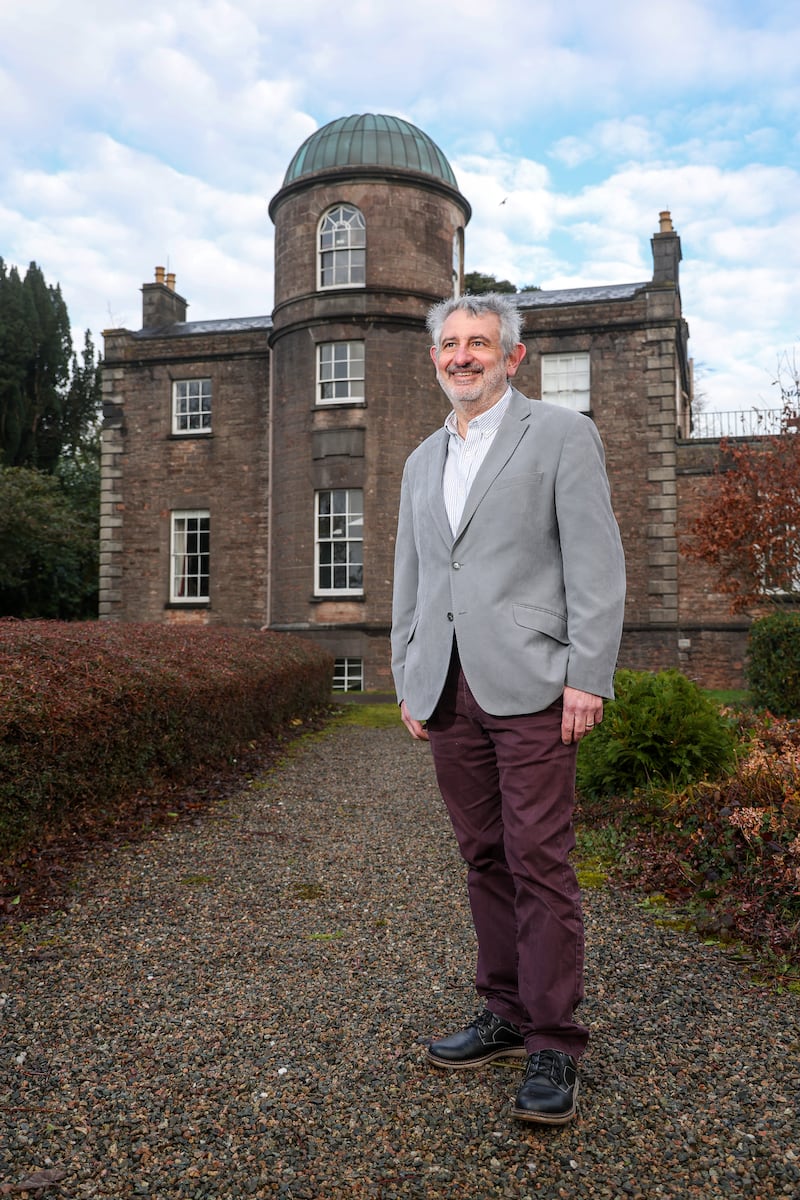
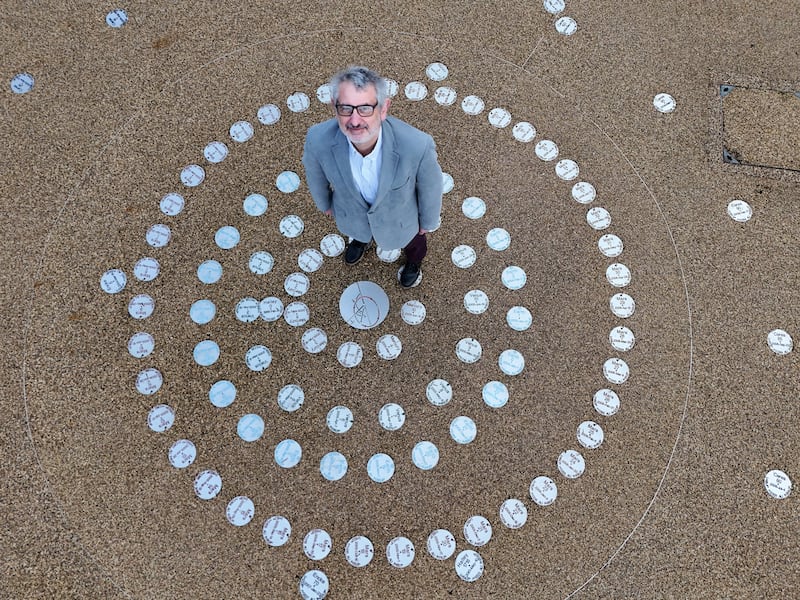 Dr Stefano Bagnulo, astronomer at Armagh Observatory, has been fascinated by the skies since childhood. PICTURE: MAL MCCANN
His fascination with the subject goes beyond scientific discovery.
“I think that, in general, people have always been fascinated by the universe. We look up and are amazed by the mystery of the skies above us.
“But what fascinates me, apart from the age and size of the universe and the beauty of what we can see with the help of a telescope, even if it’s just pointed at the moon, is how insignificant we are when compared to the vastness of the night sky. I also appreciate the ‘telescope’ as an instrument. It is an amazing product of mechanical, optical, and electronic engineering.”
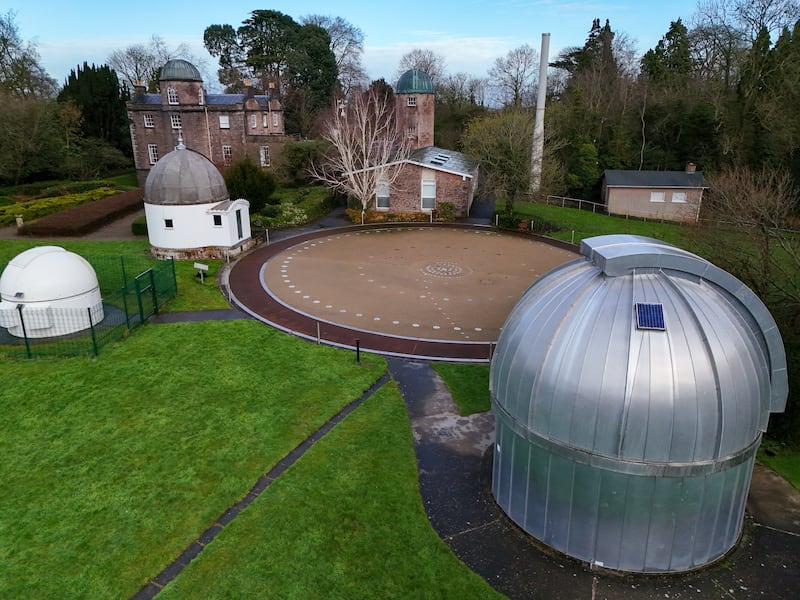 Armagh Observatory. PICTURE: MAL MCCANN
Stefano’s journey to Northern Ireland began more than 30 years ago.
“My first experience of Northern Ireland was in 1994, when I arrived at the Armagh Observatory and Planetarium as a PhD student.”
He points out the distinction between the two institutions, explaining that the Observatory focuses on scientific research, while the Planetarium is involved in outreach and education.
“In 1996, I left Armagh and went to study in Austria, then on to Chile.”
 Dr Stefano Bagnulo first came to Northern Ireland in 1994. PICTURE: MAL MCCANN
“Travel is an essential part of any professional astronomer’s life. I always tell my students they must go and explore other places. There are a few reasons for that but, mainly, it’s because we learn different things from different parts of the world.”
Later, while searching for a permanent position in what he describes as a competitive job market, he spotted an opportunity closer to home.
“When I was looking for a position and, you know, jobs for astronomers aren’t that easy to find—you won’t find them just around the corner—I saw one advertised at the Observatory in Armagh. I applied and returned as a staff member in 2007.”
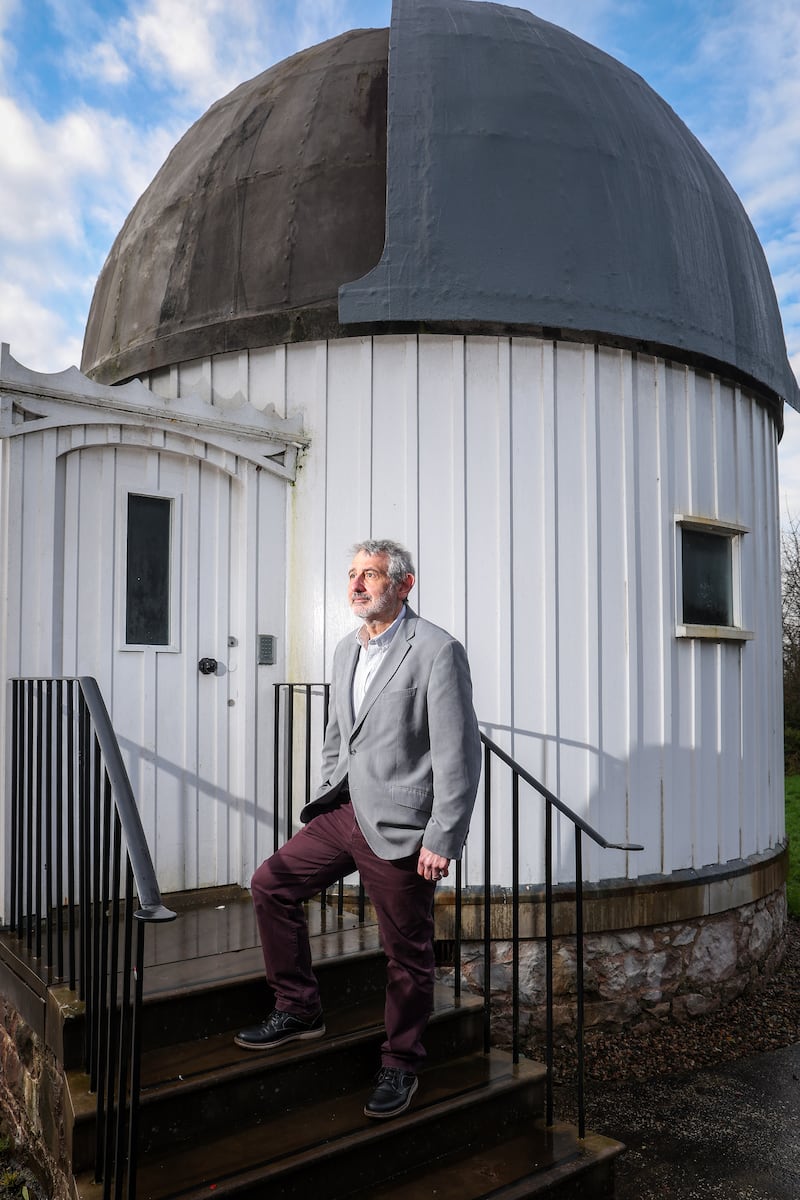 In 2024, Dr Bagnulo led a study that unravelled a mystery surrounding a particular white dwarf. PICTURE: MAL MCCANN
Modern telescopes, Stefano explains, must be located far from cities.
“Telescopes are very expensive pieces of equipment and tend to be placed where the skies will afford the best opportunities for research and study. Due to light pollution, we cannot put them in cities. It needs to be somewhere so remote that the skies are transparent for most of the year.
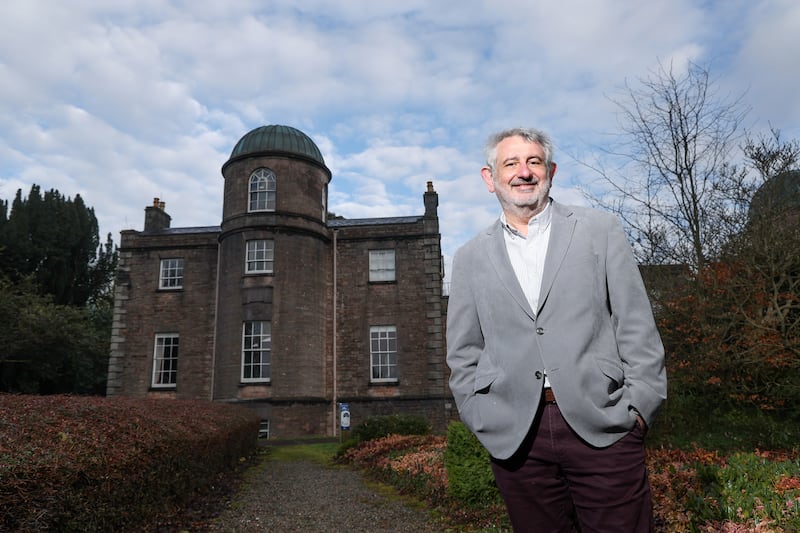 Dr Stefano Bagnulo believes there could be life beyond Earth. PICTURE: MAL MCCANN
“One of these locations is the Atacama Desert in Chile, where the largest ones are based. These four telescopes with an 8m mirror are collectively called ‘VLT’, ie Very Large Telescopes.”
He says that “a few nights of telescope time typically leads to months of work for data and analysis.”
Even larger ambitions lie ahead with the Extremely Large Telescope.
“Incredibly, an even more impressive telescope, known as ELT, ie ‘Extremely Large Telescope’, is currently under construction and will be available around the end of this decade. In this one, the mirror is 38m, and the dome is as large as the Colosseum in Rome!”
The Chilean observation site itself leaves a lasting impression.
“The observation site itself is fascinating! With the desert’s red sand, you get the impression you’re on Mars. There is also a kind of ‘hotel’ where astronomers, engineers, and all the various staff needed to run the Observatory are hosted. There’s even a small swimming pool! However, the huge domes on top of the mountain are simply stunning.”
Although much of an astronomer’s work involves repetition, precision measurements, and data analysis, there are moments of real excitement.
In 2024, using observations from the VLT in Chile, Stefano led a study that unravelled a mystery surrounding a particular white dwarf.
“A white dwarf is the name given to the burnt remains of a star that has reached the end of its life cycle. In around five billion years, our Sun will also become a WD. It’s well known that some white dwarfs are cannibalising pieces of their planetary systems—in other words, they are feasting on nearby planets and asteroids! Now we have discovered that the star’s magnetic field plays a key role in this process, resulting in a scar on the white dwarf’s surface.”
He also notes that Canadian astronomer John Landstreet, “who is married to a Belfast woman and is a friend as well as a colleague,” was part of the team that discovered the first magnetic white dwarf in 1970.
Public attention turned skyward again in the summer of 2025 when headlines announced the sighting of a huge comet, with some speculating that it was an alien vessel. Stefano clarifies what was actually observed.
“Last July, an interstellar comet, known as 31/ATLAS, was causing great excitement. We don’t know which solar system this comet comes from but we know, by the way it travels, that it is not from ours.
“The comet has now approached the Sun at its closest point and is on its way to leaving our solar system for good. For us, the special interest is how it managed to survive such close proximity to the Sun.”
Asked about the possibility of life beyond Earth, Stefano is open-minded. “Yes, I think it does exist. Considering the complexity and vastness of the universe, it’s reasonable to assume there may be some form of life elsewhere.”
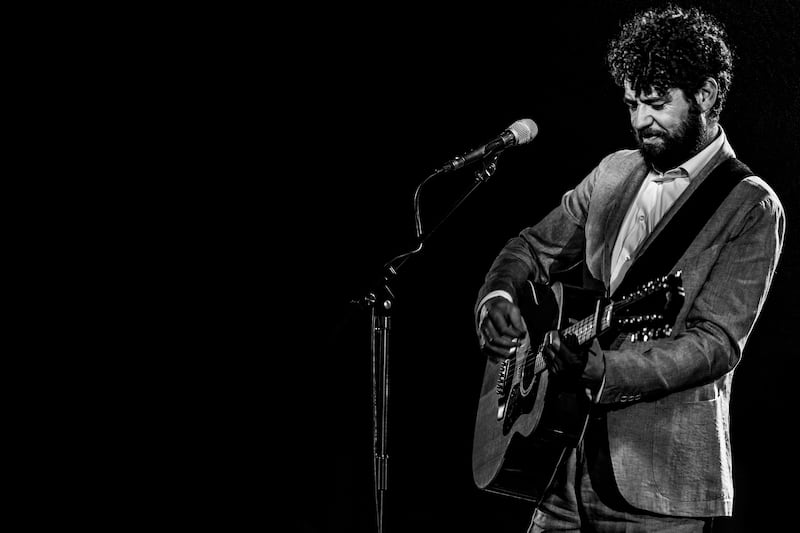 Dr Bagnulo met Irish singer/songwriter Declan O’Rourke some 10 years ago and the pair have become firm friends
Back on Earth, he reflects on his life in Northern Ireland.
“People often express surprise that I don’t choose to live in Italy, where the sun shines more often! But I really enjoy the cooler climes. People in Northern Ireland are very friendly and kind, and the pace of life is much calmer.”
When he is not studying the skies, music provides another source of enjoyment.
“I like classical music, Beethoven, Mahler, and opera. However, I also enjoy the Beatles, Talking Heads, and, of course, a few French and Italian songwriters.”
He also speaks warmly of his friendship with Dublin-born singer-songwriter Declan O’Rourke.
“I met Declan 10 years ago, and suggested that, given the name of his song Galileo, he might like to visit Galileo’s house in Florence, where he spent the last 11 years of his life.
“I offered to facilitate the trip and, somewhat to my surprise, he agreed. We became great friends, and whenever he’s performing in Belfast and I’m also home, I invite him and his band to my home to have dinner, usually pasta. It’s always a great night!”