

A U.S. commercial spacecraft has successfully landed on the Moon, confirming a major advance in the partnership between NASA and the private space sector. The achievement marks a new phase in lunar exploration, where privately developed landers deliver scientific payloads, test critical technologies, and support future human missions. This milestone demonstrates that commercial companies can now operate reliably on the lunar surface, reshaping how access to the Moon is organized and financed.
Blue Ghost’s Landing Signals A Shift In Lunar Strategy
The successful touchdown of Firefly Aerospace’s Blue Ghost Mission 1 represents a defining moment for the company and for U.S. space policy. The lunar lander reached the surface after a complex sequence of orbital maneuvers and a controlled descent to Mare Crisium, a region of high scientific interest. This mission shows how NASA’s Commercial Lunar Payload Services (CLPS) program is moving from concept to operational reality, relying on private firms to transport instruments and experiments to the Moon.
According to Firefly Aerospace, the mission reflects years of engineering development and coordination with NASA scientists. “Firefly is literally and figuratively over the Moon,” said Jason Kim, CEO of Firefly Aerospace. “Our Blue Ghost lunar lander now has a permanent home on the lunar surface with 10 NASA payloads and a plaque with every Firefly employee’s name. This bold, unstoppable team has proven we’re well equipped to deliver reliable, affordable access to the Moon, and we won’t stop there. With annual lunar missions, Firefly is paving the way for a lasting lunar presence that will help unlock access to the rest of the solar system for our nation, our partners, and the world.”
The landing underscores how commercial missions can now meet NASA’s technical and scientific requirements while maintaining tighter schedules and controlled costs.
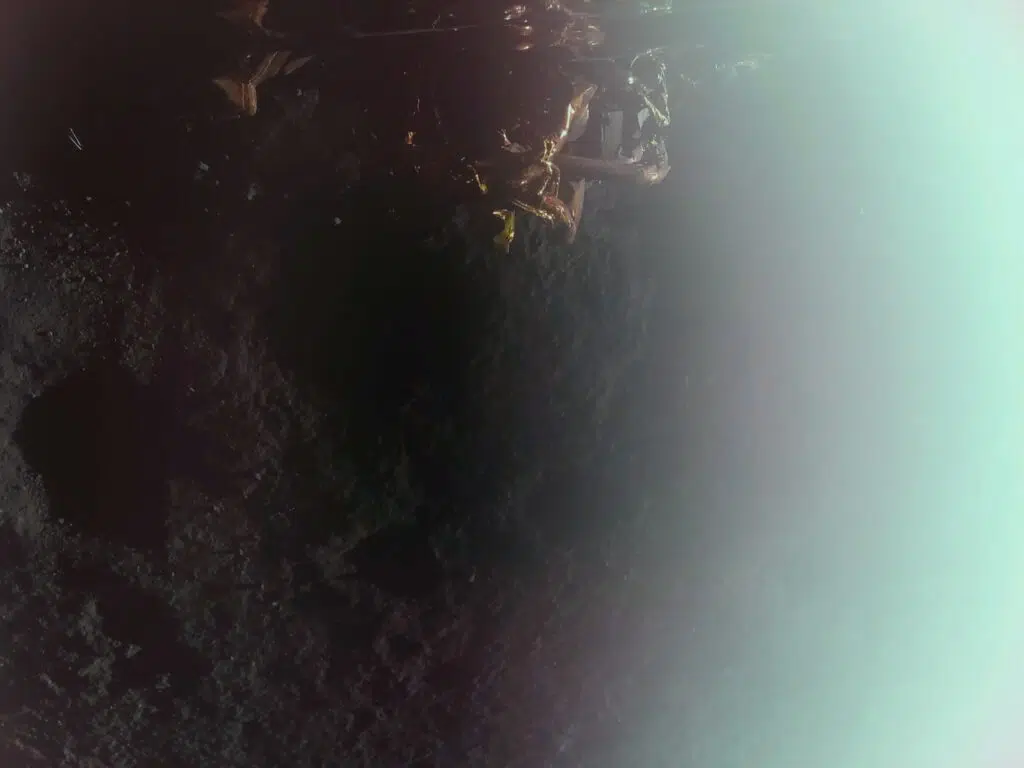 Firefly’s Blue Ghost lunar lander softly touched down in Mare Crisium carrying 10 NASA instruments Credit: FireFly
Scientific Payloads And NASA’s CLPS Model In Action
Blue Ghost is carrying ten NASA payloads designed to study lunar soil, subsurface temperatures, dust behavior, and navigation technologies. These instruments are intended to gather data that supports the Artemis program, which aims to establish a sustainable human presence on the Moon. The CLPS approach allows NASA to focus on science objectives while commercial partners handle spacecraft development and operations.
Firefly has emphasized that the mission is not limited to the landing itself. The lander is expected to operate on the lunar surface for more than two weeks, collecting continuous streams of scientific data. This phase is seen as critical for validating commercial landers as dependable platforms for future missions. The official mission details and confirmation of this achievement were outlined by Firefly Aerospace in its announcement, available at: https://fireflyspace.com/news/firefly-aerospace-becomes-first-commercial-company-to-successfully-land-on-the-moon/.
By demonstrating sustained surface operations, Blue Ghost strengthens confidence in using private spacecraft for repeat lunar deliveries.
From Rocket Builder To Cislunar Service Provider
The mission also reflects Firefly’s broader transformation within the space industry. Once focused primarily on launch vehicles, the company is now positioning itself as a provider of end-to-end services from low Earth orbit to cislunar space. This evolution mirrors NASA’s long-term strategy of cultivating a competitive commercial ecosystem capable of supporting exploration beyond Earth orbit.
“With the hardest part behind us, Firefly looks forward to completing more than 14 days of surface operations, again raising the bar for commercial cislunar capabilities,” said Shea Ferring, Chief Technology Officer at Firefly Aerospace. “Just through transit to the Moon, Firefly’s mission has already delivered the most science data to date for the NASA CLPS initiative. CLPS has played a key role in Firefly’s evolution from a rocket company to a provider of launch, lunar, and on-orbit services from LEO to cislunar and beyond. We want to thank NASA for entrusting in the Firefly team, and we look forward to delivering even more science data that supports future human missions to the Moon and Mars.”
This data-first approach highlights how commercial missions can rapidly advance scientific knowledge while reducing development cycles.