
Why the Tic Tac UAP Is a Genuine, Well-Documented Phenomenon (Not a Hoax)
The 2004 Nimitz “Tic Tac” incident is often misunderstood as a single blurry video or anecdotal pilot story. In reality, it represents one of the best-documented unidentified aerial phenomena on record, supported by multiple independent data sources.
- Multi-sensor confirmation (not just eyewitness testimony)
This case is notable because it involved simultaneous detection by different, independent systems:
AN/SPY-1 radar aboard USS Princeton, tracking objects descending from ~80,000 ft to sea level in seconds
F/A-18 FLIR footage, later released as FLIR1
Visual confirmation by trained fighter pilots (Cmdr. David Fravor and others)
Radar operators and weapons systems officers corroborating the same objects over multiple days
In physics and aerospace analysis, multi-sensor corroboration drastically reduces the likelihood of misidentification or sensor artifact, especially when the sensors operate on different physical principles (radar vs infrared vs human visual tracking).
- Observed flight characteristics exceed conventional aerospace models
The Tic Tac object reportedly exhibited:
No visible wings, control surfaces, or exhaust plume
Instantaneous acceleration and deceleration
Sustained hovering followed by rapid directional changes
No sonic boom despite hypersonic-like velocity
Apparent trans-medium behavior (air–sea interface interaction)
From a physics standpoint, these observations do not violate known laws, but they do exceed the engineering limits of conventional propulsion and aerodynamics.
This distinction matters:
“Impossible” ≠ “unexplained with current technology”
The issue is engineering feasibility, not fundamental physics
- Human-made theoretical frameworks do exist
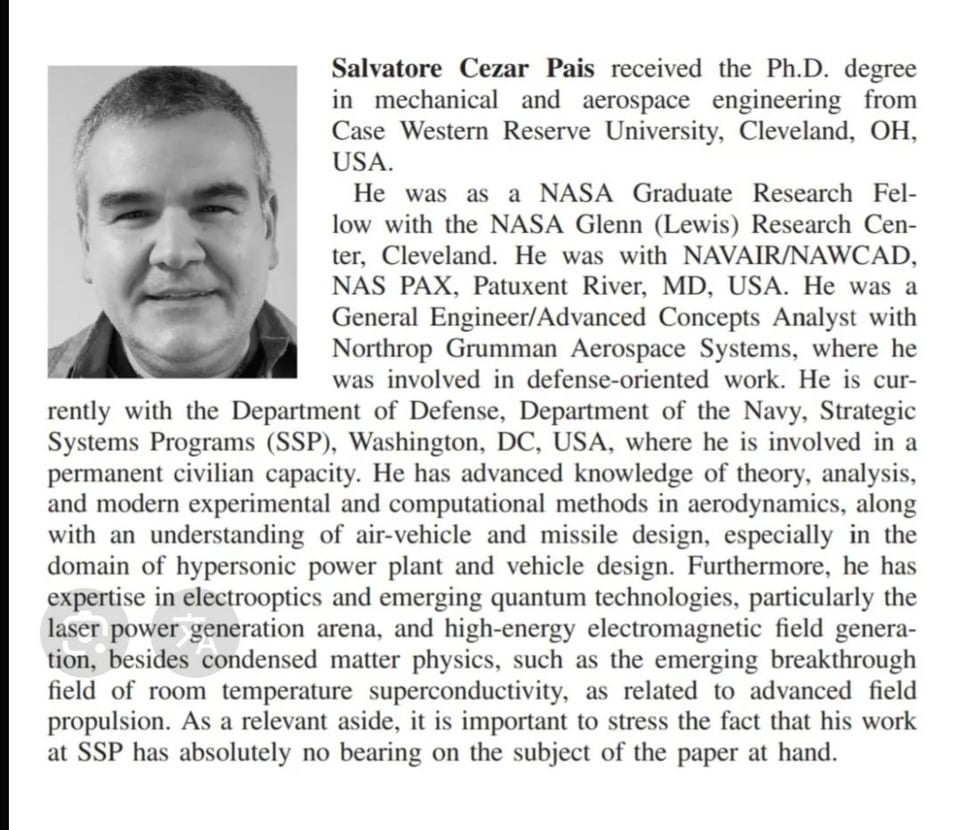
Between 2016–2019, the U.S. Navy filed several patents associated with Dr. Salvatore Cezar Pais, including:
Craft Using an Inertial Mass Reduction Device
High-Frequency Gravitational Wave Generator
Plasma Compression Fusion Device
Crucially, the U.S. Navy formally defended these patents, stating that the concepts were “operable in theory”, even if not practically realizable with current materials and energy systems.
The predicted outcomes of these concepts include:
Reduced inertial mass → extreme acceleration without lethal G-forces
Electromagnetic field encapsulation → reduced interaction with air/water
Spacetime modification → absence of sonic booms and conventional heat signatures
These predicted effects map closely to the reported Tic Tac observables, suggesting a plausible human-engineered theoretical pathway, even if no operational system has been demonstrated publicly.
- Why this does not imply “proven secret tech” or aliens
Important caveats:
Patents do not demonstrate deployment or maturity
Energy requirements and materials science remain unsolved challenges
No evidence shows this technology is fielded as a weapon system
However, none of this undermines the authenticity of the Tic Tac event itself. It only means the phenomenon remains unidentified, not imaginary.
The U.S. Department of Defense has repeatedly confirmed:
The footage is authentic
The objects remain officially unidentified
The encounters posed real flight-safety concerns
- Conclusion (physics-grounded position)
The Tic Tac UAP is best described as:
A real, documented phenomenon
Observed by trained professionals
Corroborated by multiple sensor systems
Not explainable by known conventional aerospace technology
Not in violation of known physical laws
Skepticism is healthy but dismissing the Tic Tac incident as a hoax or simple misidentification is not supported by the available evidence.
A scientifically honest position is not “this proves aliens,” but rather:
> This represents a genuine, unresolved aerospace and physics problem.
Summary & Key Sources
The 2004 Nimitz “Tic Tac” UAP is a real, documented event, confirmed by the U.S. Department of Defense as authentic Navy footage involving unidentified objects.
The incident is supported by multi-sensor data:
AN/SPY-1 radar (USS Princeton)
FLIR infrared targeting footage
Visual confirmation by multiple U.S. Navy pilots (Cmdr. David Fravor, Lt. Cmdr. Alex Dietrich)
Corroborating radar operators and weapons officers
Multi-sensor corroboration significantly reduces the likelihood of misidentification or sensor error.
Observed characteristics (instant acceleration, no sonic boom, no exhaust, sharp turns, possible trans-medium behavior) exceed conventional aerospace engineering, but do not violate known physical laws.
Between 2016–2019, the U.S. Navy filed several advanced physics patents through Dr. Salvatore Cezar Pais (Naval Air Warfare Center), including:
Craft Using an Inertial Mass Reduction Device (US 10,144,532)
High-Frequency Gravitational Wave Generator (US20180229864A1)
Plasma Compression Fusion Device (US20190295733A1)
The U.S. Navy formally defended these patents, stating the concepts were “operable in theory.”
These patents outline theoretical mechanisms (inertial mass reduction, electromagnetic field encapsulation, spacetime modification) whose predicted effects closely align with reported Tic Tac observables, without proving operational deployment.
U.S. government assessments (DoD, UAP Task Force, AARO, NASA UAP Study) acknowledge that some UAP cases remain unresolved, emphasizing data gaps rather than dismissal.
Conclusion:
The Tic Tac UAP is best understood as a genuine, unresolved aerospace and physics problem, supported by official sources and multi-sensor data. This position does not require claims of extraterrestrial origin or confirmed secret weaponsonly acceptance of an unexplained, well-documented phenomenon.
by RussiaHax
5 Comments
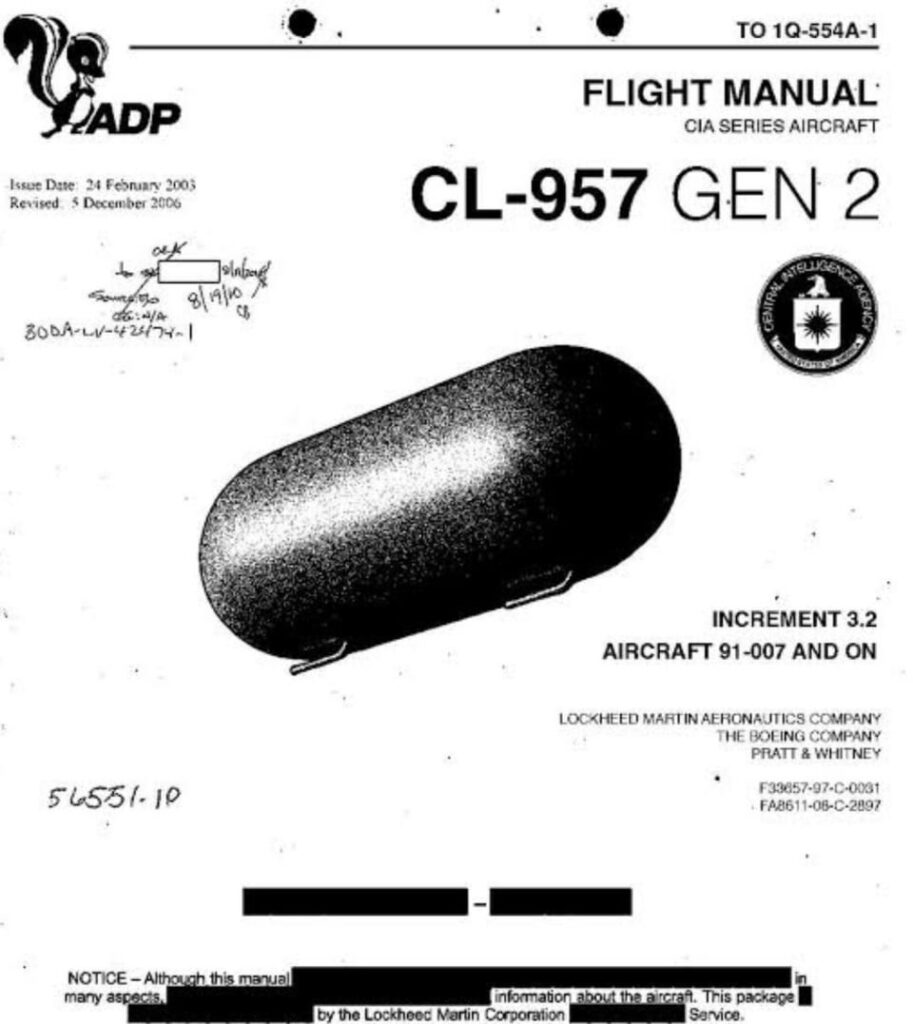
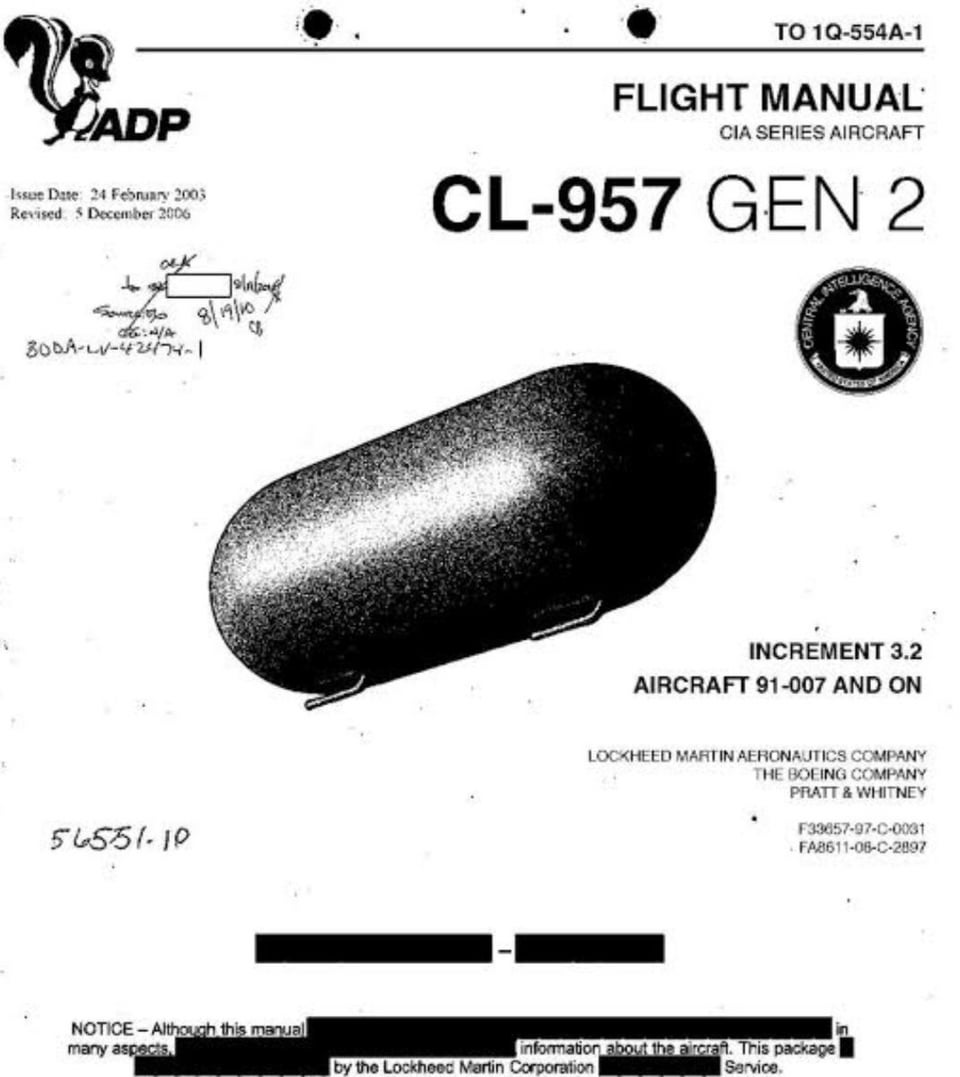
I think this document s mostly likely a fake. As for Pais, I’ve listened to him at length and I don’t find him entirely convincing either. His physics seems somewhat contrived and he never goes into great detail.
AI wrote this post
is this some kind of well known AI made image and text? (bigger version of comment to avoid auto deletion for being too short)
Submission Statement (Heavy Physics + Order-of-Magnitude Estimates):
The 2004 Nimitz Tic Tac UAP encounter presents a quantitative physics problem rather than a qualitative mystery. According to radar tracks and pilot testimony, the object descended from approximately ~80,000 ft (≈24 km) to near sea level in less than 1 second. Even under conservative assumptions, this implies a vertical velocity on the order of 20–25 km/s, corresponding to Mach 60–70 in the upper atmosphere.
Using basic kinematics, such a maneuver would require accelerations on the order of 2,000–5,000 g, depending on trajectory curvature. This exceeds known material limits and would be instantly fatal to biological occupants under conventional inertial physics. No sonic boom, shockwave, or thermal plume was observed, which directly contradicts expectations for hypersonic atmospheric flight, where aerodynamic heating should exceed thousands of Kelvin (comparable to reentry vehicles).
Infrared FLIR data further complicates the picture: the Tic Tac displayed no exhaust signature consistent with chemical propulsion and showed temperature contrast inconsistent with jet engines, rockets, or plasma-based propulsion known to exist publicly. Power estimates for conventional propulsion achieving such acceleration would require gigawatt-scale energy output, far beyond what could be concealed in an object of the observed size (~10–15 m).
The object also demonstrated instantaneous lateral acceleration and right-angle turns without observable deceleration arcs, implying either non-Newtonian motion relative to the surrounding medium or a mechanism that effectively reduces inertial mass. This is notable given U.S. Navy patents (2016–2019) authored by Dr. Salvatore Pais describing theoretical inertial mass reduction via high-energy electromagnetic field configurations—concepts speculative but mathematically rooted in general relativity and quantum vacuum models.
With multisensor confirmation (Aegis SPY-1 radar, airborne radar, FLIR, and visual observation) and official DoD acknowledgment of the encounter’s authenticity, the Tic Tac case cannot be dismissed as a single-sensor artifact. Either multiple independent sensing systems simultaneously failed in a correlated manner, or the object exhibited flight characteristics inconsistent with publicly known aerospace physics, making it a legitimate unresolved physics anomaly.
I’m pretty sure the unredacted paper was posted here earlier and it was pretty much confirmed a hoax