

SWISSto12, a provider of satellite systems and RF technologies developed using additive manufacturing, has announced it will receive €73 million ($84.8 million) from European Space Agency (ESA) member states through the HummingSat ARTES partnership. This investment is set to accelerate the HummingSat program and expand production capabilities for next-generation geostationary satellite systems.
“We are proud to continue our support of SWISSto12, particularly in creating cost-effective solutions for satellite systems that answer to the satcom ecosystem’s ever-increasing demands. ESA is committed to elevating Europe’s future in space through our support of industry, and by accelerating next-generation satellite technologies,” said Laurent Jaffart, ESA Director of Connectivity and Secure Communications.
 ESA Ministerial Council. Photo via ESA.
Accelerating Development and Manufacturing
The funding will enable SWISSto12 to scale the development and industrialization of its HummingSat platform while strengthening its manufacturing infrastructure. These efforts are aimed at meeting growing global demand for agile, cost-efficient, and sovereign satellite communications across both commercial and government markets.
In parallel, the investment will support further development of SWISSto12’s phased-array antenna technologies, which are designed for deployment across LEO, MEO, and GEO satellites, as well as ground terminals. This multi-orbit, multi-platform approach is intended to deliver flexible and resilient connectivity solutions.
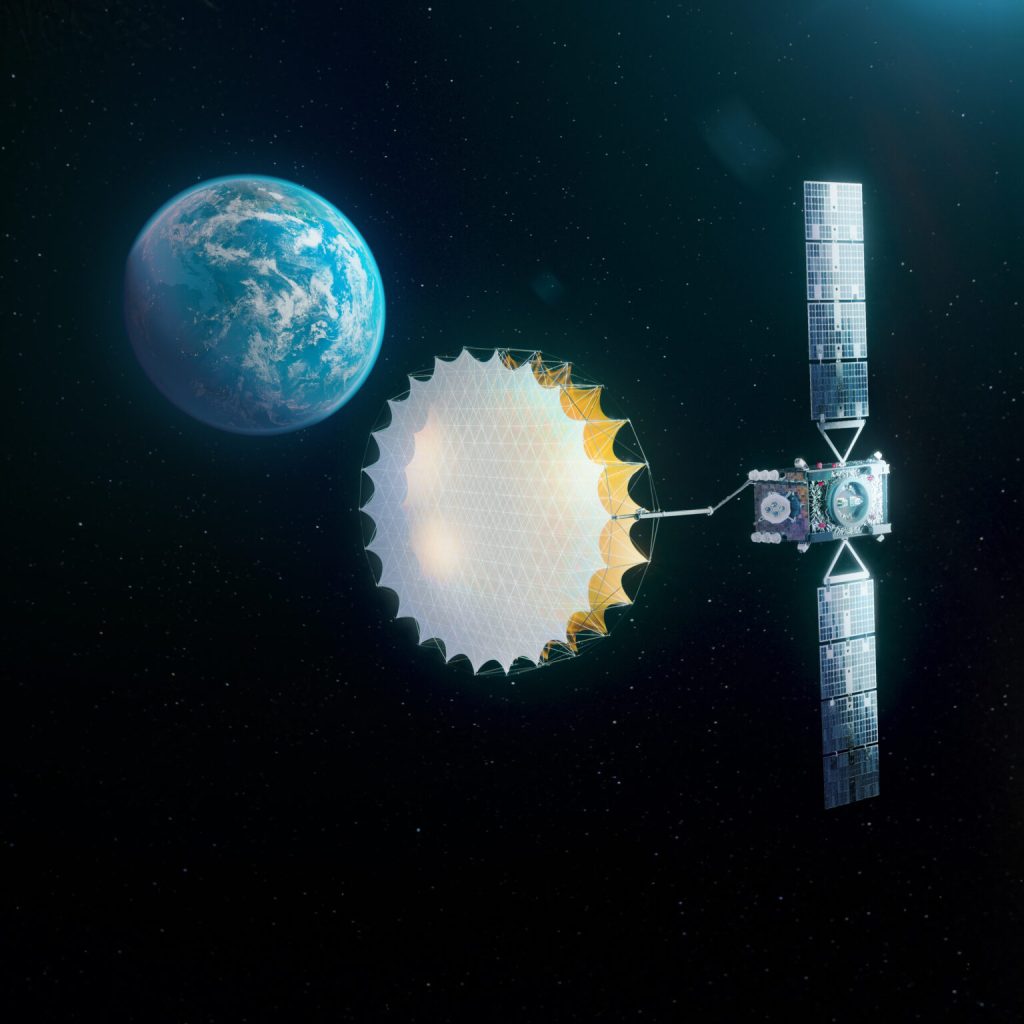 Vertical satellite. Image via SWISSto12.
The funding was approved under ESA’s Advanced Research in Telecommunications Systems (ARTES) HummingSat Partnership Project, part of the agency’s Connectivity and Secure Communications program. It follows commitments made at the 2025 ESA Ministerial Conference by Switzerland, Germany, Austria, Sweden, Norway, and Associate Member Canada.
“The recent subscriptions of Member States and Cooperating States at the ESA Ministerial Council to the HummingSat Project, and the latest round of funding from European private investors sends a strong message to the global market that SWISSto12 is at the heart of satellite communications innovation. With our growing suite of agile, cost-effective and highly performant SatCom solutions, we provide a credible answer to some of the most pressing challenges facing the space economy, including the critical issue of enabling satellite sovereignty – something, until now, out of reach for most of the world’s nations,” said Emile de Rijk, CEO and Founder of SWISSto12.
Why Europe Is Reinforcing Its Sovereign GEO Capabilities
ESA’s €73 million commitment to SWISSto12’s HummingSat program is not a standalone technology bet, but part of a broader strategic effort to safeguard Europe’s sovereign capacity in GEO satellite communications amid intensifying competitive and structural pressure.
While smaller LEO satellites are enabling faster and lower-latency services globally, European GEO systems remain critical for secure, wide-area, and government-controlled communications. Traditional GEO satellites have long been large, costly, and slow to produce, limiting responsiveness and increasing barriers for European operators and public institutions seeking resilient, sovereign communications capabilities.
European GEO systems must now become faster to manufacture, lighter, and more economically viable, while maintaining the security, reliability, and control required for institutional and governmental use. Within this context, the funding positions HummingSat as a potential reference platform for future ESA and national procurement, strengthening Europe’s ability to secure communications infrastructure without reliance on non-European suppliers.
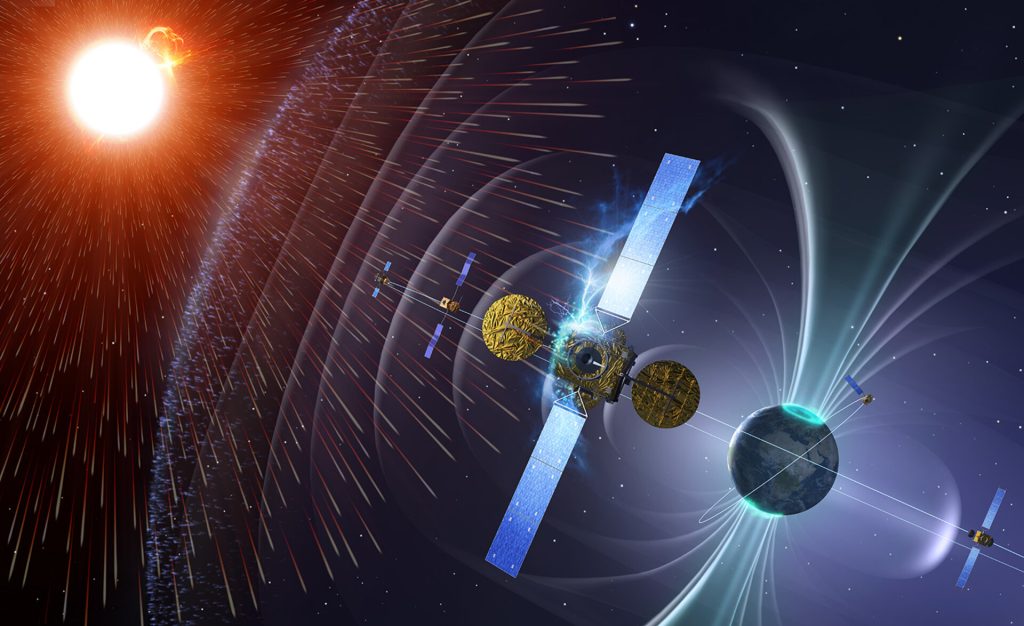 Illustration of space radiation. Image via ESA.
ESA’s Long-Term Bet on Additive Manufacturing for Sovereign Space Systems
Over the past decade, ESA has supported the qualification and deployment of additively manufactured components across scientific, institutional, and communications missions, reflecting a growing recognition that conventional manufacturing approaches constrain Europe’s ability to scale, adapt, and maintain autonomy in key space domains.
Examples include 3D printed structural and optical components developed for flagship ESA missions such as the Athena space telescope, as well as metal additively manufactured RF antennas flown on the PROBA-3 mission. ESA has also backed dedicated Design for Additive Manufacturing (DfAM) initiatives aimed at reducing part count, mass, and production complexity in space-qualified systems. In parallel, ESA-supported programs have advanced high-temperature polymer and metal additive manufacturing platforms for the International Space Station, extending Europe’s manufacturing capabilities from terrestrial production into in-orbit environments.
The 3D Printing Industry Awards are back. Make your nominations now.
Do you operate a 3D printing start-up? Reach readers, potential investors, and customers with the 3D Printing Industry Start-up of Year competition.
To stay up to date with the latest 3D printing news, don’t forget to subscribe to the 3D Printing Industry newsletter or follow us on Linkedin.
Featured image shows ESA Ministerial Council. Photo via ESA.