
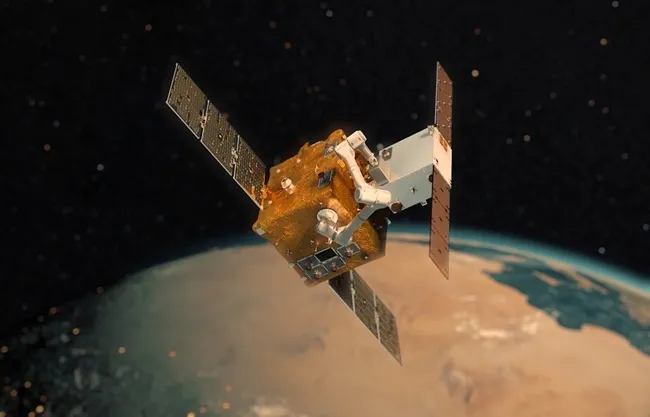
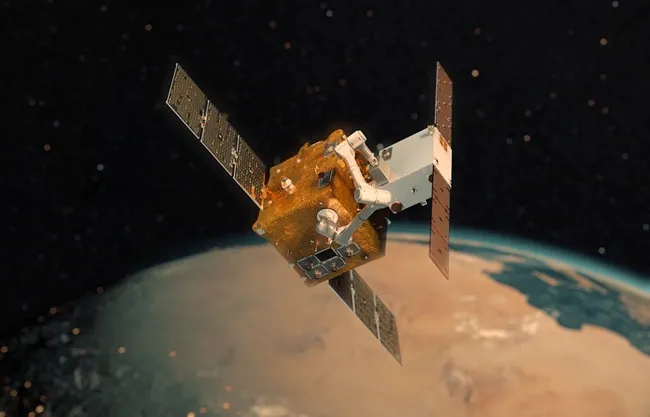
The Phase A contract has a value of €399,000 (£350,000) and will involve an eight-month study. This is to develop the technical groundwork, and commercial case, for in-orbit refurbishment and upgrading services.
Specifically, Astroscale team will explore how robotic and servicing technologies can connect with and refurbish satellites already in orbit. For example, assessing the technical feasibility and commercial viability of upgrading a satellite or extending its life. This may involve replacing degraded or out-of-date subsystems, such as batteries, solar panels and on-board computers.
Such in-orbit updates will both reduce the need for replacement launches and mitigates the risk of creating additional debris, a key priority for space safety.
ISAM precursor
Basically, IRUS is paving the way for more complex In-Orbit Servicing, Assembly and Manufacturing (ISAM) capabilities. The agency highlights that such refurbishment, and upgrading, are essential precursors to assembling longer-term platforms in space.
“By exploring how satellites can be upgraded and enhanced in orbit, we are helping to shape a sustainable future for space – one that delivers long-term value for operators, governments, and society in general,” said Nick Shave, Managing Director of Astroscale UK.
“This study is an important milestone for Astroscale, our industrial partners, and for the UK’s growing strength in in-orbit servicing and dual-use technologies that will support both civil and defence space activities.”
BAE Systems
One of those industrial partners is BAE Systems, taking the role of a future in-orbit servicing client.
“We’re committed to ensuring space is sustainable both now and in the future, and IRUS is an important step on that journey,” said Rachael Hoyle, Director of Space, BAE Systems’ Digital Intelligence business.
“By working with Astroscale, we’re combining world-class in-orbit servicing expertise with BAE Systems’ space systems and defence integration capabilities to develop technologies that have both civil and defence applications. IRUS demonstrates how dual-use innovation can reduce debris, lower launch needs, and build resilient space infrastructure for the UK and its allies.”
“ESA’s mission to demonstrate in-orbit refurbishment is a key step toward a circular economy in space, aiming to enable sustainable orbital operations, to reduce space debris, and to extend satellite lifetimes, aligning with ESA’s Space Safety Programme objectives,” said Ross Findlay, Head of Sustainable Engineering Section at ESA. “It supports ESA’s 2040 strategy and positions European industry as leaders in sustainable orbital operations. This first demonstration lays the groundwork for future ISAM missions and ESA’s goal of becoming space-debris neutral by 2040.”
The UK base for Astroscale is at the Harwell Campus in Oxfordshire. Its Japanese parent company has its headquarters in Tokyo.
See also: Astroscale wins Orpheus space weather satellite contract