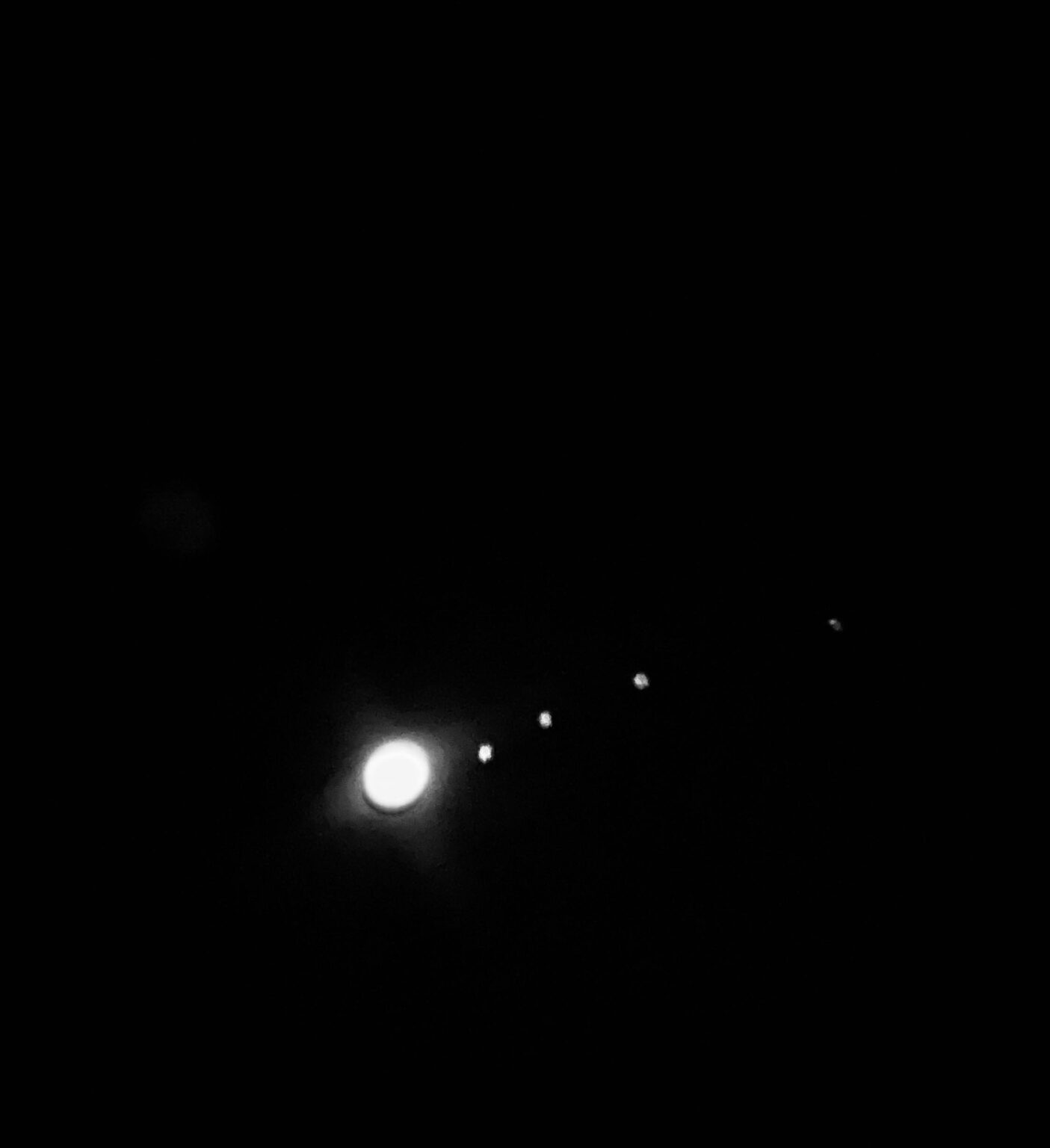
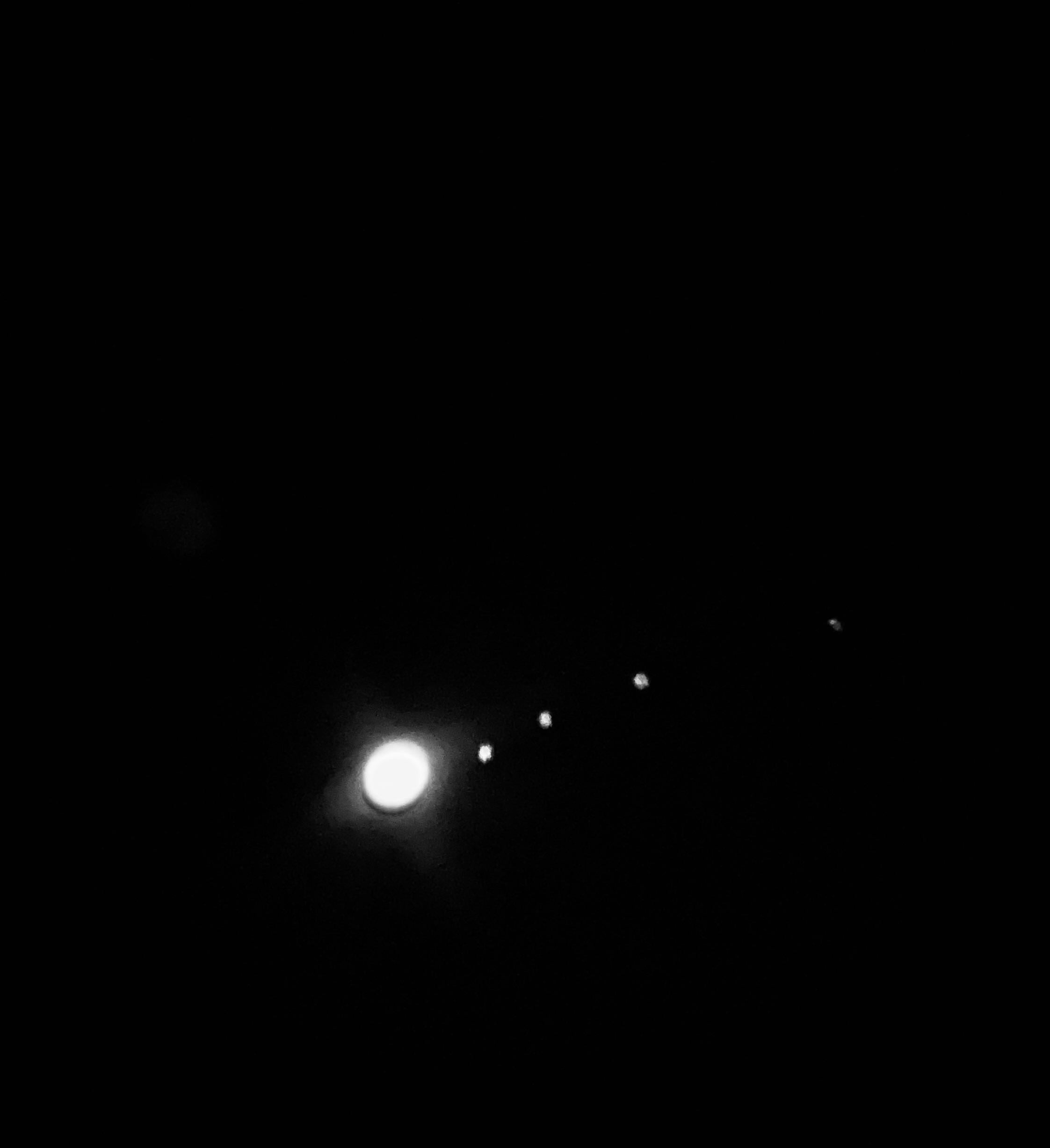
Hi guys, I managed to get a shot of Jupiter and her 4 largest moons. My question is, what can I use to reduce the amount of light coming in so it’s not blown out (it’s like this to the naked eye too)
Im using a skywatcher 650mm telescope with 130mm diameter
Don’t use autoexposure. Use the highest shutter speed that gives reasonable results. High shutter speed also reduces the effects of atmospheric turbulence. Once you’ve got the shutter speed right, take a lot of images and use the best image of the planet and each moon, or average the best images of each together after correcting for position shifts.
It also appears that processing within the camera (conversion to jpeg, color balancing, de-shake) is causing artifacts. If your camera has a raw mode, use it. You may also be somewhat out of focus. Are you using an SLR with an adapter, or do you have a smart-phone mount?

3 Comments
try lower shutter and lower ISO
a filter?
Don’t use autoexposure. Use the highest shutter speed that gives reasonable results. High shutter speed also reduces the effects of atmospheric turbulence. Once you’ve got the shutter speed right, take a lot of images and use the best image of the planet and each moon, or average the best images of each together after correcting for position shifts.
It also appears that processing within the camera (conversion to jpeg, color balancing, de-shake) is causing artifacts. If your camera has a raw mode, use it. You may also be somewhat out of focus. Are you using an SLR with an adapter, or do you have a smart-phone mount?