It would be much, much larger I think. And the atmosphere wouldn’t exist.
PeIeus on
Far too big
Laugh_Track_Zak on
It would be dimmer (maybe?) and smaller.
IscahRambles on
If it’s bigger “due to proximity” then it hasn’t just been replaced; the solar system has been rearranged.
ASuarezMascareno on
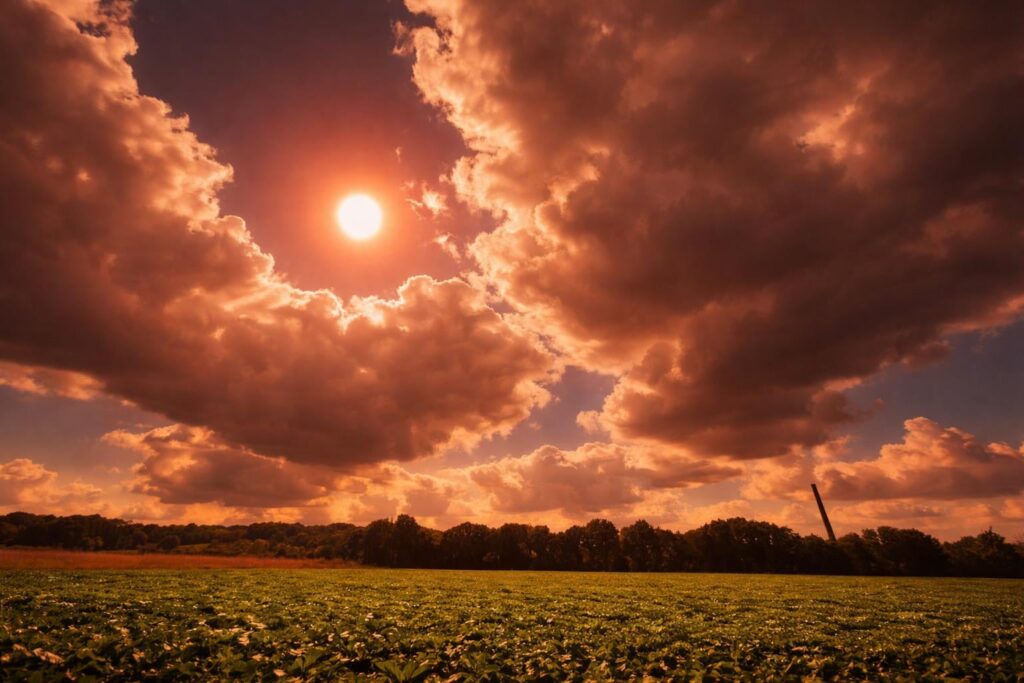
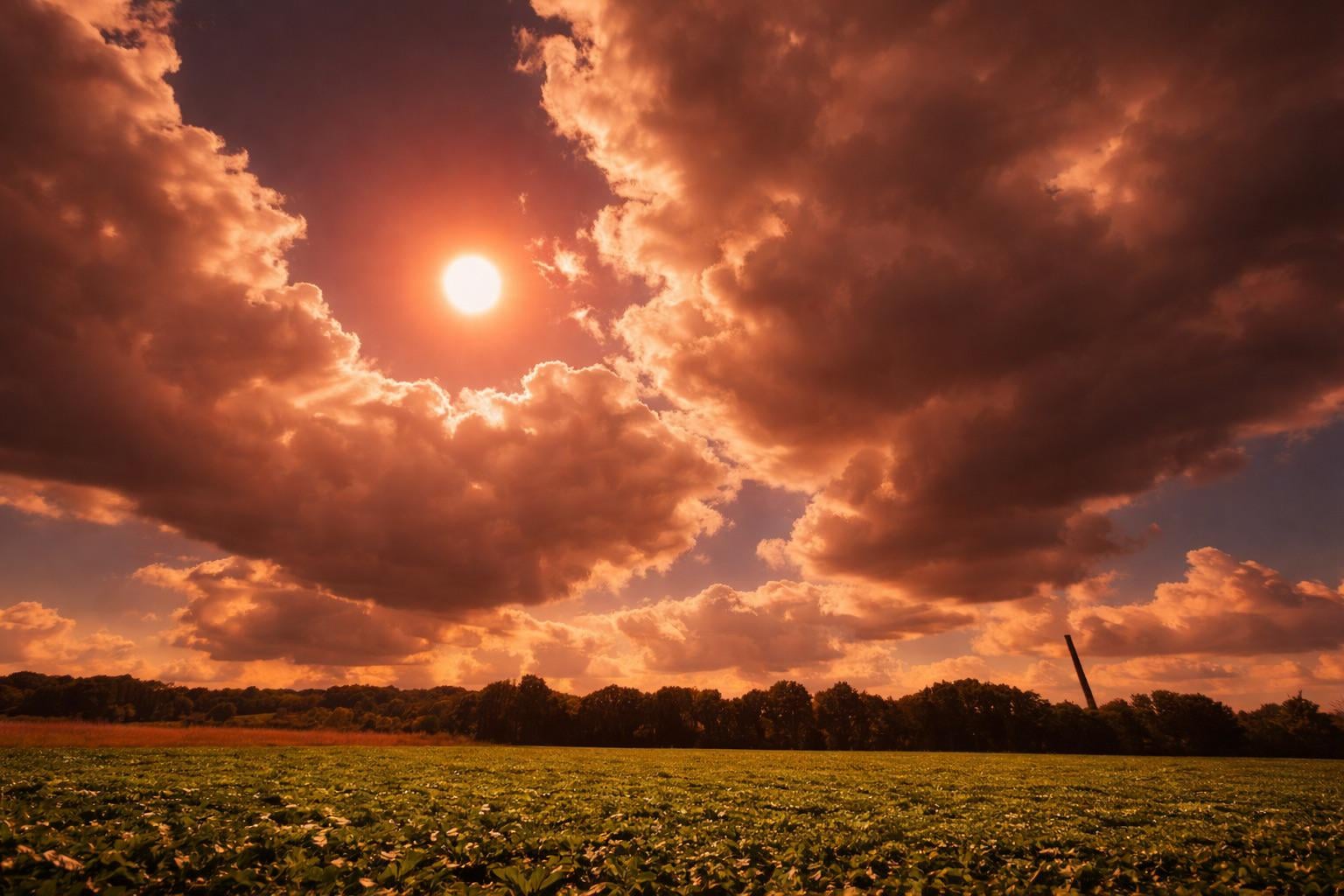
Depends on the type of red-dwarf. If it was an M6 (like Proxima), and we were on an orbit similar to Proxima b, the star would look ~3 times larger than what the Sun looks like on Earth. In addition, I think there wouldn’t be any or almost any blue in the sky. The blue comes from the Rayleigh scattering of the Sun’s blue light. If there’s no blue in the starlight, there won’t be blue in the sky. The sky would most likely be red/brown.
ramriot on
It all depends upon the mass of the red dwarf star & if we are placing our planet within its theoretical habitable zone. An example may well be [TOI-715 ](https://en.wikipedia.org/wiki/TOI-715)which has a confirmed earth-like planet in orbit of its habitable zone (where the stars light could conceivably result in liquid water on the surface of a planet with an earth like surface pressure).
The star is 24% of the suns radius, 23% of its mass and a surface temperature of 3,075 K (2,802 °C). Its planet at 1.55 times the radius of earth (I assume calculated from assuming a similar density). The planet has an orbital period of 19 days and is orbiting TOI-715 at a distance of 0.083 astronomical units (12,400,000 km).
This would make the star appear as ~1.45 degrees in the sky, 2.89 times larger than our sun appears in the sky.
Present_Low8148 on
At our current distance from the Sun, imagine a star that’s sortof halfway between what the Sun looks like and what Jupiter looks like.
Midday would be like late-dusk in terms of brightness on Earth, and the Sun would be much smaller, redder, and dimmer in the sky. Maybe a bit brighter than a full moon, but smaller in the sky.
moaihead on
no
-Insert-CoolName on
It’s a cool render, but if we’re talking about actual photography, this image is way too clean.
To get the star that big in the sky, you are orbiting deep in the danger zone. M-dwarfs emit violent X-ray and UV flares. A standard CCD or CMOS sensor wouldn’t just see “red light” here; it would be getting hammered by high-energy photons.
You’d see a ton of noise (‘Salt and pepper’ or random white pixels) where X-rays strike the silicon and dump a massive charge instantly. It would look less like a pristine sunset and more like that grainy, flashing footage from inside a nuclear reactor. Basically, it needs a lot more radiation snow and blooming to be realistic.
blitzkrieg_bop on
The grass and trees look alive. They would be alive only if the replacement sun radiates at the same wavelengths, frequencies and proportions our sun radiates. I assume…

10 Comments
It would be much, much larger I think. And the atmosphere wouldn’t exist.
Far too big
It would be dimmer (maybe?) and smaller.
If it’s bigger “due to proximity” then it hasn’t just been replaced; the solar system has been rearranged.
Depends on the type of red-dwarf. If it was an M6 (like Proxima), and we were on an orbit similar to Proxima b, the star would look ~3 times larger than what the Sun looks like on Earth. In addition, I think there wouldn’t be any or almost any blue in the sky. The blue comes from the Rayleigh scattering of the Sun’s blue light. If there’s no blue in the starlight, there won’t be blue in the sky. The sky would most likely be red/brown.
It all depends upon the mass of the red dwarf star & if we are placing our planet within its theoretical habitable zone. An example may well be [TOI-715 ](https://en.wikipedia.org/wiki/TOI-715)which has a confirmed earth-like planet in orbit of its habitable zone (where the stars light could conceivably result in liquid water on the surface of a planet with an earth like surface pressure).
The star is 24% of the suns radius, 23% of its mass and a surface temperature of 3,075 K (2,802 °C). Its planet at 1.55 times the radius of earth (I assume calculated from assuming a similar density). The planet has an orbital period of 19 days and is orbiting TOI-715 at a distance of 0.083 astronomical units (12,400,000 km).
This would make the star appear as ~1.45 degrees in the sky, 2.89 times larger than our sun appears in the sky.
At our current distance from the Sun, imagine a star that’s sortof halfway between what the Sun looks like and what Jupiter looks like.
Midday would be like late-dusk in terms of brightness on Earth, and the Sun would be much smaller, redder, and dimmer in the sky. Maybe a bit brighter than a full moon, but smaller in the sky.
no
It’s a cool render, but if we’re talking about actual photography, this image is way too clean.
To get the star that big in the sky, you are orbiting deep in the danger zone. M-dwarfs emit violent X-ray and UV flares. A standard CCD or CMOS sensor wouldn’t just see “red light” here; it would be getting hammered by high-energy photons.
You’d see a ton of noise (‘Salt and pepper’ or random white pixels) where X-rays strike the silicon and dump a massive charge instantly. It would look less like a pristine sunset and more like that grainy, flashing footage from inside a nuclear reactor. Basically, it needs a lot more radiation snow and blooming to be realistic.
The grass and trees look alive. They would be alive only if the replacement sun radiates at the same wavelengths, frequencies and proportions our sun radiates. I assume…