
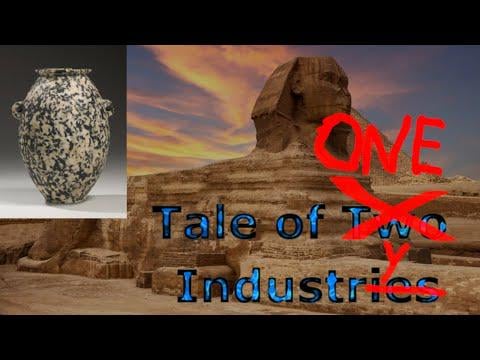
Just uploaded a 15-min video critiquing Ben from UnchartedX's "Tale of 2 Industries" and proposing what I think is a much simpler explanation for the precision hard-stone vases of predynastic / early dynastic Egypt.
Instead of two completely separate high-tech industries (one perfect, one crude), I argue it's mostly one change: switching from quartz sand (Mohs 7) to imported corundum/emery (Mohs 9, possibly sapphire-bearing from Punt or India) + a basic human-powered barrel tumbler kept as a guild secret.
In the video:
Quick recap of the mystery and metrology gap
Critique of Ben's binary theory
The brutal reality of Old Kingdom grain grinding (women at saddle querns, severe skeletal damage)
I literally build and dry-test a minimal analog tumbler using wood, rope, jar, and brass rods (proxy for copper/bronze)
No aliens, no lost CNC – just clever abrasive + mechanics + time.
What do you think? Does a rare abrasive + simple tumbler explain most of the precision difference better than two separate technologies? Or am I missing something?
by maxi_res
1 Comment
Please explain how they put the boxes in the serapeum in tumblers. Please explain the ratio algorithm behind the proportions.
Sure, tumblers can polish stuff but they cannot make precision parts because they rely on random action to polish and it requires a machine to tumble enormous objects – and extremely fragile objects. We do ceramic polishing today but we make the parts to the precision we need then use specific grit polishes to smooth surfaces out. The polishing can’t MAKE the part, we do that on CNC machine tools.
I like your idea but it cannot explain how the vases were manufactured.