
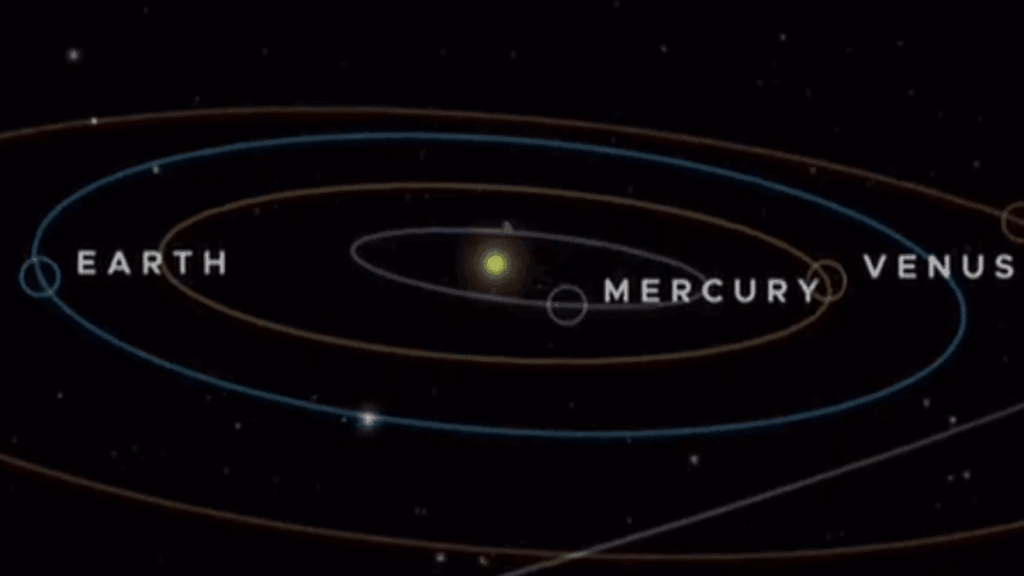
SEATTLE — The comet 3I/ATLAS makes its closest approach to Earth on Friday, December 19th, according to NASA.
Research Assistant Professor at the University of Washington’s Department of Astronomy James Davenport says the name “3I” means the third interstellar. This is the third object like this that’s been seen, which is a comet or a rock, that’s not from our solar system.
Davenport is also the Director of DiRAC (Institute for Data Intensive Research in Astrophysics and Cosmology).
The University of Washington is studying the fascinating comet.
“It is a little weird compared to the comets and the asteroids in our own solar system. It’s very red. It has a really fluffy tail, most comets have tails that’s how we know they’re a comet, but this tail started ejecting from the comet way far out much farther than most comets in our solar system erupt. This kind of makes sense this object has been floating through interstellar space from whatever parent star it came from for millions, if not billions of years,” said Davenport.
Davenport says the UW is one of the founding members of the Vira C. Reuben Observatory in Chile, which is doing a sky survey of the southern sky every three nights and the field of view they’re doing testing on is exactly where 3I/ATLAS passed through.
“This is a survey that was really dreamt up here. This is a survey that was founded by scientists here and in Arizona and other places. A lot of the project scientists and principal scientists are here, a lot of the software that’s been written to drive the telescope and to analyze the data in real time is all being written here,” said Davenport.
NASA says you can catch a glimpse of 3I/ATLAS on Friday, December 19th, through a pair of binoculars or a telescope. It will be around 170 million miles from Earth, which is about twice the distance between Earth and the sun. Scientists believe it will then head back off into interstellar space.