

Link to the science paper
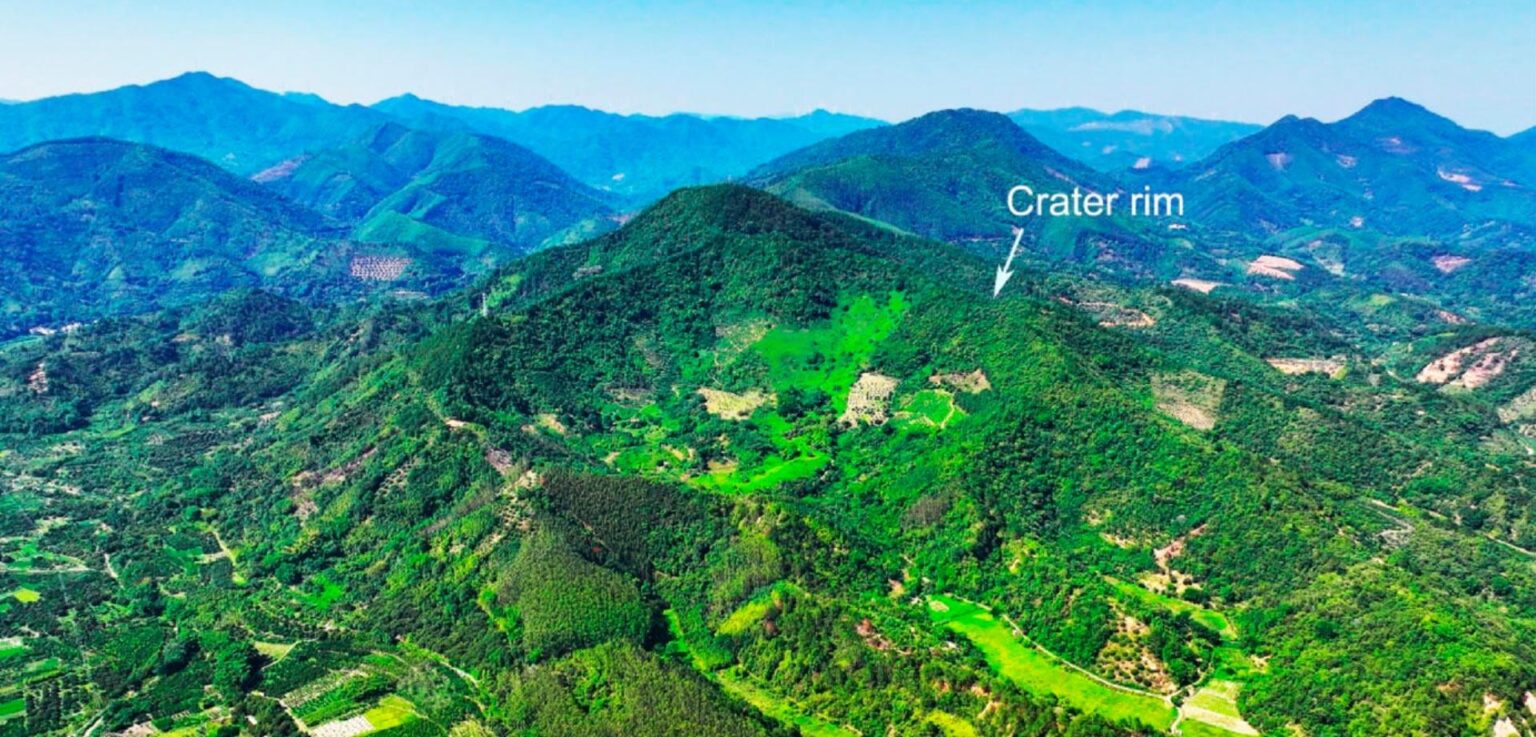
Researchers in China have discovered a remarkably well-preserved meteorite impact crater that offers new insight into how space objects collide with Earth. The crater, called the Jinlin crater, is located in Guangdong Province and was reported in the journal Matter and Radiation at Extremes.
It is about 900 meters wide, making it the largest known impact crater formed during the Holocene epoch, which began around 11,700 years ago after the last ice age. This makes it much larger than the previously known Holocene record-holder in Russia. Scientists estimate its age based on soil erosion around the site.
The crater was formed by a meteorite, not a comet, since a comet impact would have created a much larger structure. While the exact type of meteorite is still unknown, the evidence clearly shows an impact from space.
What makes this discovery especially important is how well the crater has survived despite heavy rainfall, monsoons, and humid conditions that usually erase such features. The crater is protected by a thick granite layer containing quartz grains with special microscopic damage patterns that only form under extreme shock from impacts.
Credit: Ming Chen
by Busy_Yesterday9455
4 Comments
So maybe the meteor still exists in the middle?
What’s the logic behind it being a meteor “because a comet impact would be larger”? Isn’t that like saying something is string, because rope would be longer?
This makes me wonder how much undiscovered “things” exist in areas that are closed off from scientists, geologist, archeologists, etc. If the best teams of each field had access to every country, what discoveries could be made, basically.
How did it go undiscovered? There’s literally people living there, surely it was thought of as either a dead volcano or crater