
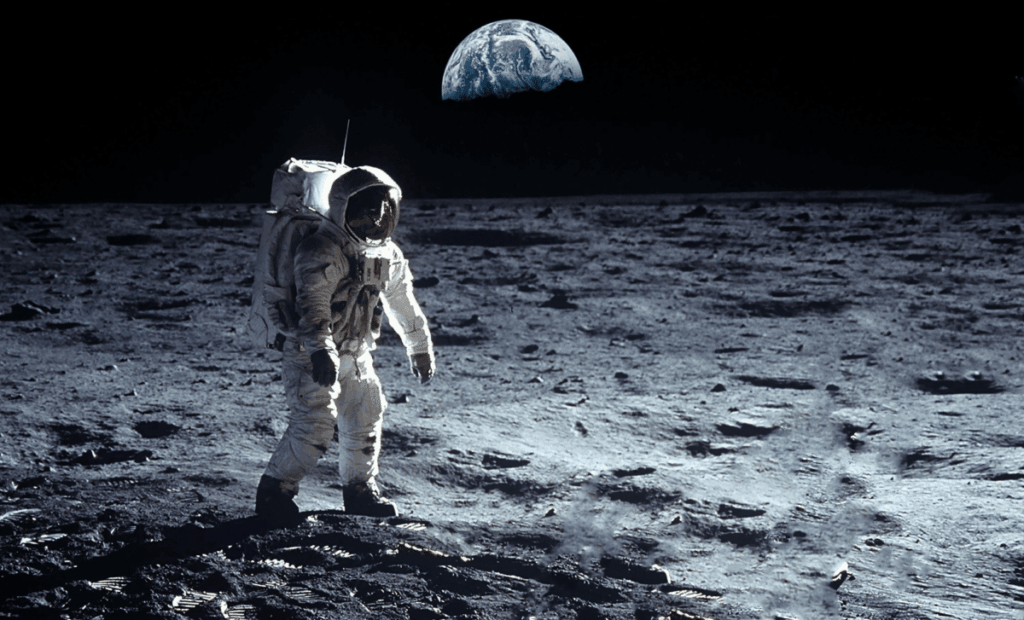
In a groundbreaking announcement by the European Space Agency (ESA), Germany will be sending the first European astronaut to the Moon as part of NASA’s Artemis program. This achievement marks a historic moment for Europe in space exploration, as it aligns with the growing international collaboration between space agencies.
A Historic Milestone for European Space Exploration
For the first time, a European astronaut will travel to the Moon, with Germany playing a pivotal role in this extraordinary leap in human space exploration. The upcoming Artemis 4 mission will see one of two experienced German astronauts, Matthias Maurer or Alexander Gerst, selected to take part in this trailblazing mission. These two astronauts have already demonstrated their expertise aboard the International Space Station (ISS), each completing significant missions that have contributed to ESA’s space exploration agenda. Maurer, who spent 176 days aboard the ISS in 2021, and Gerst, who has accumulated 362 days in space, are now among the leading candidates for the mission, which aims to send humans back to lunar orbit.
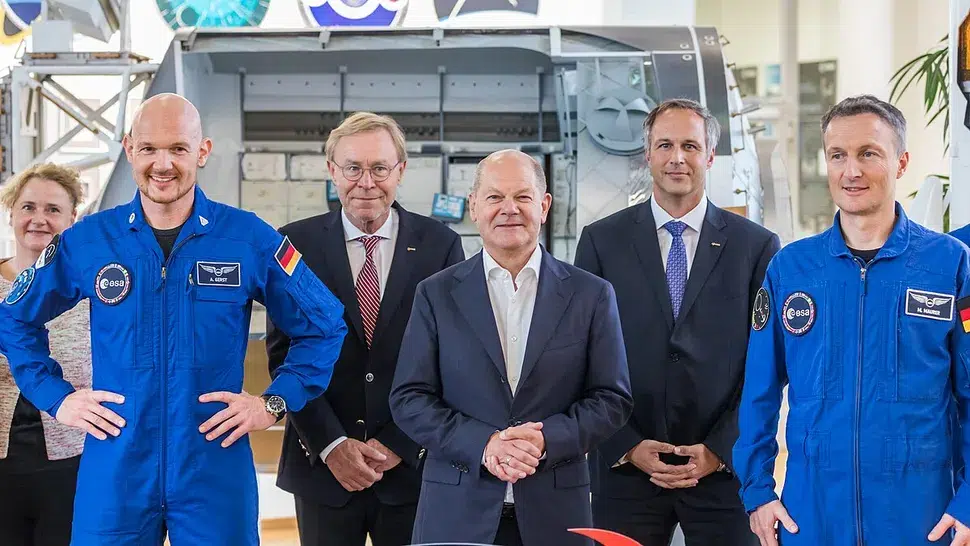 (Left to right): Astronaut Alexander Gerst, Chancellor Olaf Scholz, astronaut Matthias Maurer at the EAC (European Astronaut Centre) of the ESA. (Image credit: Raimond Spekking via Wikimedia Commons)
This momentous achievement underscores Europe’s rising role in the global space race, supported by the European Space Agency’s commitment to advancing human spaceflight capabilities. As noted by Dorothee Bär, Germany’s Federal Minister for Research, Technology, and Space, this mission will allow a European astronaut to travel farther than any European has before.
“We can now, for the very first time, send a European astronaut flying 360,000 kilometers away,” Bär said during a press conference. “This means that a European astronaut will be traveling for approximately three days until for the first time he sees the Earth as a whole. No European has ever seen that before.”
ESA’s Contributions and Future Plans
The European Space Agency (ESA) has made significant contributions to the Artemis program, providing essential hardware and support. The European Service Module, developed by Airbus at its Bremen facility, plays a crucial role in the Orion spacecraft. As reported by Space.com, this module provides power, propulsion, and environmental control during deep space missions, making it a cornerstone of NASA’s lunar ambitions. ESA’s involvement goes beyond just providing hardware—its astronauts are now set to join the ranks of those heading to the Moon.
Looking ahead, ESA is also working on a lunar gateway, a space station that will orbit the Moon and support missions on the lunar surface. This project is part of a broader collaboration between NASA and ESA, aiming to create sustainable human exploration beyond low Earth orbit. As Daniel Neuenschwander, ESA’s Director for Human and Robotic Exploration, mentioned,
“Beyond European Service Module number six, we want to keep the options open.” He further added, “It’s possible that the U.S. partner will come to us and look for the continuation of the Orion — European Service Module couple.”