
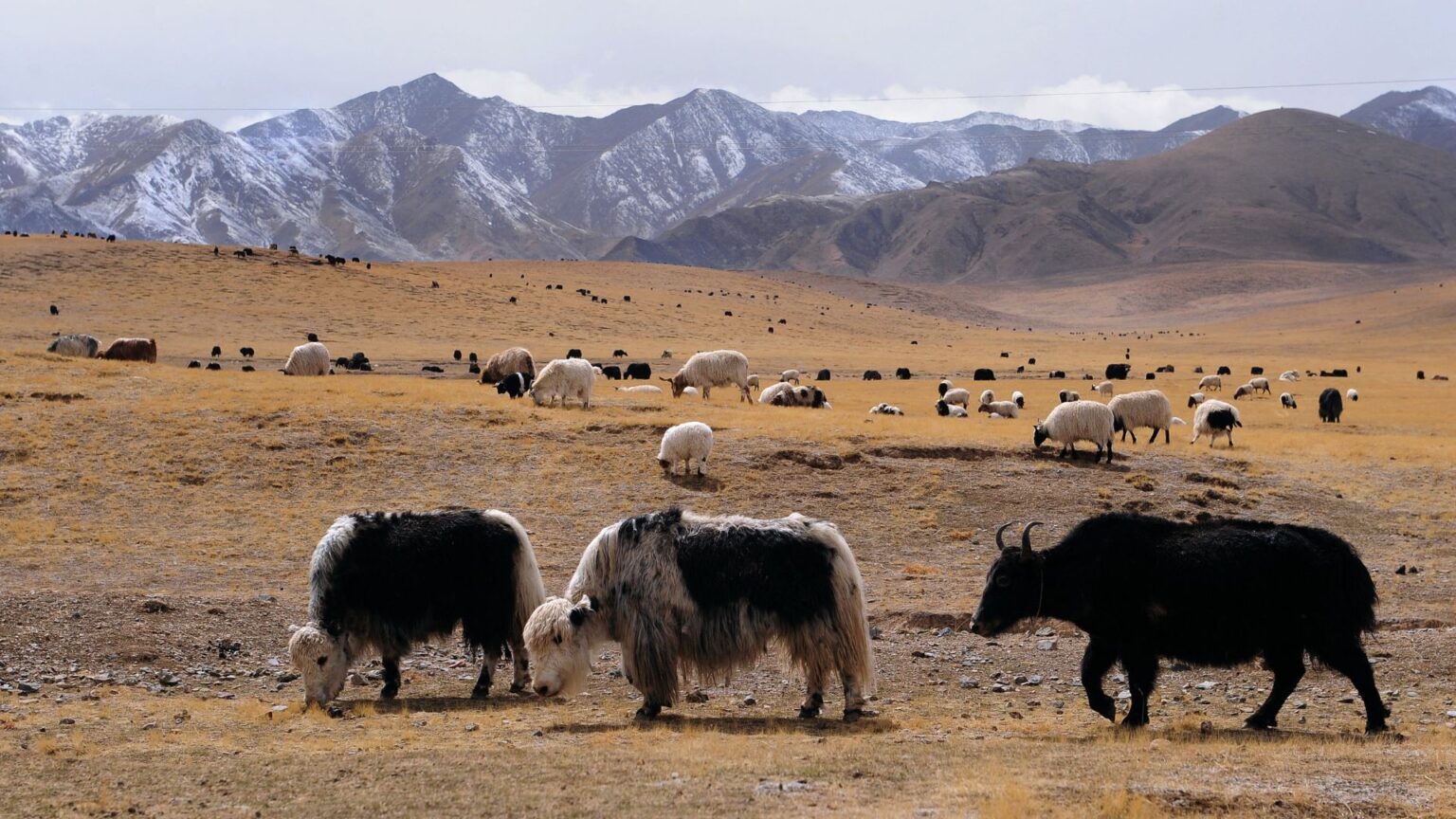
Chinese researchers have mapped an enormous collection of unknown microbes hidden inside the animals that roam the Qinghai-Tibet Plateau, revealing biological functions that could power the next generation of biotechnology.
The findings highlight how extreme environments can produce microbes with unique engineering value.
Microbes from extreme terrains show major industrial potential
As reported by the South China Morning Post (SCMP), the team found that the faeces of yaks, Tibetan sheep, antelope, cattle, horses, and kiangs host thousands of microbial species that have never been documented. Many of these microbes appear to produce enzymes that can break down cellulose, a material used in paper, cardboard and textiles.
Researchers revealed these enzymes could strengthen industrial processes that depend on faster and cleaner cellulose degradation. The microbes may also help identify biological pathways that limit methane emissions from livestock.
“Our results showed that animals living in harsh environments are promising sources for the discovery of novel biological functions of gut-residing microbes,” the scientists wrote.
The genomic data could also support the search for new gene-editing tools, antimicrobial peptides, and biotechnology products that rely on stable, highly precise enzymes.
Five-year mission uncovers a large catalogue of new species
The work was part of the Second Tibetan Plateau Scientific Expedition and Research Program, SCMP reported. Scientists from Yunnan University and BGI Research spent five years collecting more than 5,000 fresh faecal samples from native herbivores.
For this first phase, they processed 1,412 samples and found that 88 percent of all microbial species were unknown to science.
“Our study presents the first blueprint of the gut microbiota of native mammals at the Qinghai Tibetan Plateau, termed the Third Pole,” the team noted.
They wrote that the discoveries confirm the extent of microbial diversity hidden in the world’s toughest ecosystems and stressed the need for global efforts to characterize microbial organisms and understand their roles.
Lead author Zhang Zhigang said the findings carry strategic importance because new functional elements could become patent-protected. “Nations that spearhead the discovery of these resources stand to gain control, particularly over any patentable functional elements,” he said.
Zhang said the team plans to investigate whether the newly identified microbes harbor novel enzymes that could enhance gene-editing platforms. “Its stability, biological activity and targeting specificity are very important. We can look into our database to see if there is any brand new [enzyme] that can be used for gene editing,” he said.
The researchers also hope to use the database to screen for small-molecule drug candidates. These are chemical compounds that can easily enter cells and influence specific biological pathways, making them valuable for therapeutic development.
Co-author Li Xiaoping from BGI Research said the team adapted methods normally used to study human gut microbes. “Large herbivores on the plateau consume a lot of plants. Their intestines have a lot of enzymes that are capable of degrading cellulose,” she said.
“We are conducting experiments to validate their ability to degrade cellulose and [determine] which enzymes are the main drivers,” she added.
Early tests show promise for lowering methane emissions
Previous studies suggest that yaks naturally emit less methane than cattle because their gut microbes use different metabolic routes. The team has now identified bacteria that may influence this effect.
“We identified two strains of bacteria that have not been previously described and conducted in vitro fermentation experiments using rumen fluid from cattle. We added these strains to see the overall gas and methane emissions,” Li said.
“The initial results from our experiments showed that adding these two strains led to a decrease in methane emissions compared to the controls.”
The researchers are now planning in vivo tests on animals. “We hope to achieve positive results because these bacteria have the potential to help reduce greenhouse gas emissions,” she added.
The study was published this month in the journal Microbiome.