
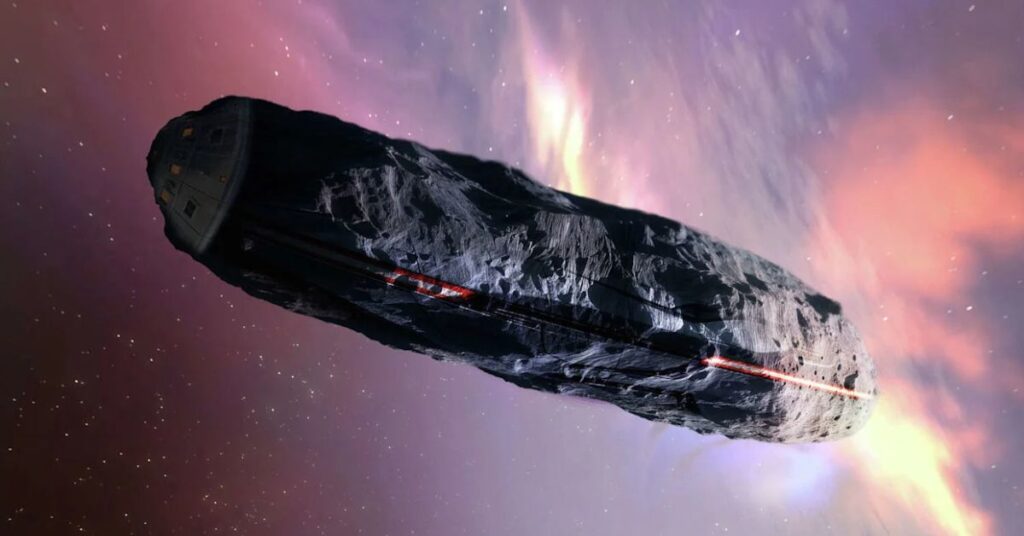
NASA has officially confirmed that the third interstellar object, 3I/ATLAS, also designated as C/2025 N1 (ATLAS), is a natural comet and not an artificial object or spacecraft.
The rare celestial visitor, first discovered in July 2025 by the ATLAS (Asteroid Terrestrial-impact Last Alert System) survey telescope in Chile, has sparked global interest and speculation, especially after images and observational data were released.
The interstellar comet 3I/ATLAS became a subject of debate as its path and unusual activity fueled rumours that it could be alien technology.
However, NASA officials have now put the speculation to rest, stating that all evidence points to 3I/ATLAS being a natural comet originating outside our solar system, with typical characteristics and behaviour of a comet.
According to NASA’s latest briefing, comprehensive observations from spacecraft and ground-based telescopes, including the Hubble and James Webb Space Telescopes, have confirmed the object’s cometary nature.
The comet’s closest pass by the Sun took place on October 29, 2025, when it was around 1.36 astronomical units away and moved between the orbits of Earth and Mars. Its size is estimated at less than 5.6 kilometres in diameter, and spectral analyses have revealed gas emissions consistent with natural cometary activity.
3I/ATLAS is believed to have originated from the thick or thin disk of the Milky Way, possibly making it billions of years old. It will be monitored by NASA and other agencies as it exits the solar system, providing unprecedented opportunities for scientific study. The object poses no threat to Earth, with its closest approach to our planet being about 1.8 astronomical units away.
The confirmation aligns with ongoing scientific interest in interstellar objects, offering vital clues about the early universe and the processes that shape other star systems.