
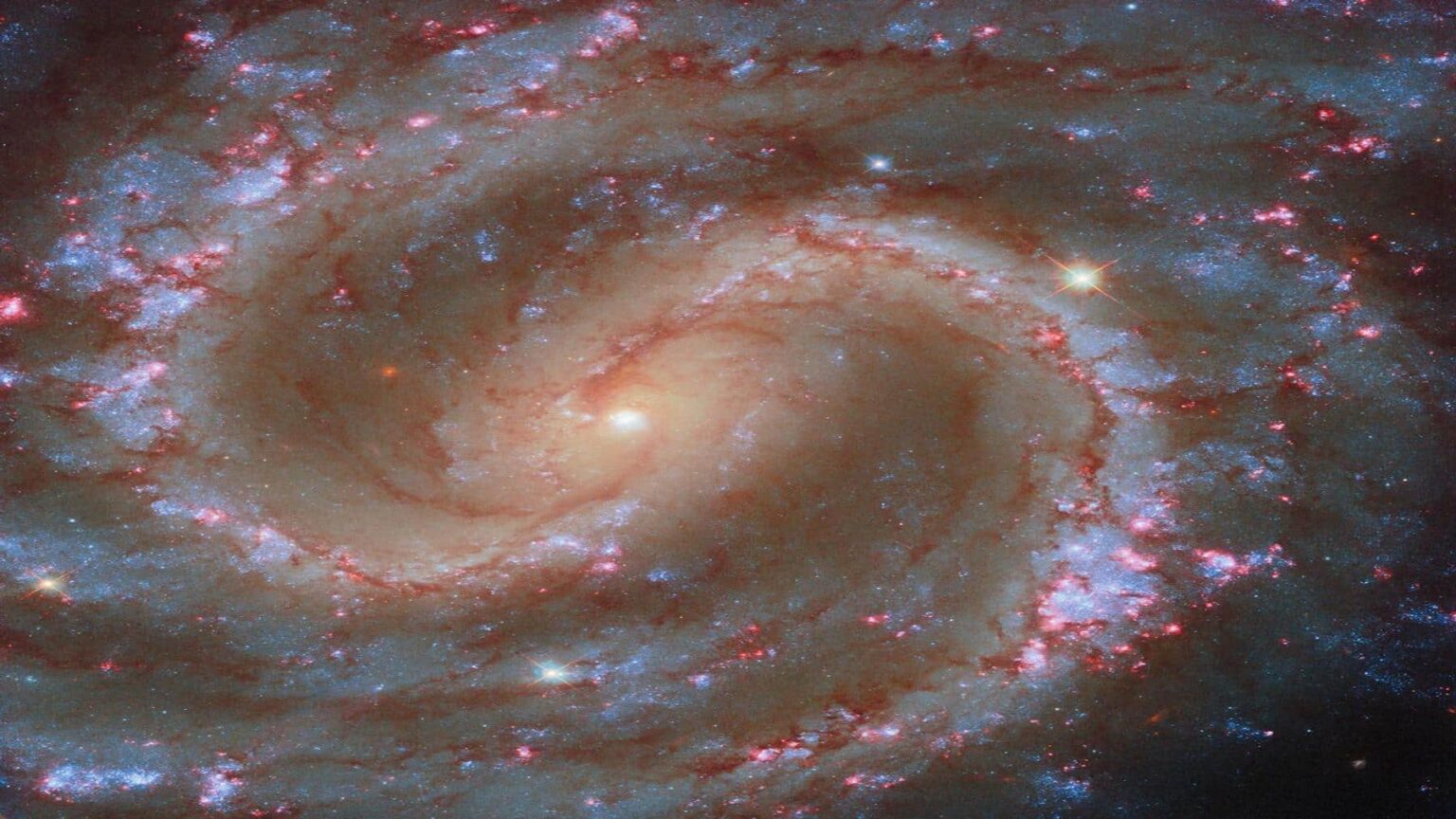
Within the fabric of our universe, astronomers have discovered many innumerable galaxies. And in their numbers, these galaxies hold rare elegances that are incomprehensible when viewed via a telescope. In today’s article, we discuss one such galaxy with cosmic rainbows that has stunned and taken the science community by surprise.
Scientists uncover beauty beneath Lost Galaxy
For years, NASA has ventured into the farthest corners of our universe. Most of the time, what they find can be hard to describe. For example, some galaxies can seem unusually devoid of light, with stars appearing strange and distant. These galaxies are often ignored, not because they lack excitement, but because they are difficult to study.
It is important to note that this difficulty stemmed from the limitations of the technology at the time. But as observatories began to improve with more advanced technology, scientists began revisiting these galactic oddities. However, the results from their revisitation have been modest, revealing patches of this lost world bit by bit.
The more scientists looked, the clearer they saw that these particular patches of galaxies were oddities. They had just been short-changed in brightness and had their wonders hidden behind simple complexities. With each new observation, scientists are now able to uncover these worlds, especially this one in particular.
Cosmic rainbow found in the Lost Galaxy
The lost world we speak of is NGC 4535, otherwise known as LEDA 41812 and UGC 7727. It was first discovered in December 1785 by German-British astronomer William Herschel. In his discovery, he found the galaxy to be faint but heavy with potential. But the name The Lost World ” wasn’t coined until the 1950s by astronomer Leland S. Copeland.
The galaxy earned this name because of its ghostly appearance. Surprisingly, in 2021, using the NASA/ESA Hubble Space Telescope, scientists were able to uncover the world behind this galaxy, as this powerful cosmic monster was discovered inside a mysterious bubble. It was located 52.6 million light-years away in the Virgo constellation and was surrounded by a cluster of young, hot, and massive blue stars.
When they analyzed the imaging from the Hubble telescope, they saw NGC 4535 lit up with glowing pink clouds around its massive blue stars. This scene resembles a cluster of cosmic rainbows as the stars emitted high radiation in a cluster of 50,000 glowing clouds. This observation was made during NASA’s PHANGS observing program.
NASA says the cosmic rainbows wonder is not exaggerated
When this discovery was made, many believed the Hubble imagery may have been altered. Reports from officials at NASA have otherwise argued this to be untrue. The colors observed were only natural signatures of gases as new stars were born. The red and pink glow surrounding the blue stars was found to be hydrogen gases.
Importance of this discovery for future galactic revisits
In the past decade, many galaxies have suffered the same fate due to limitations in sensors and old telescopes. With tools like the Hubble Telescope and James Webb Space Telescope, these galaxies can be rediscovered in their hidden construct behind the universe.
For now, this discovery serves as an inspiration for NASA to revisit other abandoned or lost galaxies that have been poorly mapped galaxies. With better techniques and expertise, astronomers are hopeful they could find structures that offer answers about the universe. Most especially, how stars are born and distributed across several galaxies.
In that vein, future cosmic explorations would use advanced spectrographs to analyze the universe bit by bit. This would enable them to identify individual compositions, temperatures, and age timelines of different regions, just like this mysterious cosmic event expected across 50 states. This could collectively help scientists reconstruct a map of what shapes our universe.