
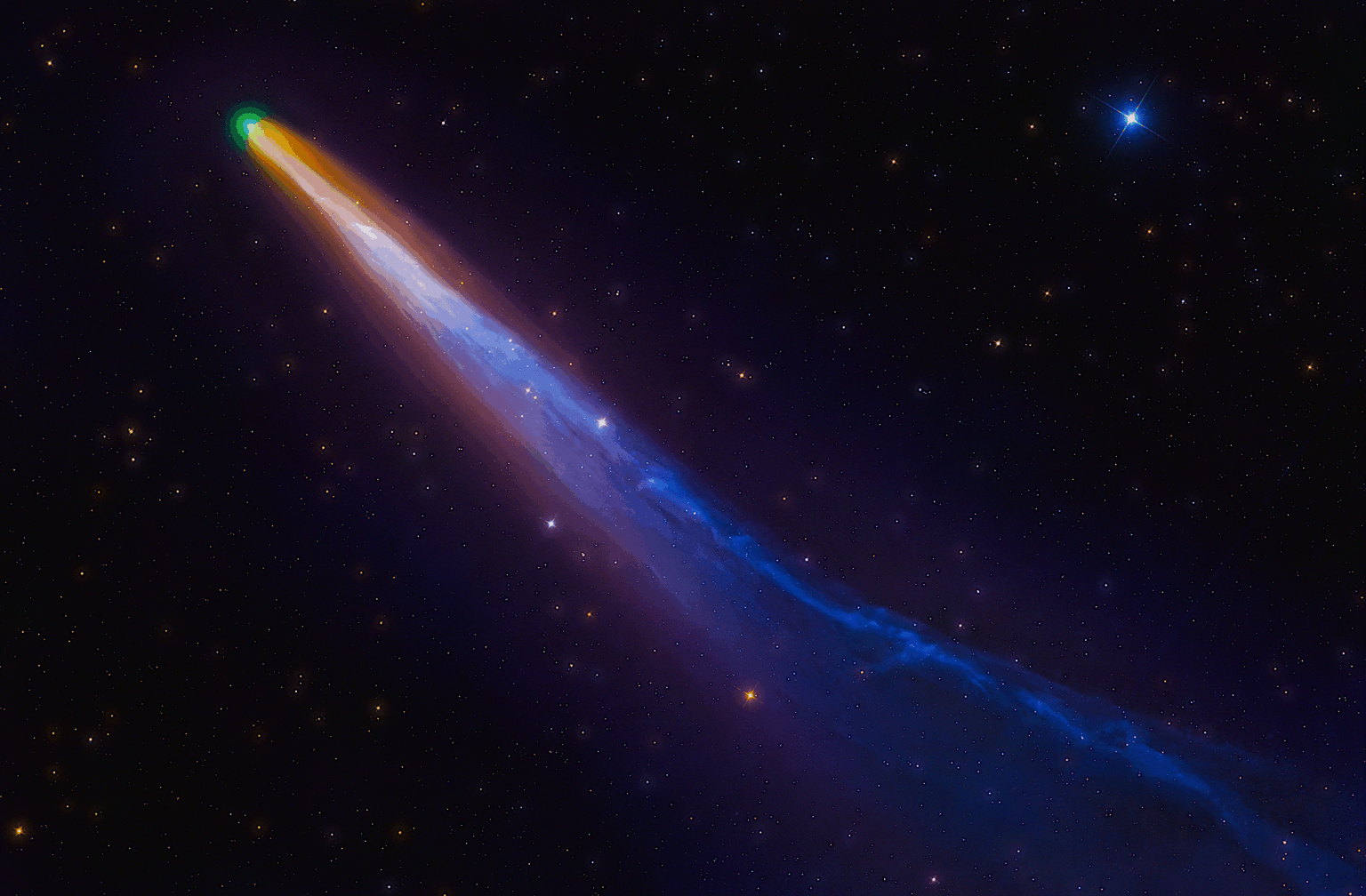
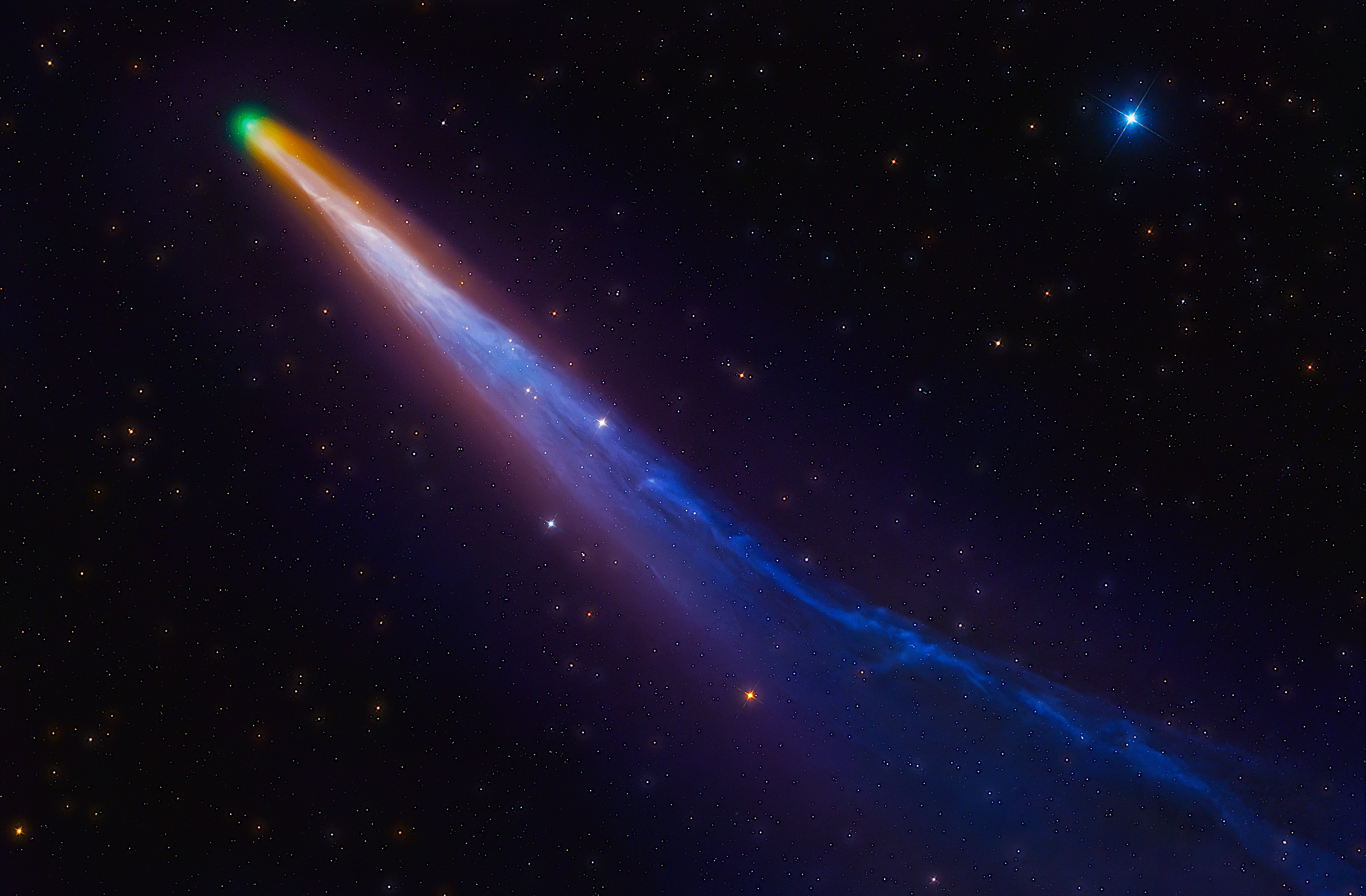
The analysis describes how rapidly Comet Lemmon’s tail was changing during observations made between October 23 and November 4, 2025.
To estimate these motions, the author first checked the comet’s radial velocity using image timestamps and distance data from JPL, finding a value of about 51 km/s, close to the published number.
The author tracked small regions of the tail between frames using image-registration and optical-flow techniques. This allowed the motion in the images to be converted from pixels per second to real speeds in kilometres per second, with a correction for the tail’s angle in space.
The results show that ionized gas moves faster the farther it is from the comet’s head because the solar wind continually accelerates it. Newer plasma knots move at about 80–100 km/s, while older ones reach over 200 km/s, matching what is visually seen on calmer versus more active days.
by Busy_Yesterday9455