
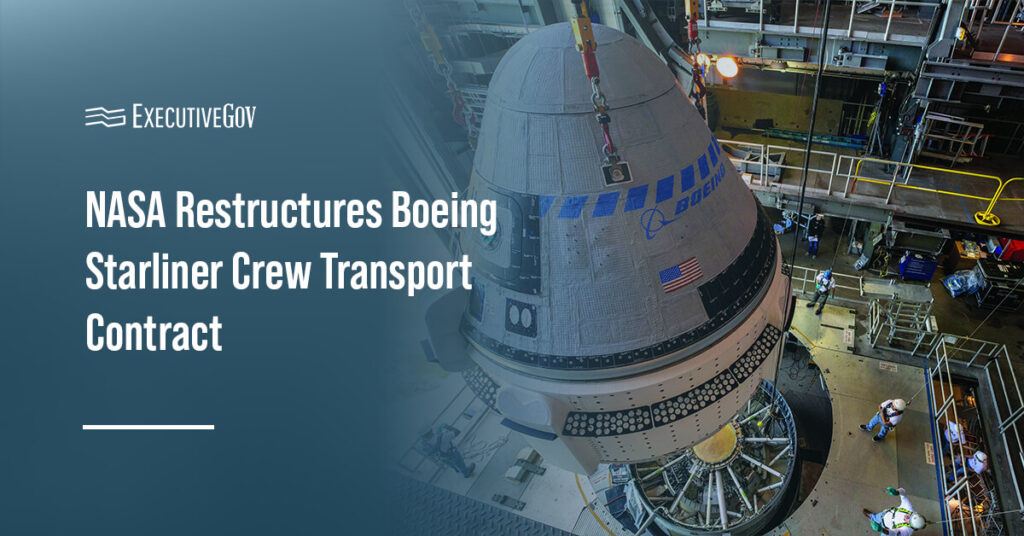
NASA has revised its commercial crew contract with Boeing, changing the number of committed Starliner flights and shifting the program’s next mission to an uncrewed demonstration as certification work continues.
What Has Changed in the Boeing Commercial Crew Contract?
NASA said Monday that under the modified Commercial Crew Transportation Capability contract, it will order four Starliner flights to the International Space Station, with two additional flights retained as options. The original 2014 contract had envisioned up to six crewed rotations.
The Starliner-1 mission will now launch without astronauts on board and carry cargo to the station while validating propulsion system upgrades and other changes. NASA and Boeing are targeting no earlier than April 2026 for that flight, pending the completion of testing, certification activities and mission readiness reviews.
Why Was the Starliner Mission Plan Adjusted?
The June 2024 Starliner crew flight test revealed several propulsion anomalies, including multiple helium leaks in the service module and failures in reaction control thrusters during approach to the ISS. Follow-on ground work determined that a Teflon seal had expanded under heat, likely constricting propellant flow and contributing to the thruster issues.
As NASA and Boeing evaluated the findings, the vehicle’s return was delayed and ultimately completed without a crew on board while additional certification work began.
What Comes Next for Starliner?
Steve Stich, manager of NASA’s Commercial Crew Program, said the contract modification allows the program to focus on safely completing certification in 2026 and planning future missions based on station needs through 2030.
If Starliner-1 is successful and the spacecraft is certified, Boeing would then conduct up to three crewed flights under the revised order.
NASA emphasized that bringing Starliner to full operational status remains essential to its long-term strategy for maintaining a continuous human presence in low Earth orbit and preserving dissimilar redundancy in commercial crew access.
Currently, NASA is using SpaceX’s Crew Dragon spacecraft to transport astronauts to and from the ISS.
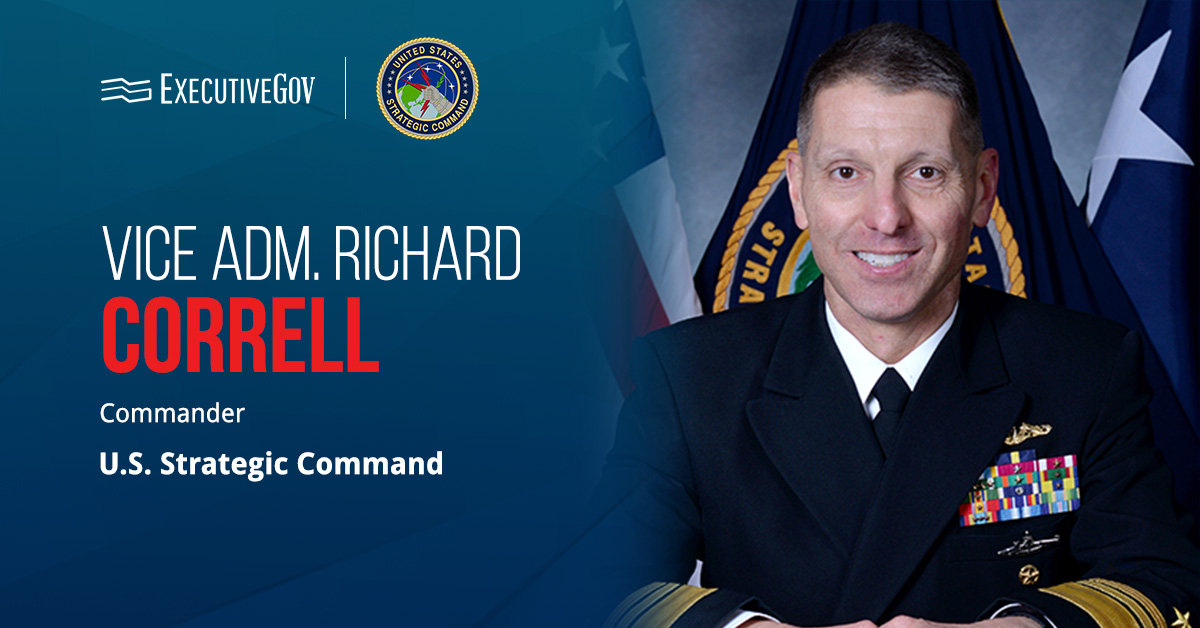 Senate Confirms Richard Correll as New STRATCOM Commander
The Senate confirmed Vice Adm. Richard Correll’s nomination as commander of the U.S. Strategic Command during a voice vote Thursday, according to congressional records. Correll succeeds Air Force Gen. Anthony Cotton, who has led the combatant command since 2022. Who Is STRATCOM’s New Commander? Correll joined STRATCOM as director of plans and policy and then later became its deputy commander, a role he has held for three years. An experienced submariner, Correll has commanded USS Topeka, Submarine Squadron 11 and Submarine Group 7. He has also deployed aboard the USS Henry M. Jackson, USS Hyman G. Rickover and USS Buffalo.
 Trump Signs EO Establishing Genesis Mission to Bolster AI Use for Scientific Research
President Donald Trump has signed an executive order establishing the Genesis Mission, a national effort to use artificial intelligence to accelerate scientific discovery and strengthen U.S. leadership in AI. Learn how government, military and industry are utilizing AI to process data and carry out complex missions at the Potomac Officers Club’s 2026 Artificial Intelligence Summit on March 19. The event will bring together AI experts from public and private sectors to identify new use cases in insightful speeches and panel discussions and build new partnerships. Secure your tickets as early as today! What Is Genesis Mission? The order, issued Monday,
 Army Issues Second Sources Sought Notification for Company-Level SUAS
The U.S. Army has released its second sources sought notification for the Company-Level Directed Requirement, or CoLvl DR, Small Uncrewed Aircraft System program. Join industry leaders and government officials at the Potomac Officers Club’s 2026 Army Summit on June 18. Attendees will gain insights into how the revitalized Army is modernizing technology, streamlining contracting and strengthening a unified network. The Army said Monday the SSN seeks to leverage industry innovation to advance SUAS technologies and fast-track their deployment to troops. The solicitation aims to determine how vendors’ software supports the Army’s Uncrewed Vehicle Control and Software Product Development Services initiatives, enabling