200+ Million Galaxies in the observable Universe. Each with 200-500 BILLION stars.
Not so rare.
faceintheblue on
We are only at the very start of being able to detect exoplanets. If you had asked astronomers a few centuries ago how many moons there were in the solar system, they would have said seven to ten, because telescopes at the time were still primitive. Who knows how many more planets we will find once we’re not relying just on wobbling and flickering of distant stars, both of which favour finding big gas giants?
I would also say if there really is one Earth for ever billion planets (or whatever astronomical number is being floated around), that’s still a lot more than people were prepared to estimate when I was a kid. The Milky Way has somewhere between 100 and 400 billion stars. Now I understand not every star has planets, but I think the odds are good that most stars that do have planets probably have more than one planet. Are there more than a hundred Earths out there, even with pessimistic back-of-the-cocktail napkin math? That’s a great number, especially compared to what we were guessing even a few decades ago!
> Our analysis reveals that only 0.6% (3 planets including Earth) meet all habitability criteria under relaxed thresholds,
…
> We identify Kepler-22 b as a compelling Earth analog with remarkable parameter similarity,
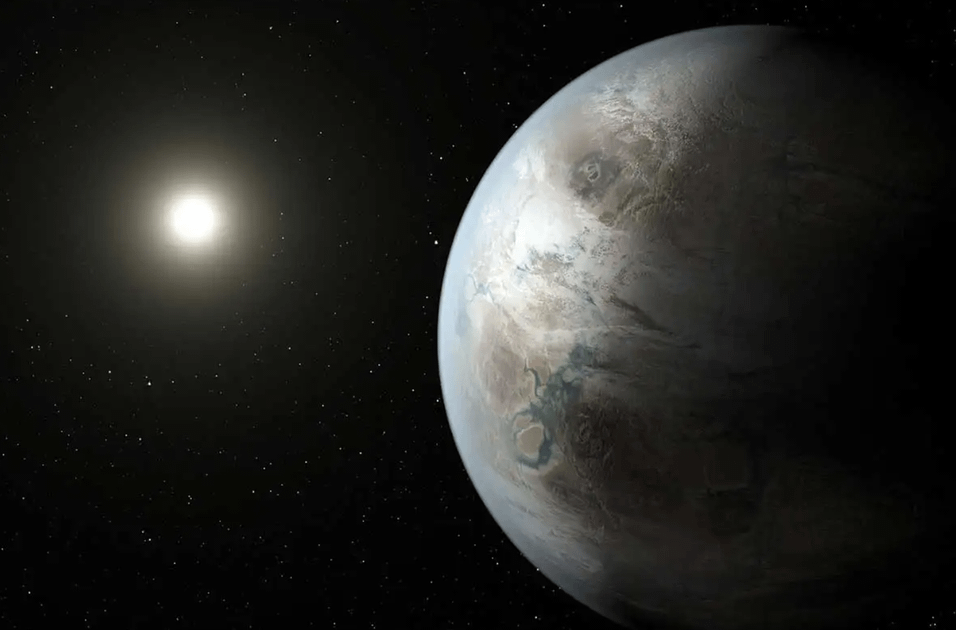
Their habitability criteria is extremely relaxed. [Kepler-22 b](https://en.wikipedia.org/wiki/Kepler-22b) has a radius over twice that of the Earth. That is not a terrestrial planet. It’s a planet much bigger than the Earth, that likely consists mostly of water.
Another “habitable planet” they study is [LHS 1140 b.](https://en.wikipedia.org/wiki/LHS_1140_b) It’s orbiting a red dwarf, so it’s tidally locked. It only has a radius 1.7 times that of Earth, and a mass about 5.6 times that of the Earth. That planet has a density about the same as the Earth. But it’s much bigger. Venus is more Earth-like in many way.
The third planet they find is similar to the Earth is [TOI-1452 b.](https://en.wikipedia.org/wiki/TOI-1452_b) It’s orbiting a red dwarf, so it’s tidally locked. TOI-1452 b has an estimated mass of 4.8 times that of the Earth. Again, it’s much bigger than the Earth.
The truth is we have not found a single Earth-sized planet in the habitable zone of a yellow dwarf. If a planet has five or six times the mass of the Earth, that is not similar to the Earth. Out of thousands of exoplanets they have found zero planets that could truly be called a twin of the Earth.
StingerAE on
I have a machine that detects the footsteps of people walking around the school. It can detect people weighing over 80kg easily but really only notices people under that weight if they fall over or jump off a chair
Anyway we’ve been running the machine for a week and it turns out that children are much much rarer than adults…
BigCraig10 on
There are approximately 100 billion to 400 billion exoplanets in the galaxy, I’d say the issue is so far we have confirmed about 6000 of them. All of which will be the lowest possible hanging fruit.
Disalga on
ok but like this actually stresses me out sometimes?? imagine being literally the only planet in the universe with life like that’s lowkey terrifying to think about.

9 Comments
Right, so on a universal scale, these are great odds. Even on a galactic scale, honestly.
Known exoplanets are known because our detection methods bias large planets around big stars, or small (or large) planets around small stars.
Earthlike worlds around g-class stars are extremely hard to detect.
The[ Rare Earth hypothesis](https://en.wikipedia.org/wiki/Rare_Earth_hypothesis) is not new.
300 Billion stars in OUR Milky way alone.
200+ Million Galaxies in the observable Universe. Each with 200-500 BILLION stars.
Not so rare.
We are only at the very start of being able to detect exoplanets. If you had asked astronomers a few centuries ago how many moons there were in the solar system, they would have said seven to ten, because telescopes at the time were still primitive. Who knows how many more planets we will find once we’re not relying just on wobbling and flickering of distant stars, both of which favour finding big gas giants?
I would also say if there really is one Earth for ever billion planets (or whatever astronomical number is being floated around), that’s still a lot more than people were prepared to estimate when I was a kid. The Milky Way has somewhere between 100 and 400 billion stars. Now I understand not every star has planets, but I think the odds are good that most stars that do have planets probably have more than one planet. Are there more than a hundred Earths out there, even with pessimistic back-of-the-cocktail napkin math? That’s a great number, especially compared to what we were guessing even a few decades ago!
[Here is the study.](https://arxiv.org/abs/2506.18200)
> Our analysis reveals that only 0.6% (3 planets including Earth) meet all habitability criteria under relaxed thresholds,
…
> We identify Kepler-22 b as a compelling Earth analog with remarkable parameter similarity,
Their habitability criteria is extremely relaxed. [Kepler-22 b](https://en.wikipedia.org/wiki/Kepler-22b) has a radius over twice that of the Earth. That is not a terrestrial planet. It’s a planet much bigger than the Earth, that likely consists mostly of water.
Another “habitable planet” they study is [LHS 1140 b.](https://en.wikipedia.org/wiki/LHS_1140_b) It’s orbiting a red dwarf, so it’s tidally locked. It only has a radius 1.7 times that of Earth, and a mass about 5.6 times that of the Earth. That planet has a density about the same as the Earth. But it’s much bigger. Venus is more Earth-like in many way.
The third planet they find is similar to the Earth is [TOI-1452 b.](https://en.wikipedia.org/wiki/TOI-1452_b) It’s orbiting a red dwarf, so it’s tidally locked. TOI-1452 b has an estimated mass of 4.8 times that of the Earth. Again, it’s much bigger than the Earth.
The truth is we have not found a single Earth-sized planet in the habitable zone of a yellow dwarf. If a planet has five or six times the mass of the Earth, that is not similar to the Earth. Out of thousands of exoplanets they have found zero planets that could truly be called a twin of the Earth.
I have a machine that detects the footsteps of people walking around the school. It can detect people weighing over 80kg easily but really only notices people under that weight if they fall over or jump off a chair
Anyway we’ve been running the machine for a week and it turns out that children are much much rarer than adults…
There are approximately 100 billion to 400 billion exoplanets in the galaxy, I’d say the issue is so far we have confirmed about 6000 of them. All of which will be the lowest possible hanging fruit.
ok but like this actually stresses me out sometimes?? imagine being literally the only planet in the universe with life like that’s lowkey terrifying to think about.