
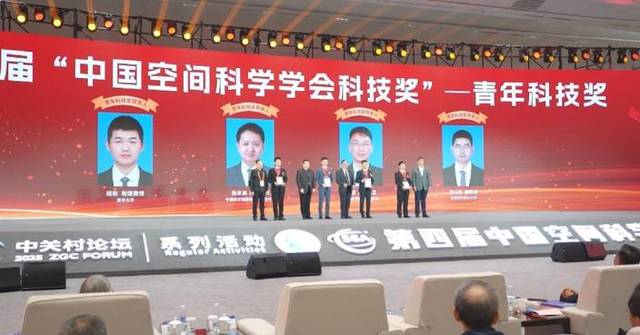
China on Saturday honored a group of leading space scientists at the opening ceremony of the fourth China Space Science Assembly in Beijing, recognizing their role in advancing the country’s advancements in space exploration.
The event, held from Friday to Monday in the Chinese capital, gathered about 1,000 experts and scholars from over 200 research institutes and universities.
At the opening ceremony held on Saturday, the Chinese Society of Space Research (CSSR) announced the recipients of the science and technology awards.
Four scientists from institutions, including Tsinghua University, received the youth science and technology award, and Zhuang Shuangnan, a researcher from the Institute of High Energy under the Chinese Academy of Sciences (CAS), received the science award for his achievements in black hole and neutron star research.
“We used the Insight-HXMT to measure the density of Earth’s atmosphere at different altitudes, which is equivalent to scanning the Earth’s atmosphere. Previously, when we designed a satellite or a rocket, we had to know the density of Earth’s atmosphere, but that data was calculated by our model; it’s not the real atmospheric density. Now, we can measure the exact atmospheric density,” said Zhang.
The Hard X-ray Modulation Telescope (HXMT) is China’s first X-ray astronomy satellite, which was launched on June 15, 2017, and is now in the science operation phase.
The opening ceremony also witnessed 14 senior scientists sharing their insights with attendees.
“Many discussions were about the latest data we gathered, and some of them are about the new plans and outlooks, including China’s upcoming space gravitational wave detection mission and how artificial intelligence can empower data analysis to boost scientific discoveries,” said Wu Ji, a researcher at the National Space Science Center under the CAS.
The assembly will also feature such an exhibition on aerospace technologies and achievements, youth academic salons, and public science lectures.
As China’s leading comprehensive academic gathering in the space science domain, the China Space Science Assembly is organized every two years by the CSSR.
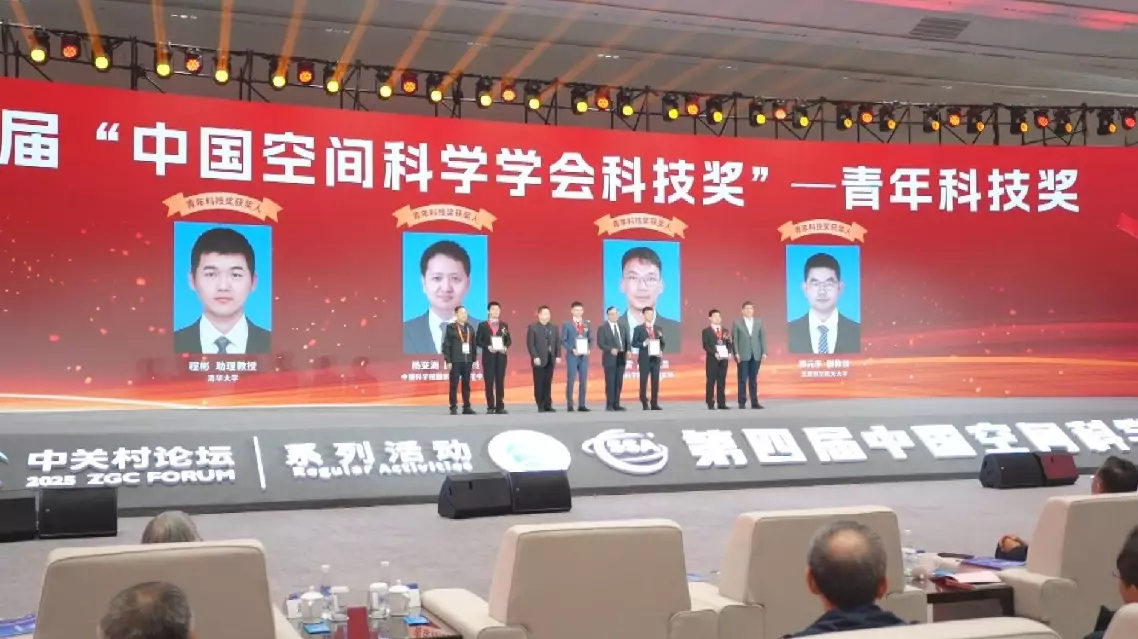
China awards space scientists for landmark achievements
China’s cumulative installed power generation capacity had reached 3.75 billion kilowatts by the end of October 2025, marking a year-on-year increase of 17.3 percent, official data showed on Monday.
Solar power generation capacity amounted to 1.14 billion kilowatts by the end of last month, surging 43.8 percent compared to the same period last year, according to the National Energy Administration (NEA).
Wind power generation capacity reached 590 million kilowatts by the end of October, rising 21.4 percent year on year, the NEA data revealed.
As the world’s largest electricity producer, China has established the world’s most systematic and comprehensive carbon emission reduction policy framework, achieving significant results in energy transition. Total installed capacity of wind and solar power has reached the country’s internationally committed targets more than six years ahead of schedule.
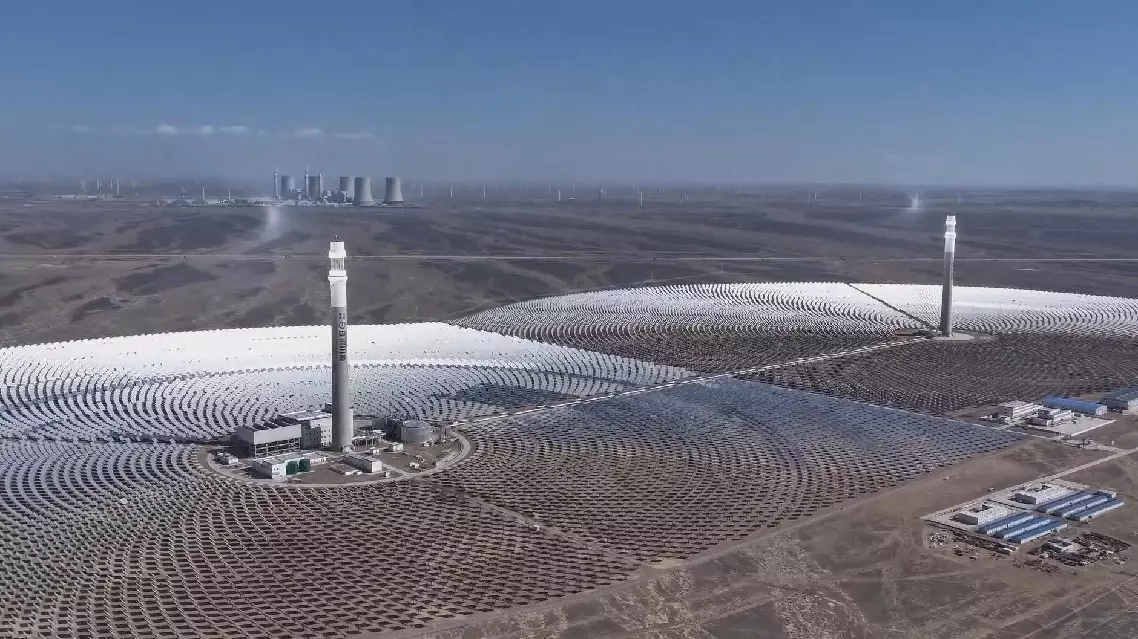
China’s installed power generation capacity up 17.3 pct in Jan-Oct