
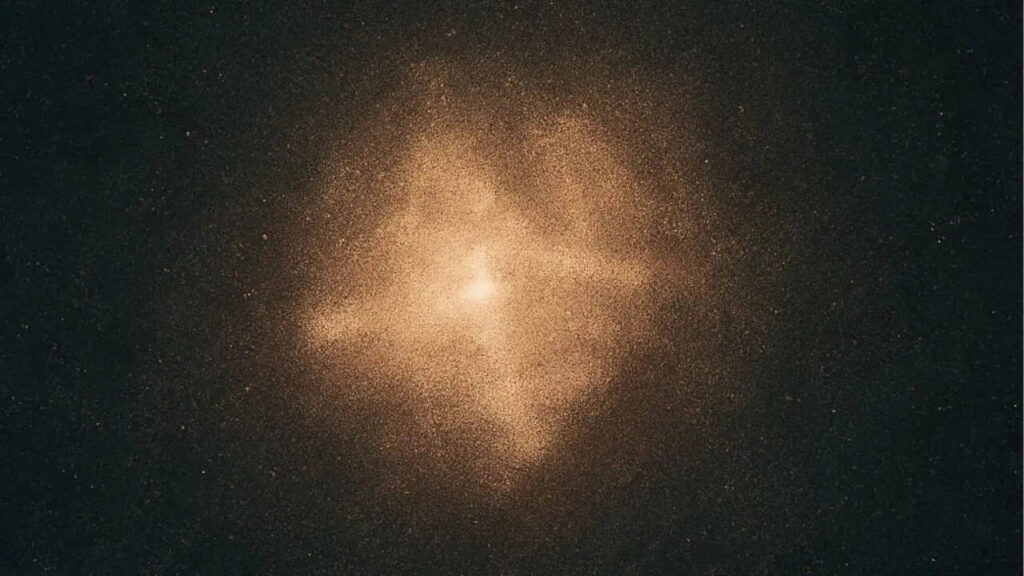
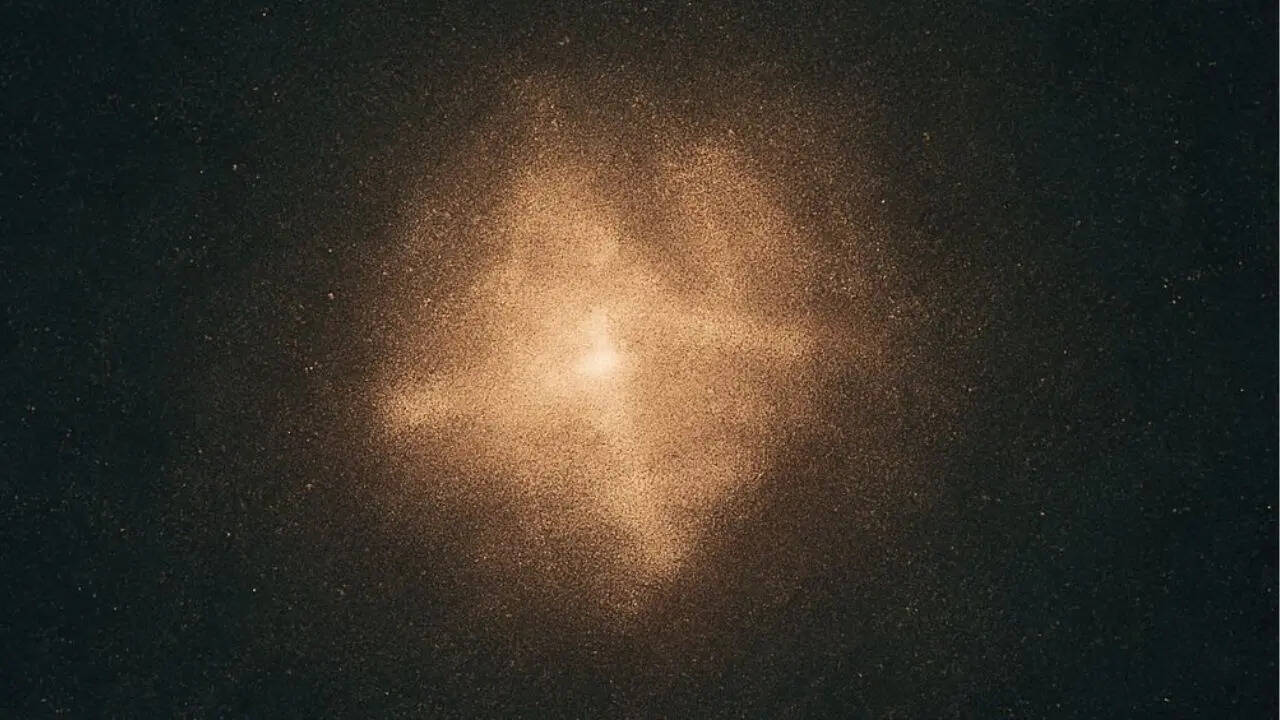
Discovered in 2025, 3I/ATLAS is not bound to the Sun and poses no threat to Earth, travelling too fast for solar capture. (Image Credits: X/@3IATLASEXPOSED)

A new wave of online posts has suddenly pushed the interstellar comet 3I/ATLAS back into the spotlight. Over the past few days, images shared by astrophotographers, NASA and ESA updates and social media threads have reignited one big question: is 3I/ATLAS actually spinning? The flare-up began after fresh footage appeared online, with users pointing out what looked like a rotating pattern, dust rings and even “detached shells” forming around the comet. None of these claims have been scientifically verified yet, but they have definitely added a new layer of curiosity around this rare interstellar visitor.
New Footage And The “Spinning” Claims
Much of the current discussion started when posts attributed to Ray’s Astrophotography and space-watching accounts on X shared time-lapse captures of 3I/ATLAS. One user compared the visual pattern to a rotating structure once reportedly seen by the ESA ExoMars Orbiter. Another post credited to Diego San Araujo suggested a similar swirling motion, though, like the rest, it remains unverified. Other posts added their own interpretations. One claimed stacked images showed “five objects circling a centre,” while another described “five dust rings” spread almost 150,000 km from the nucleus. These observations could simply be coma variations, dust jets or stacking artefacts, but until NASA or ESA confirms anything, they remain speculative.
What We Know About 3I/ATLAS
3I/ATLAS was discovered on July 1, 2025, by the NASA-funded ATLAS survey in Chile. NASA has already confirmed that it is the third interstellar object ever detected, after 1I/ʻOumuamua (2017) and 2I/Borisov (2019). Its hyperbolic orbit makes it clear that it’s not bound to the Sun and will never return once it exits the solar system. The comet flew past the Sun on October 30, 2025 and is now gradually moving away on its outbound path.
Visibility, Path And Speed
NASA has clarified that 3I/ATLAS poses no threat to Earth. Travelling at more than 210,000 km/h, it is far too fast to be captured by the Sun’s gravity. After its perihelion, the comet shifted back into the pre-dawn sky. Observers can catch it low on the eastern horizon using at least an 8-inch telescope. It remains visible through November and December, though it never becomes a naked-eye object.
Why Astronomers Are Interested
Early analysis suggests that 3I/ATLAS may contain high levels of carbon dioxide, a hint that it formed in extremely cold regions of a distant star system. It also made a notable close pass by Mars earlier this year, coming within 29 million kilometres. ESA’s JUICE mission will observe the comet from November 2 to 25, with the scientific data expected in 2026.
How To Watch And Track 3I/ATLAS
Space enthusiasts can follow the comet’s movement using NASA’s Eyes on the Solar System tool, which provides real-time tracking. For telescopic observation, the early morning sky through November and December is the best window. The mystery around whether 3I/ATLAS is spinning may take a while to settle, but the excitement around this once-in-a-lifetime interstellar visitor is only growing.