
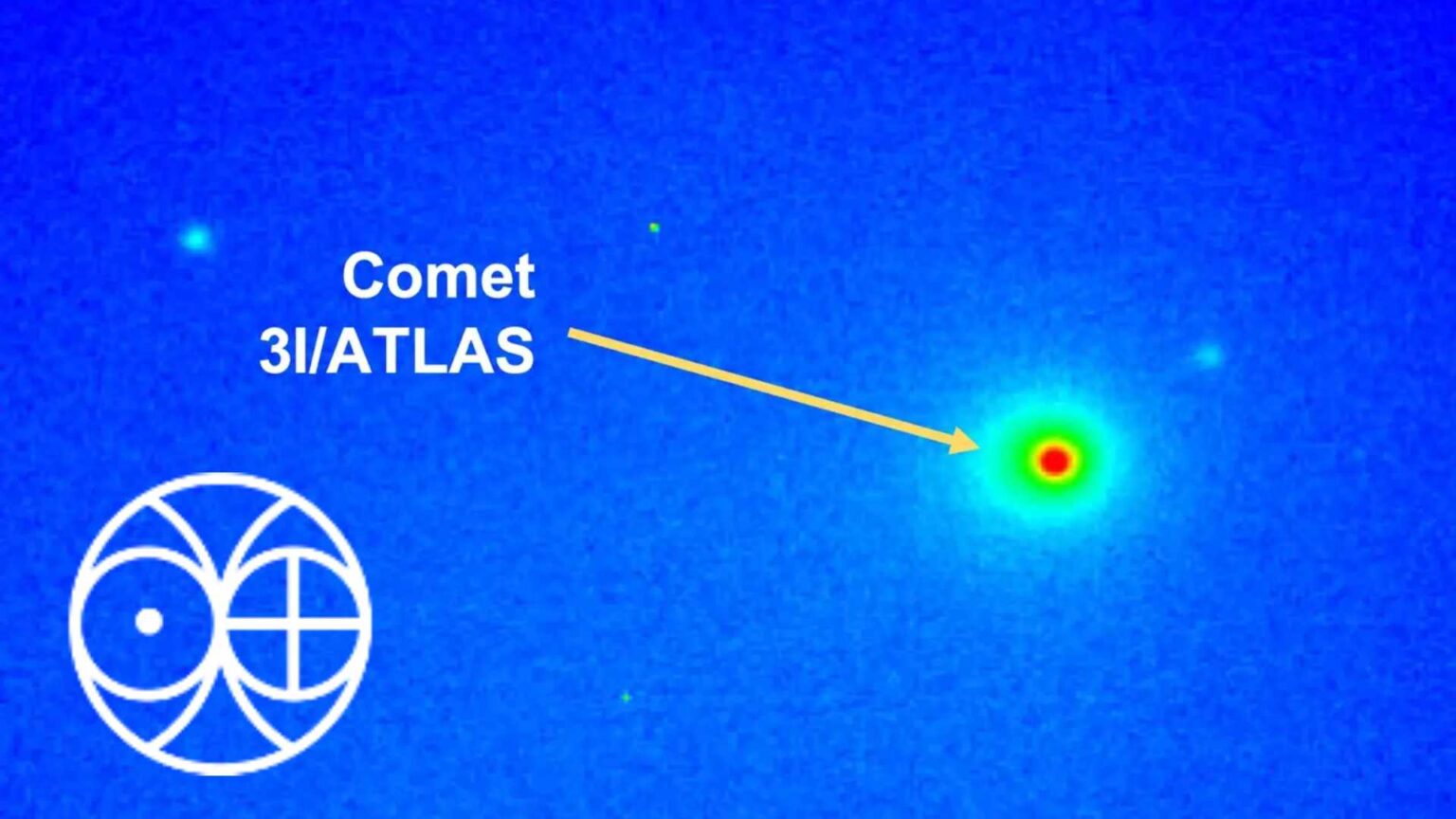
Indian scientists at the Mount Abu-based Physical Research Laboratory (PRL) captured a glimpse of the bizarre interstellar comet 3I/ATLAS aka C/2025 N1 (ATLAS).
The comet that was discovered on July 01, 2025, maneuvered closest to the Sun on October 29, which is also known as perihelion.
3I/ATLAS, after its short solar system vacay is now on its way back to oblivion. It will come closest to Earth on December 19, at about 1.8 AU which is about 170 million miles away. As scientists and stargazers alike rush to capture a fleeting glimpse, all eyes are trained on the comet that some speculate could be a piece of an alien technology, even a spy probe.
So what exactly did the researchers at PRL find with a 1.2 m telescope?
…a near-circular coma. The coma of a comet is the large, glowing atmosphere of gas and dust that forms around its nucleus as it gets closer to the Sun. It is created when the Sun’s heat causes the frozen ices on the nucleus to vaporize, or “sublimate,” releasing gas and dust that form a large, diffuse cloud. In the present observing geometry, the dust tail, if present, would be pointing away from the Sun behind the comet as seen from the Earth, while deep wide-field multiband images may show the ion tail.
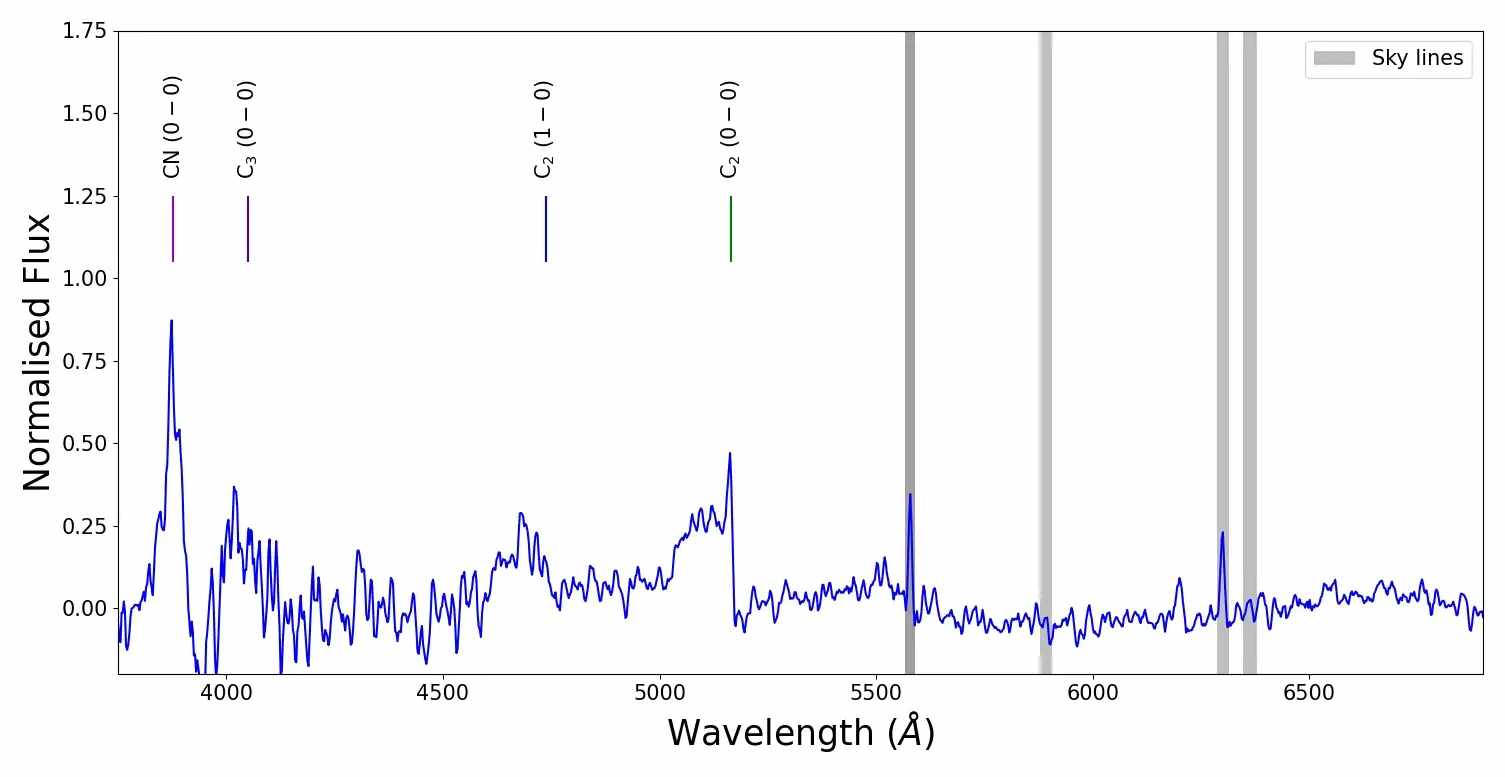
In its LISA spectrograph reading, PRL found that
the production rates for the prominent bands (emissions pertaining to the constituent molecules) were computed with limiting values around 1025 molecules/sec. The production rate ratios seem to place this comet in the class of ‘typical comets’ of the solar system. Further observations will be continued as the comet gradually comes into the darker part of the night.
A typical comet then? PRL’s findings certainly say so.
For more information visithttps://t.co/hGs5FcDa44
#SpaceScience #Astronomy #DOS pic.twitter.com/ZgywJbWfm9
— ISRO (@isro) November 19, 2025
https://t.co/aEWp60bABn pic.twitter.com/JWjQtGLhD7
— PRL Ahmedabad (@PRLAhmedabad) November 19, 2025