
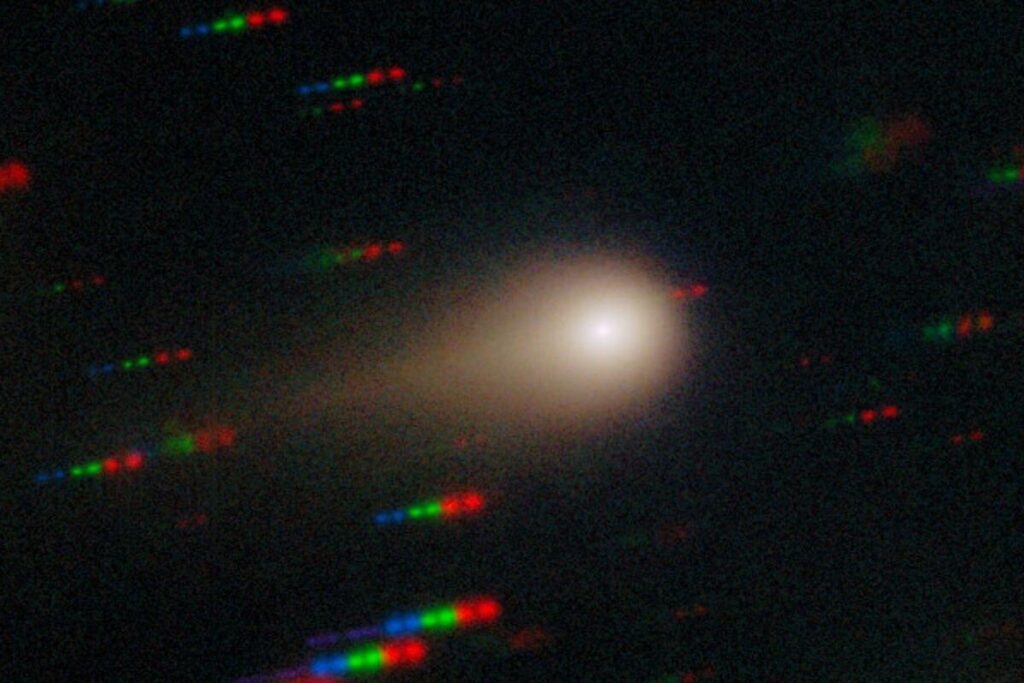
Almost all scientists agree that it is a comet.
But that hasn’t stopped speculation about alien visit and the end of humanity.
3I/Atlas is only the third interstellar object originating from outside the Solar System to be spotted in our sky.
That’s why his name starts with “3I”.
Unlike most comets we know of that orbit the Sun, the trajectory and speed of the newly discovered one suggest that it came from somewhere else in the galaxy and is passing by us.
This will be a unique visit before he leaves our area forever early next year.
Several of its properties have led Harvard astrophysicist Professor Avi Loeb, as well as a host of media outlets and social media users – to address the idea that the comet is artificial.
Elon Musk, a wealthy man and owner of several technology companies, also shared his opinion.
Even American reality star Kim Kardashian posted on X: “Wait, what’s the deal with the 3I Atlas?”
But NASA and the vast majority of astronomers are unequivocal that all observations so far can be explained by natural, non-extraterrestrial phenomena.
What do we know so far?
3I/Atlas was first observed in July 2025 by the NASA-funded Atlas telescope in Chile.
And ever since then, it has excited astronomers around the world.
“We probably have a few months left and then we’ll never see this facility again.”
“And so we’re desperate to get as much data as we can, while we can,” says Chris Lintot, a professor of astrophysics at the University of Oxford, UK.
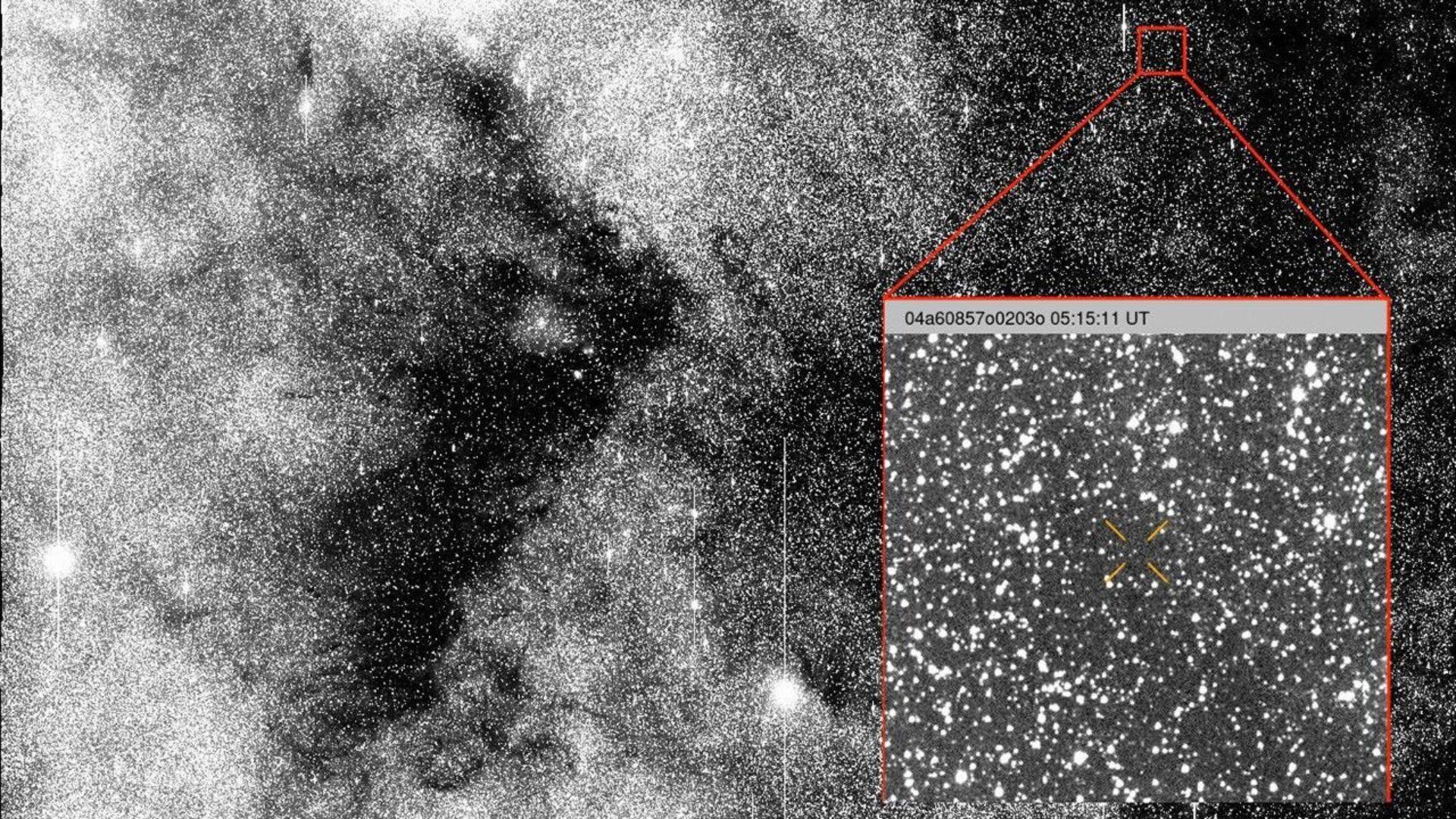
Atlas/University of Hawaii/Nasa
Some reported that the comet was the size of Manhattan, New York.
But measurements from NASA’s Hubble Space Telescope in August show that its diameter could be as small as 5,6 kilometers, or just 440 meters.
The US space agency says it was hurtling through space at a speed of 61 kilometres per second when it was first discovered.
Where did she come from?
Astronomers think that 3I/Atlas formed during the birth of a distant star system and has been traveling through interstellar space for billions of years.
It could be the oldest comet we know of, with one study estimating its age at more than seven billion years.
This would mean that it is older than our own solar system, which formed only 4,6 billion years ago.
“That means it tells us about what happened in the early history of the galaxy,” says Lintot.
The comet is coming from the direction of the constellation Sagittarius, where the center of our Milky Way galaxy is located.
It passed behind the Sun in October, when it was out of view from Earth, fueling theories about why the object is “hiding.”
But several space probes are tracking the comet, and it has already been spotted again by telescopes on Earth.
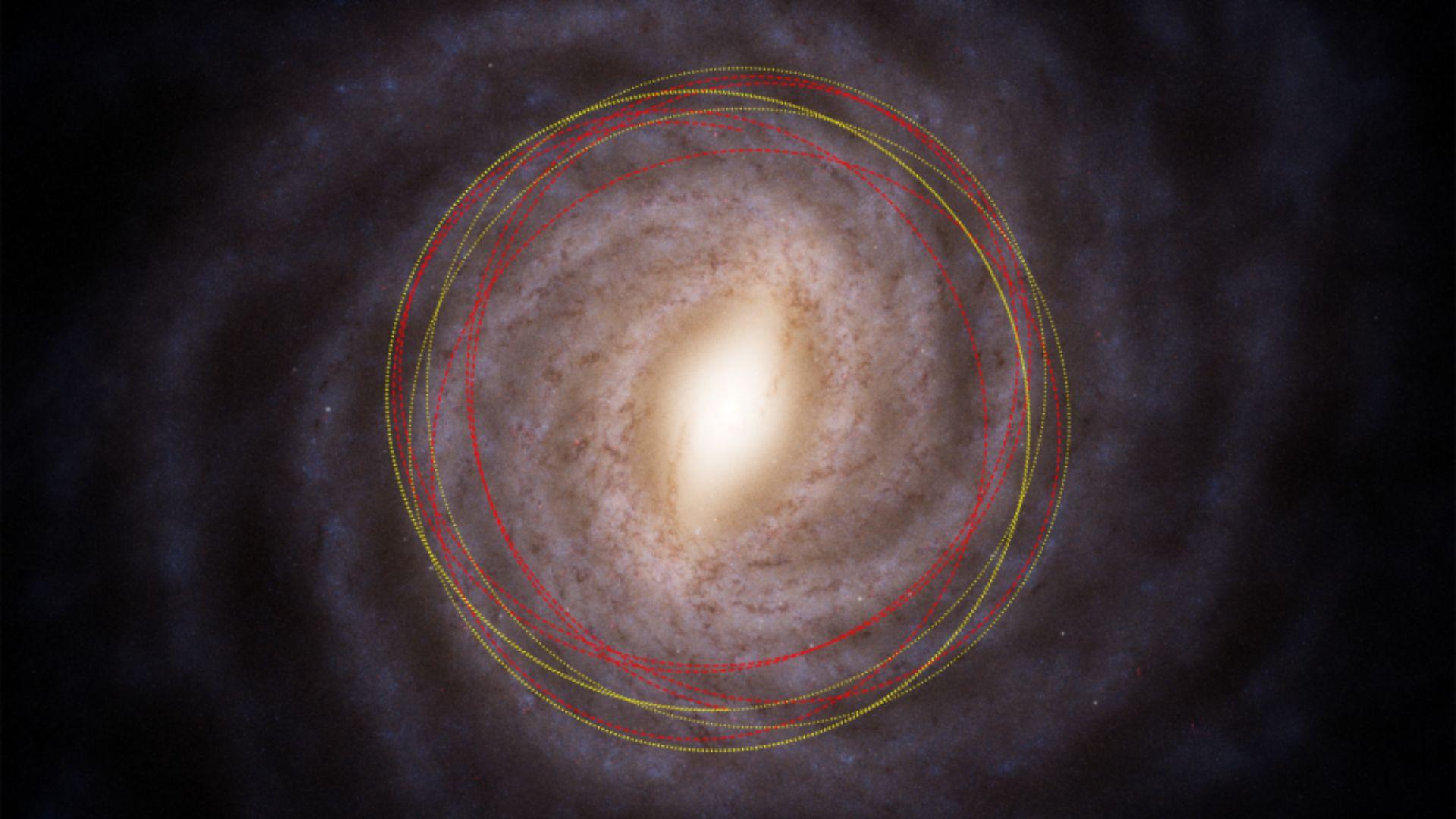
M Hopkins/Ōtautahi-Oxford team; Base map: Esa/Gaia/DPAC, S Payne-Wardenaar
Warming up near the Sun
How do 3I/Atlas heated up on its way to the Sun, it gained non-gravitational acceleration and moved faster than would be expected from gravity alone.
Professor Loeb speculates that it could be powered by a “technological rocket” and headlines and memes about an alien mothership have flooded the internet.
But many scientists who are experts in measuring comets say its acceleration is within the realm of what’s called “outgassing,” explains Lintot.
This happens when some of the material in a heated comet turns from solid ice to gas, firing jets of clouds and dust that act like propulsion engines.
Moreover, it seems that 3I/Atlas extremely active.
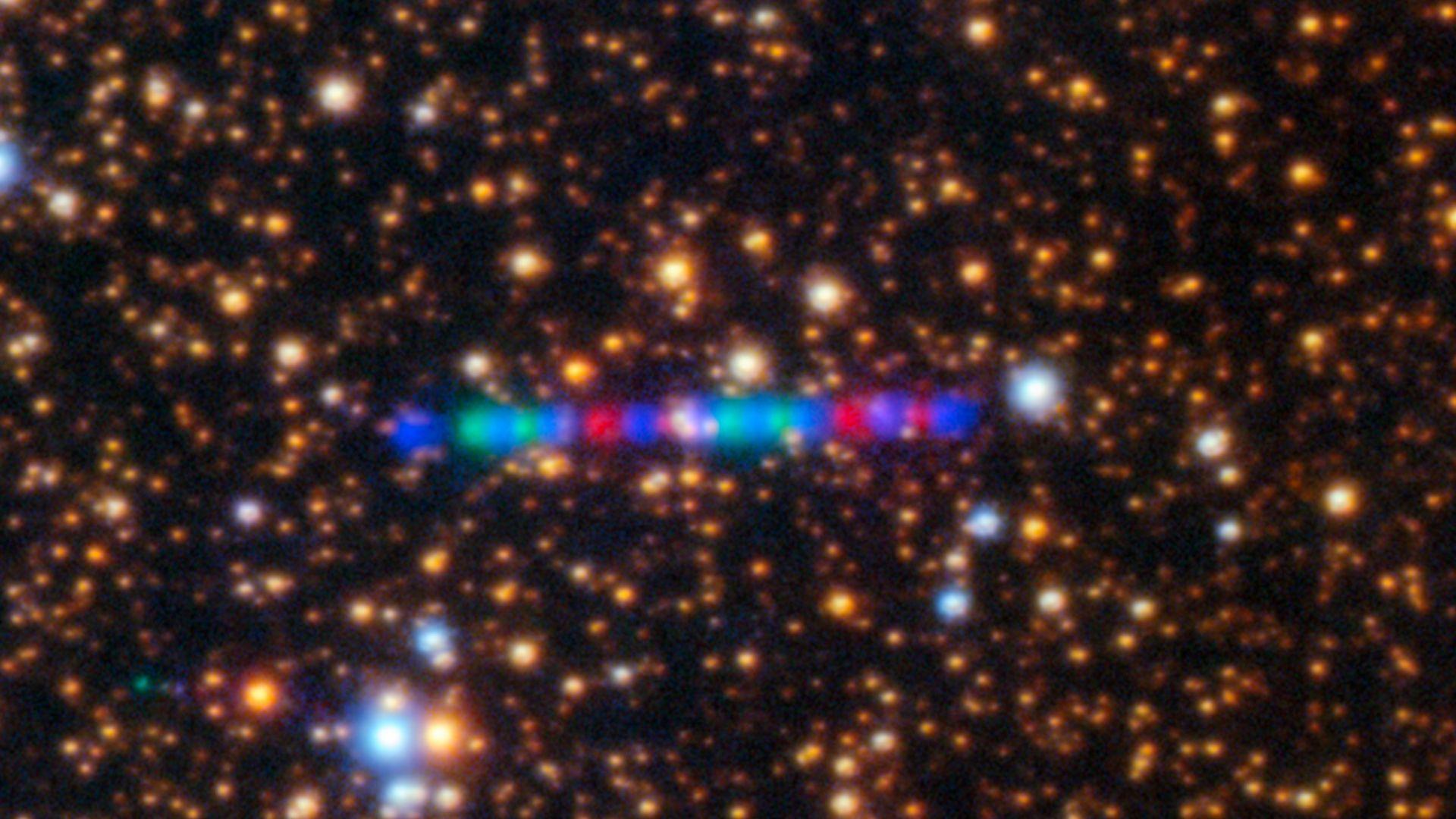
Intl Gemini Observatory/NOIRLab/NSF/Aura/K Meech (IfA/U Hawaii); Processing: J Miller, M Zamani
Dust ejected from a comet usually reflects light, causing it to brighten as it approaches the Sun.
3I/Atlas lit up very quickly.
There are also suggestions that it changed color from reddish to blue, which has fueled theories about an alien energy source.
Astronomers are still trying to figure out exactly why, but they say there are plenty of natural explanations.
The accelerated brightening “could tell us there’s a lot of fresh ice on it,” Lintot suggests.
Even if the color change were real and not simply an artifact of the way it was measured, it could indicate chemical changes.
“What we really want to do is understand what the interior of a comet is made of,” says the professor.
Nasa/SPHEREx
Mysterious chemistry
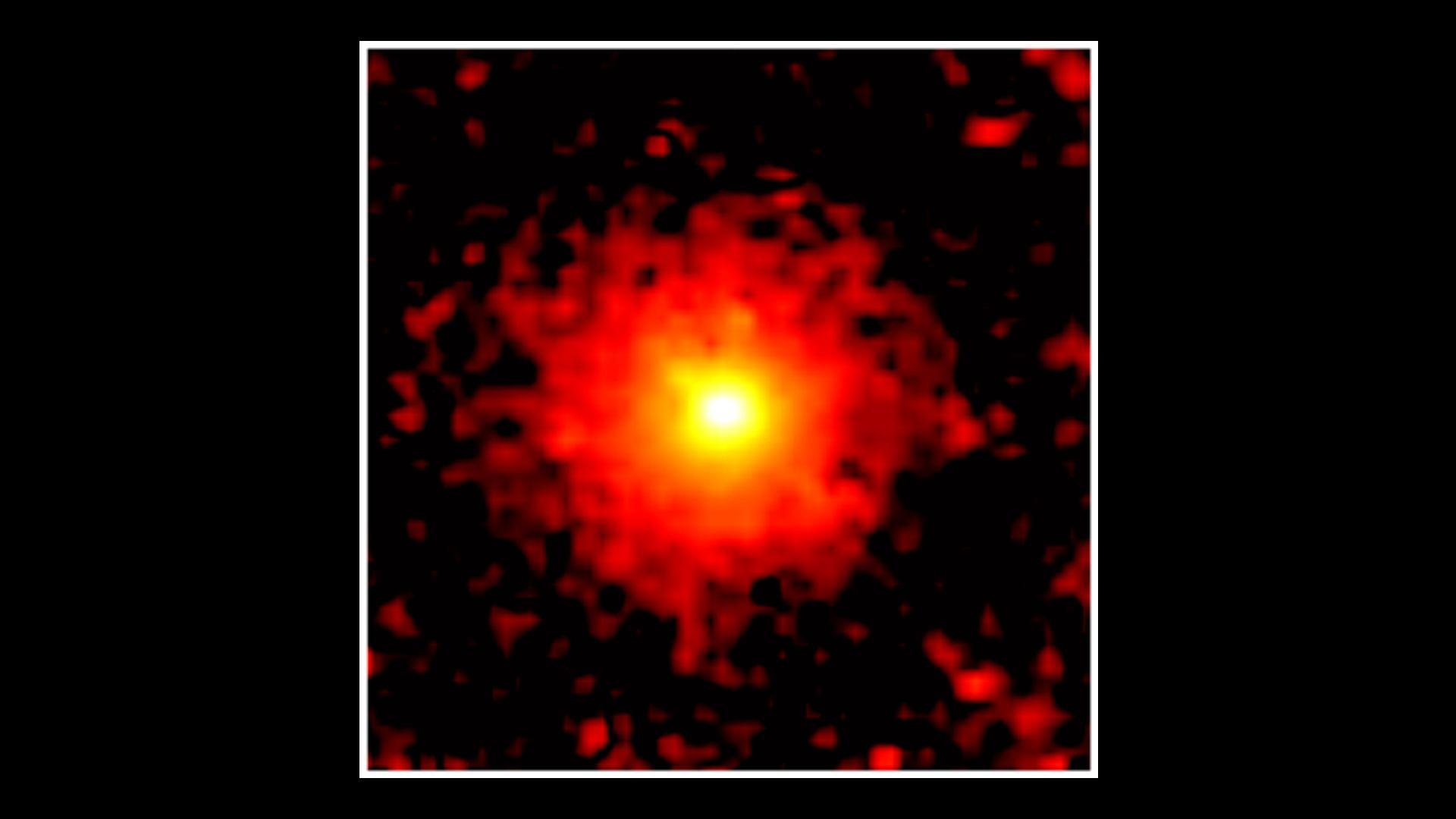
Understanding chemical composition 3I/Atlasa it could tell us what the distant star system that gave birth to it was like all those billions of years ago.
Telescopes have so far detected a lot of carbon dioxide on the comet.
And it also appears to be rich in nickel – which is what fueled the idea of an alien mothership the most, since many components of our spacecraft contain nickel.
Elon Musk has speculated that a spaceship made entirely of nickel would be so heavy it could “wipe out an entire continent”
But nickel has also been found in other comets, including an interstellar comet 2I / Borisov discovered in 2019.
The abundance of nickel could reflect the type of environment in which it is found. 3I/Atlas created.
Or the comet was simply bombarded by cosmic radiation on its own interstellar journey, which could have altered the chemical composition of its surface, as recent data from the James Webb Space Telescope suggests.
Departure
After passing the Sun in late October, 3I/Atlas will soon say goodbye to us.
It will reach its closest approach to Earth on December 19th and will be at a safe distance of 270 million kilometers – almost twice the distance between our planet and the Sun.
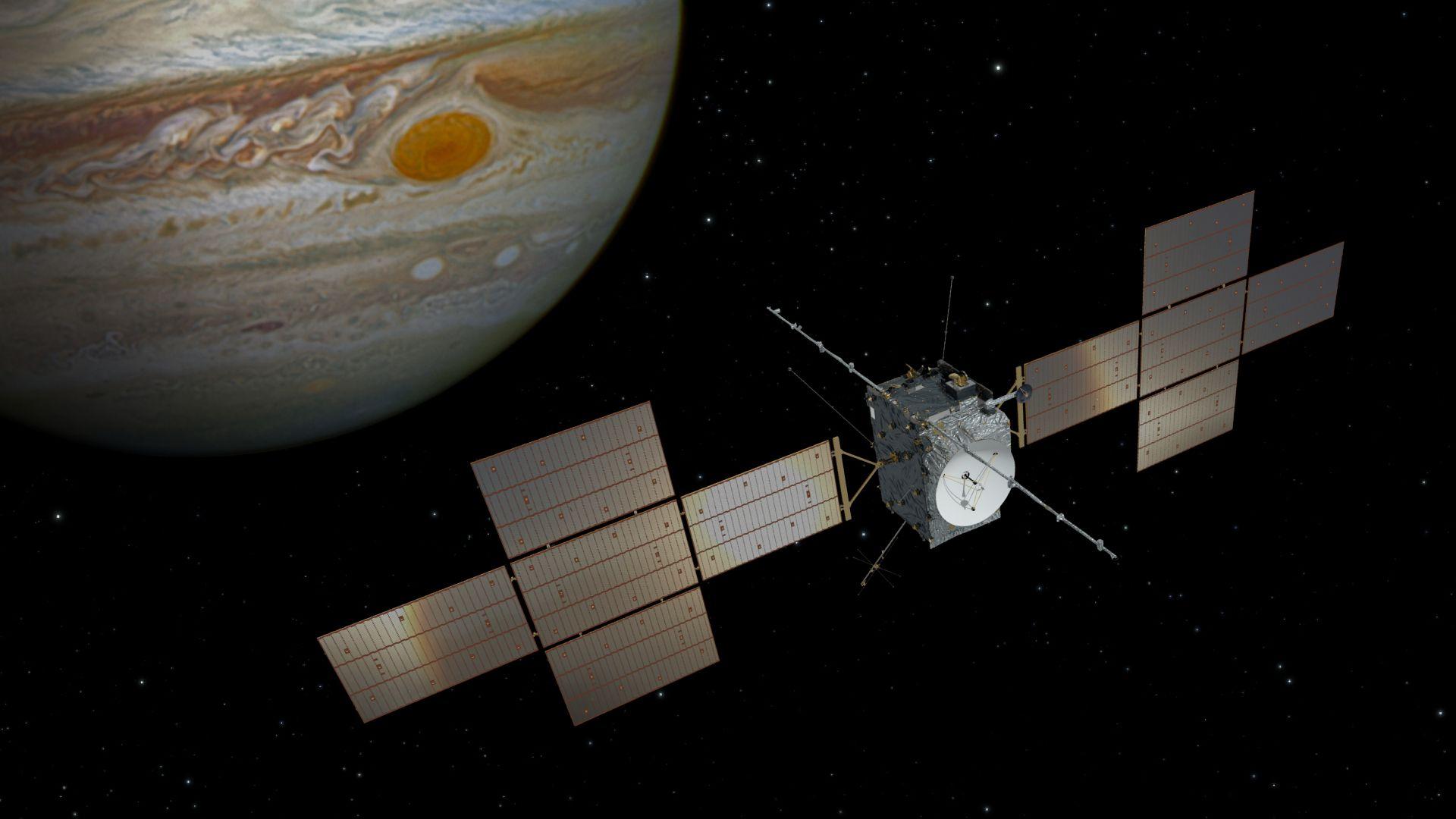
Many space and ground-based observatories hope to be able to make more measurements, and even that amateur astronomers will be able to see it through an 8-inch telescope.
We still have much to learn about these ancient travelers.
Spacecraft: Esa/ATG medialab; Jupiter: Nasa/Esa/J Nichols (Uni of Leicester)
“We think there are a billion billion of them in the galaxy, and we’ve only seen three so far,” says Professor Lintot.
“So it’s too early to say whether this is unusual,” he adds.
With the help of powerful new telescopes like the Vera Rubin Observatory in Chile, astrophysicists hope to find dozens more in the next decade.
“Then we will be able to say what types of stars form planets and what compositions are common.”
“And maybe we’ll get a better idea of how our solar system fits into the big picture,” he concludes.
BBC is in Serbian from now on and on YouTube, follow us HERE.
Follow us on Facebook, Twitter, Instagram i Viber. If you have a topic suggestion for us, please contact bbcnasrpskom@bbc.co.uk


News