
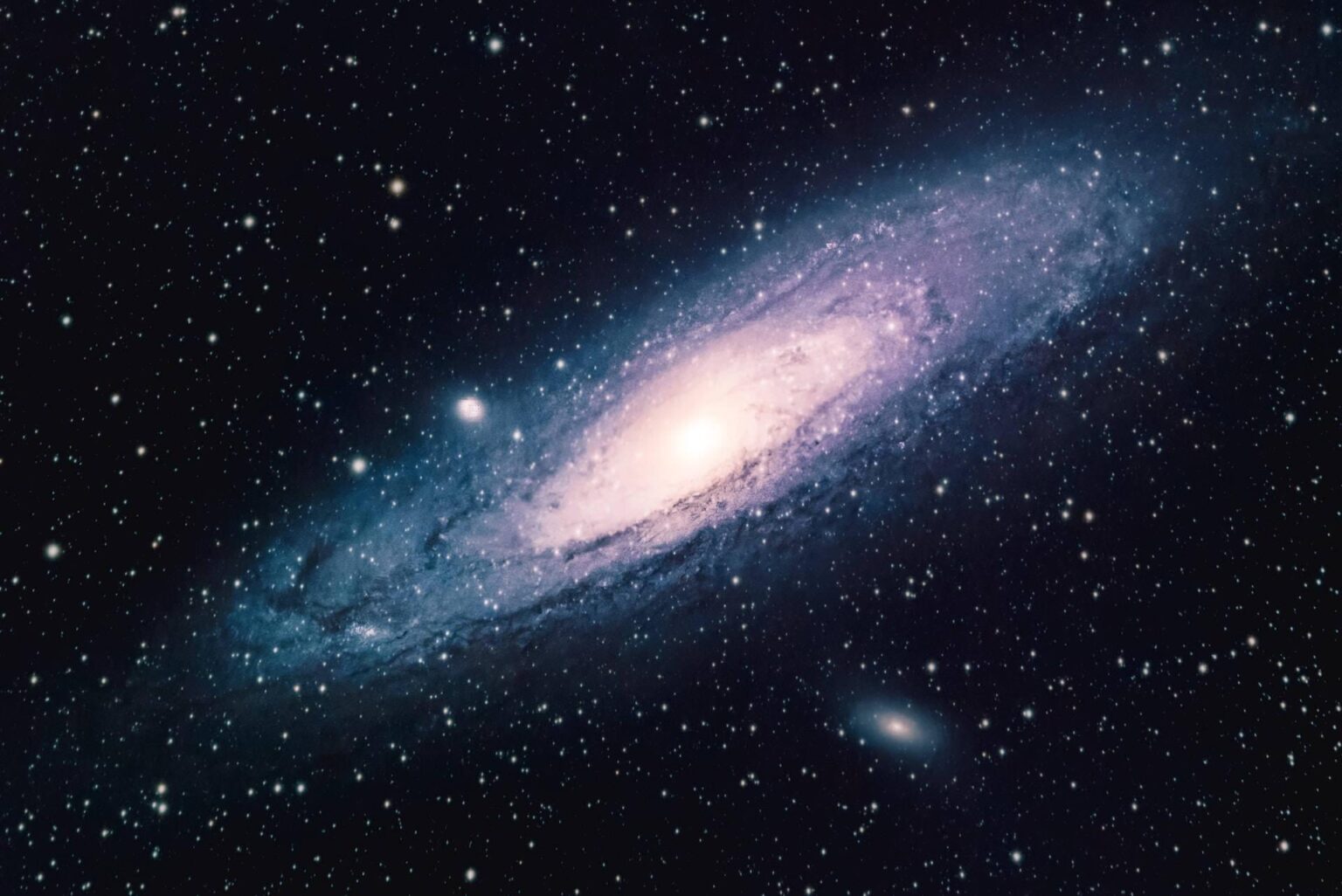
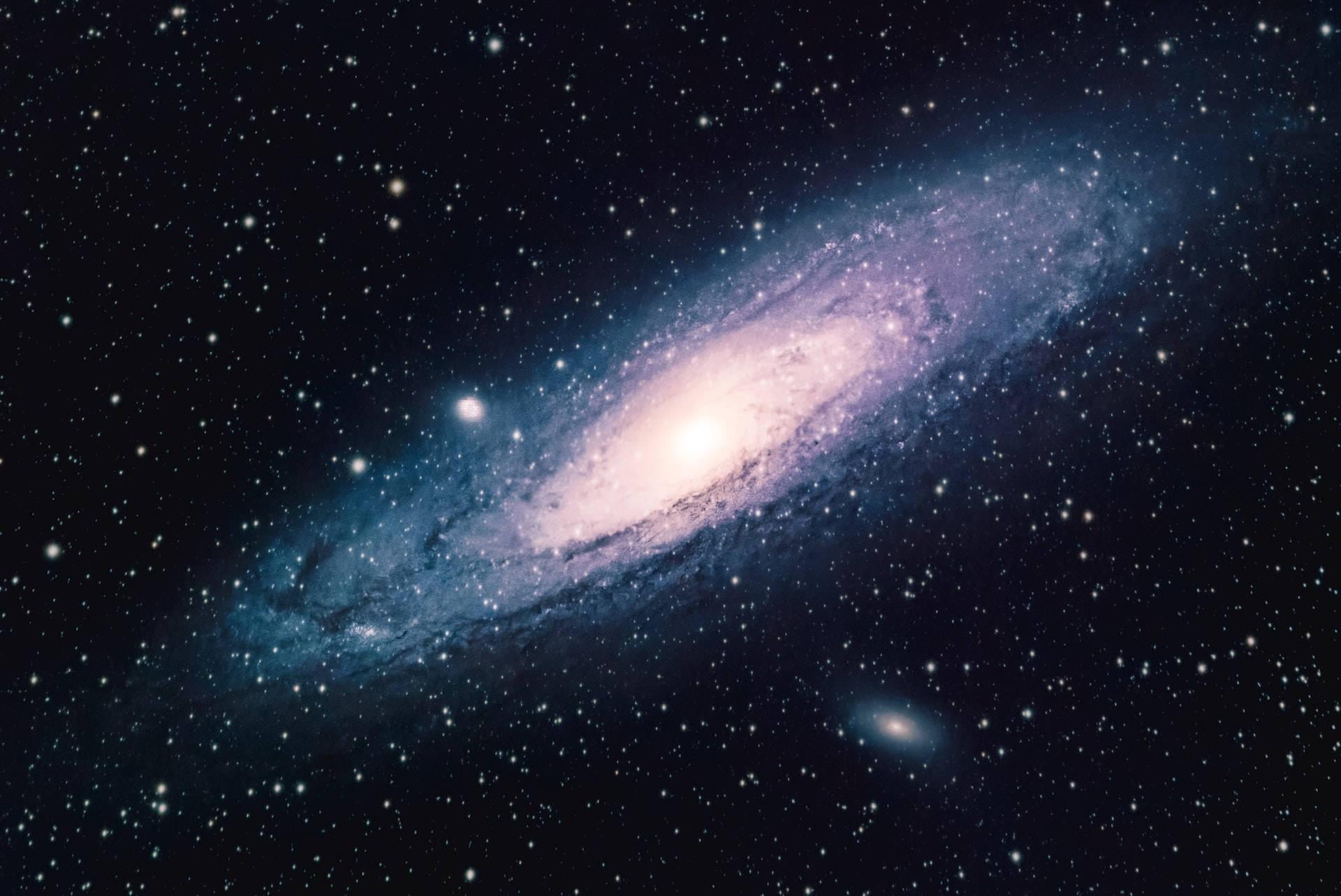
In October 1923 Edwin Hubble discovered the Andromeda galaxy which changed our view of the universe forever. This discovery showed that the universe was much bigger than anyone has ever realized. Through his knowledge of the redshift effect and his knowledge of mathematics he was able to calculate the distance to the Andromeda galaxy.
When reading about his discovery I remember that the book read that he calculated the distance to be roughly 1.8 million light years away. When reading another book published in the 90's it mentioned that it was about 2 million light years away. I know that as technology gets better, they can get more accurate calculations in regard to distances between objects in the universe.
They also mention that the universe is expanding and that the expansion of the universe is speeding up. They also mention that the Andromeda galaxy is going to collide with the Milky Way in the distant future. Which is it? Is the Andromeda going to collide with the Milky Way or not?
Today, when watching videos with Neil deGrasse Tyson he mentions that the Andromeda galaxy is now 2.5 million light years away. Based upon those 3 values I am at the conclusion that the Andromeda galaxy is slowly moving away from the Milky Way and that it will never collide with it. Ultimately, we will never be around to know for sure. What do you think? What theory is correct?
by HalfblindChaos
5 Comments
Andromeda will in fact collide with the Milky Way. It’s one of the few galaxies that instead of being redshifted, shows a blue shift; that means it’s accelerating towards us. Eventually we’ll merge with Triangulum also.
Hubble didn’t *discover* Andromeda; it’s been known since ancient times and was previously referred to as a nebula. He just determined that it was in fact a discrete community of stars like our own galaxy and disproved the notion that the Milky Way was the whole of the universe.
Andromeda will not move appreciably to our senses or even to our instruments at a scale of our lifetimes. What changes is the accuracy of the calculations. Distance estimates are continually being refined. This does not reflect an actual change in distance.
Andromeda did not move 500,000 light years in 100 years. This is obviously impossible. Andromeda is definitely coming our way, we can tell through blueshift (opposite of redshift since it is coming at us). Whether or not it will directly collide is iffy.
Space is expanding, yes. But Andromeda is close enough that its velocity THROUGH space is more important that the speed of expansion of its patch of space relative to us.
The local group (Milky Way, andromeda, and assorted dwarf galaxies) is gravitationally bound, and that gravity is strong enough to bring these galaxies closer together despite the expansion. The other galaxies outside of those, even the close by Virgo supercluster, are far enough away that the expansion of the universe will overcome gravitational attraction so those are moving away. That being said, the Milky Way and andromeda are likely on a collision course, but the LMC and M33 are also pulling on the larger galaxies so it’s not known for certain if and when that collision will happen, but they are getting closer.
>In October 1923 Edwin Hubble discovered the Andromeda galaxy
This isn’t quite correct. He didn’t discover the Andromeda galaxy (it’s visible to the naked eye and had been seen as long as humans lived), he just discovered that it was a galaxy like ours and not a nebula.
>They also mention that the universe is expanding and that the expansion of the universe is speeding up. They also mention that the Andromeda galaxy is going to collide with the Milky Way in the distant future. Which is it? Is the Andromeda going to collide with the Milky Way or not?
Both are true. The universe is expanding *and* Andromeda is moving towards us and is (likely) going to merge with the Milky Way. The expansion of the universe is only apparent on the the largest of scales, meaning entire clusters of galaxies. Locally, gravity holds galaxy groups together, and since Andromeda is in the same galaxy group as us, our mutual gravity is overpowering the expansion of the universe and bringing us closer together.
>Based upon those 3 values I am at the conclusion that the Andromeda galaxy is slowly moving away from the Milky Way and that it will never collide with it
Your conclusion is incorrect (see above). The difference in the numbers is just due to better measuring techniques and also different points that we’re measuring from (i.e., are we measuring from the edge of our galaxy to the edge of Andromeda, from the center of each galaxy…etc)