
Last Updated:November 15, 2025, 15:11 IST
Hidden beneath Mars’ rust-red dust, ancient caves may guard the planet’s oldest secrets — and possibly even long-lost traces of life still waiting to be found, scientists say
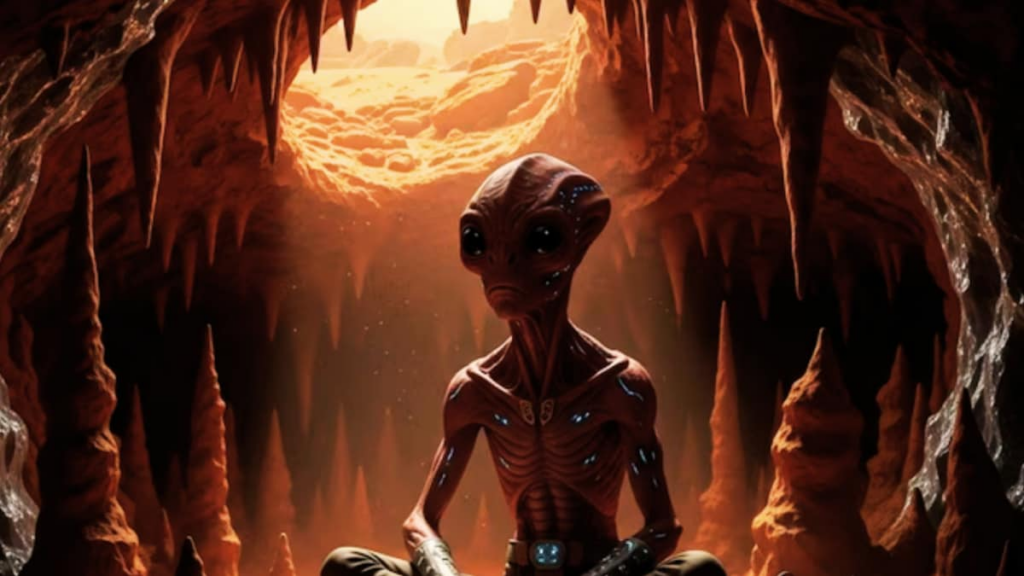
Researchers have proposed that future human missions should explore these Martian caves, as they may hold traces of ancient life. (AI Generated)
As space agencies across the world continue to debate the existence of extraterrestrial life, China has put forward a striking new claim about Mars. According to a team of scientists from Shenzhen University, they may have uncovered the first evidence suggesting the Red Planet once hosted conditions suitable for alien life.
The researchers report discovering a new type of cave system on Mars, one that may have formed through the action of water pressure. On Earth, similar formations are known as karstic caves.
Their study suggests these underground structures could once have created an environment capable of supporting microbial life. The team has even proposed that future human missions should explore these caves, as they may hold traces of ancient life that once thrived in water-filled chambers.
Natural Shelters For Future Human Missions?
In addition to their scientific significance, these caves could also serve as natural shelters and research outposts.
Unlike the exposed Martian surface, marked by dust storms, intense radiation, and extreme temperatures, these underground spaces may provide relatively safer conditions.
Eight Mysterious ‘Skylights’ In Hebrus Valles
Led by Chenyu Ding, the researchers examined eight suspected cave openings, or ‘skylights’, in the Hebrus Valles region of Mars’s northern hemisphere. These pits were initially mapped during earlier Mars missions.
Their findings, published in The Astrophysical Journal Letters, explain that most known Martian caves are volcanic lava tubes. However, this new evidence points towards caves shaped by water-related processes.
Water-Carved Structures Backed By NASA Data
Using data collected by NASA’s Mars Global Surveyor through its Thermal Emission Spectrometer (TES), the team found the surrounding terrain to be rich in carbonates and sulphates, minerals that dissolve readily in water. High-resolution imagery allowed the scientists to create 3D structural models, revealing the caves’ possible shapes and dimensions.
Researchers believe these formations mirror the karstic caves found on Earth, which develop when water erodes soluble rock, gradually carving out underground chambers. If confirmed, these eight Martian caves could become key targets for future robotic and human exploration, and potentially the strongest indication yet that life on Mars was once possible.
First Published:
November 15, 2025, 15:11 IST
News world Did Aliens Once Live In Martian Caves? China Uncovers Stunning CluesDisclaimer: Comments reflect users’ views, not News18’s. Please keep discussions respectful and constructive. Abusive, defamatory, or illegal comments will be removed. News18 may disable any comment at its discretion. By posting, you agree to our Terms of Use and Privacy Policy.
Read More