
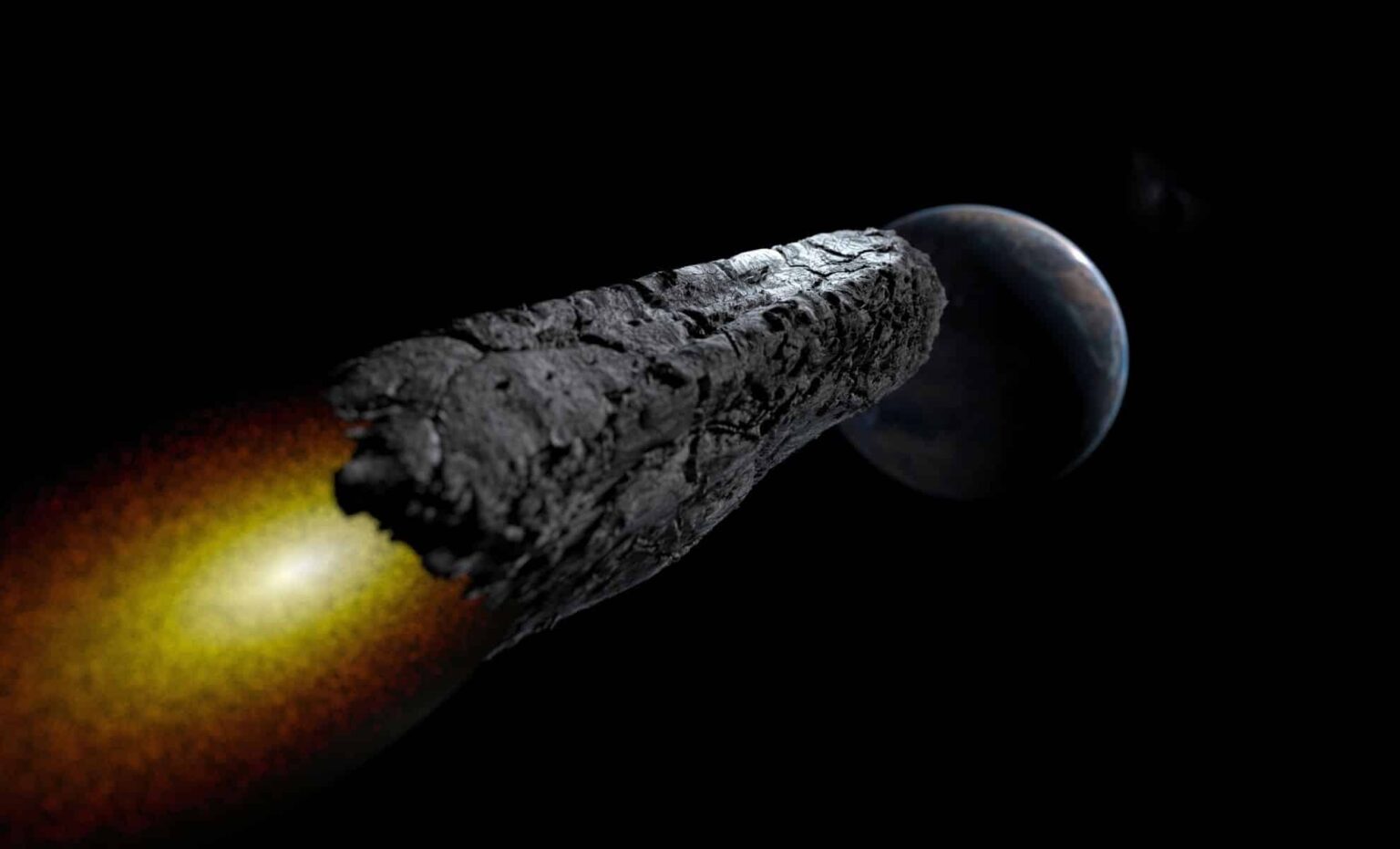
3I/ATLAS, the third known interstellar object to pass through our solar system, has already intrigued astronomers since its discovery in July 2025. While early observations suggested it was a typical comet, recent developments have raised questions that point to something far stranger.
The latest images, captured on November 8, show the object emitting at least seven distinct jets, with some pointing directly toward the Sun, an unusual phenomenon for a comet. This behavior has led to renewed speculation, particularly from Loeb, who has argued that the jets might be the result of a technological propulsion system rather than natural processes.
The latest developments have pushed the debate into the public eye. With 3I/ATLAS making its closest approach to Earth in December 2025, scientists are eagerly awaiting new data to help unravel the mystery surrounding this object.
The Mystery of the Jets
The most recent images of 3I/ATLAS show a complex network of jets extending out from the object. According to astronomers Michael Jager, G. Rhemann, and E. Prosperi, who captured the images on November 8, 2025, the object’s jets stretch over half a million kilometers in some directions.
While many of the jets appear to be typical of a comet’s behavior, some are directed toward the Sun, creating what is known as “anti-tails.” This phenomenon has baffled scientists, as comets generally have tails pushed away from the Sun by solar winds. The unusual nature of these jets has prompted Loeb to suggest that they could be the result of propulsion systems akin to thrusters, possibly used for navigation by an artificial spacecraft.
However, Loeb has also acknowledged that a natural explanation remains possible. The jets could simply be caused by pockets of ice sublimating as the object nears the Sun. Still, the sheer complexity and the directionality of the jets make this interpretation difficult to confirm, and Loeb remains open to the possibility of extraterrestrial technology.
One of the most striking anomalies associated with 3I/ATLAS is its non-gravitational acceleration, a key piece of evidence that challenges the idea that it is a typical comet. According to Loeb, this unusual acceleration suggests that 3I/ATLAS is being propelled by something more than just solar radiation. Normally, a comet will experience a small amount of acceleration due to the solar wind pushing on its tail. However, 3I/ATLAS has been exhibiting acceleration that cannot be explained by gravitational forces alone.
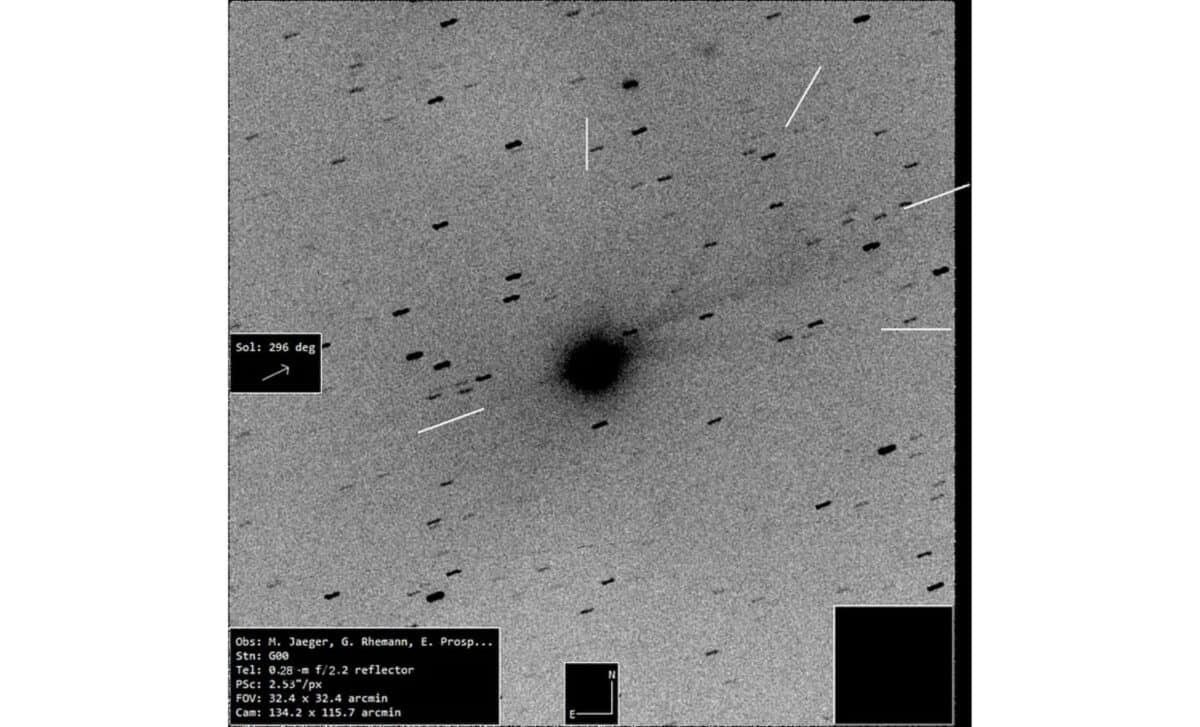 3I/ATLAS November 8 pictures ©M. Jager, G. Rhemann, E. Prosperi
Loeb’s Theory: An Alien Probe?
Harvard’s Dr. Avi Loeb has been one of the most vocal proponents of the idea that 3I/ATLAS could be more than just a comet. He has suggested that the object’s strange characteristics, such as its non-gravitational acceleration, blue hue, and the possibility of artificial jets, point to the possibility that 3I/ATLAS is an alien spacecraft. Loeb’s arguments have captivated both the scientific community and the public, but his theories have also sparked skepticism. NASA, for example, has stated that 3I/ATLAS is most likely a natural object and poses no threat to Earth.
Still, Loeb’s speculations are based on several pieces of data. For instance, he has noted that the object’s blue glow could indicate ionized carbon monoxide, a potential byproduct of an internal engine. Furthermore, Loeb has suggested that technological propulsion systems would require significantly less mass to be ejected at much higher speeds, which could explain the object’s observed behavior. As Loeb continues to call for more high-resolution images of the object, the world waits for the next phase of observations to determine whether 3I/ATLAS is a natural object or something far more extraordinary.
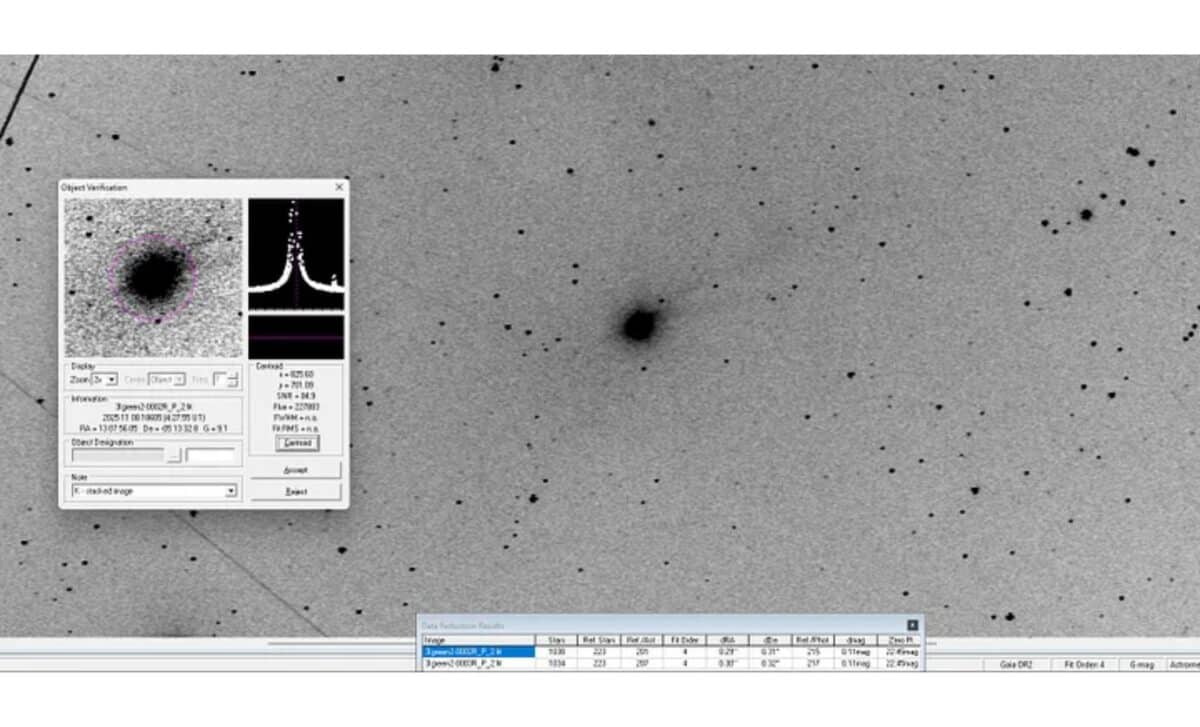 3I/ATLAS Stacked RGB images ©M. Jager, G. Rhemann, E. Prosperi
The debate surrounding 3I/ATLAS is far from over. With the object making its closest approach to Earth in December, the coming weeks will provide scientists with more opportunities to gather data and attempt to unravel the mystery of this interstellar visitor. Whether it is a comet or a spacecraft, 3I/ATLAS has certainly captured the imagination of astronomers and the public alike, raising profound questions about the nature of objects that travel through our solar system.