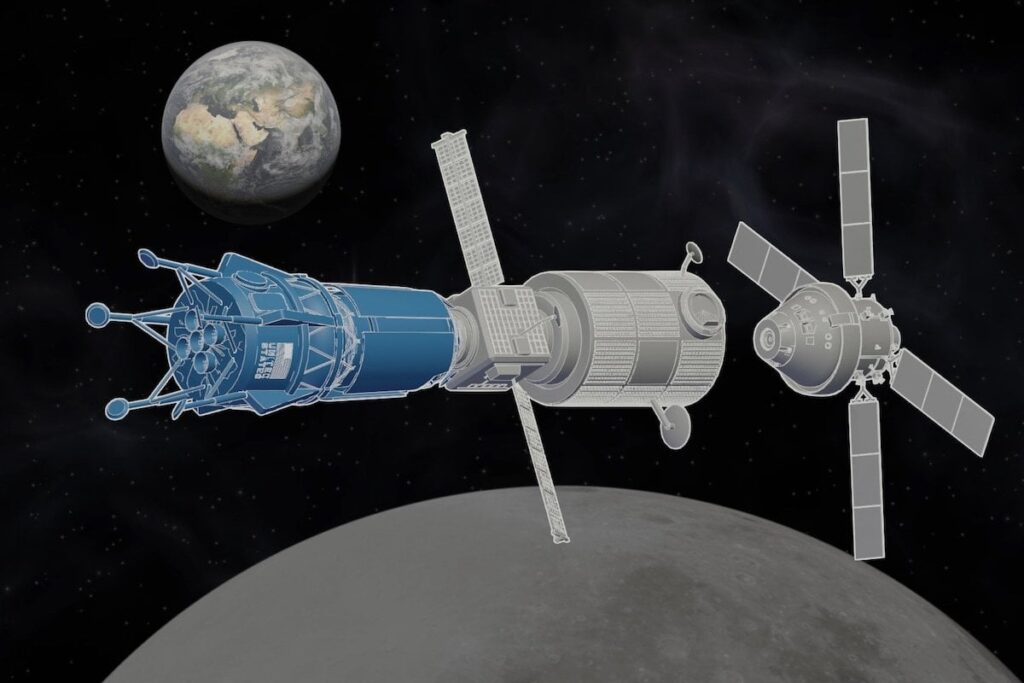
This article features a nice animation of the Blue Origin contribution to the Artemis lunar ambitions. I particularly like the demonstration of how Gateway can serve as a rendezvous point and human habitation outpost during the Artemis missions.
I posted this because I think it’s important to recognize that Artemis is not a singular piece of space hardware, but a “system of systems” that allows for flexibility and redundancy.
ofWildPlaces on
For those that got stuck at the paywall, I’ve posted the article below. However, the article is heavy with graphic animations. Text format doesn’t do it justice.
​
By William Neff, Christian Davenport and Talia Trackim
Oct. 31 at 6:00 a.m.
NASA’s next missions to land astronauts on the moon will be markedly different from its last one in 1972. Instead of flying directly to the moon, the spacecraft will be refueled in transit — an innovation that could transform the way humans explore the cosmos.
In addition to possibly making regular trips to the moon less expensive, in-flight refueling could enable missions deeper into space. NASA is spending billions to help make the technology a reality: Earlier this year, the space agency awarded a $3.4 billion contract to Blue Origin, the venture founded by Jeff Bezos. Previous contracts worth about $4 billion went to Elon Musk’s SpaceX, which is scheduled to fly the first two missions later this decade, with Blue Origin to follow.
But while SpaceX intends to refuel its massive Starship in low Earth orbit with a fleet of tanker spacecraft, Blue Origin proposes something different: a reusable lunar lander that will stay in orbit around the moon between trips to the lunar surface. The company also is working on a refueling spacecraft it calls a cislunar transporter that will carry fuel from Earth orbit to lunar orbit, where it will link up with the lander. (Bezos owns The Washington Post.)
Here’s a look at the Blue Origin plan NASA has embraced
Part 1: Launching to the moon
Blue Origin’s lunar lander, called Blue Moon, would stand about 52 feet tall, with four legs. It would launch on Blue Origin’s New Glenn rocket.
Story continues below advertisement
Advertisement
NASA hopes to find water in the form of ice in the permanently shadowed craters of the lunar south pole. Water is not only vital to sustain human life; its component parts, hydrogen and oxygen, can be used as rocket fuel. That’s why Blue Origin is proposing powering its lander with the liquid forms of hydrogen and oxygen. Spacecraft that can be refueled could be used again and again, driving down the cost of space travel, NASA hopes, and allowing a more permanent presence on and around the moon.
About this story
Text by Christian Davenport. Graphics by William Neff. Design and development by Talia Trackim.
Additional development by Frank Hulley-Jones.
Editing by Manuel Canales, Betty Chavarria, Mark Seibel and Karly Domb Sadof.

3 Comments
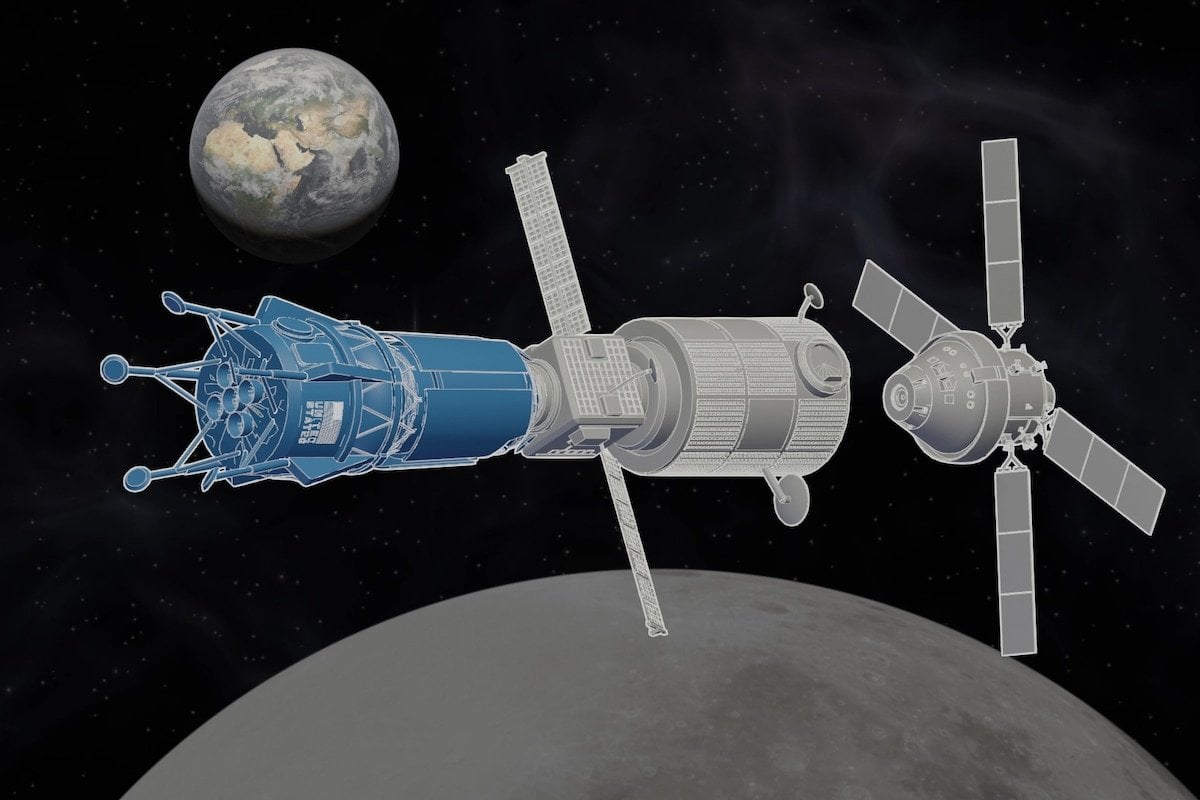
This article features a nice animation of the Blue Origin contribution to the Artemis lunar ambitions. I particularly like the demonstration of how Gateway can serve as a rendezvous point and human habitation outpost during the Artemis missions.
I posted this because I think it’s important to recognize that Artemis is not a singular piece of space hardware, but a “system of systems” that allows for flexibility and redundancy.
For those that got stuck at the paywall, I’ve posted the article below. However, the article is heavy with graphic animations. Text format doesn’t do it justice.
​
By William Neff, Christian Davenport and Talia Trackim
Oct. 31 at 6:00 a.m.
NASA’s next missions to land astronauts on the moon will be markedly different from its last one in 1972. Instead of flying directly to the moon, the spacecraft will be refueled in transit — an innovation that could transform the way humans explore the cosmos.
In addition to possibly making regular trips to the moon less expensive, in-flight refueling could enable missions deeper into space. NASA is spending billions to help make the technology a reality: Earlier this year, the space agency awarded a $3.4 billion contract to Blue Origin, the venture founded by Jeff Bezos. Previous contracts worth about $4 billion went to Elon Musk’s SpaceX, which is scheduled to fly the first two missions later this decade, with Blue Origin to follow.
But while SpaceX intends to refuel its massive Starship in low Earth orbit with a fleet of tanker spacecraft, Blue Origin proposes something different: a reusable lunar lander that will stay in orbit around the moon between trips to the lunar surface. The company also is working on a refueling spacecraft it calls a cislunar transporter that will carry fuel from Earth orbit to lunar orbit, where it will link up with the lander. (Bezos owns The Washington Post.)
Here’s a look at the Blue Origin plan NASA has embraced
Part 1: Launching to the moon
Blue Origin’s lunar lander, called Blue Moon, would stand about 52 feet tall, with four legs. It would launch on Blue Origin’s New Glenn rocket.
Story continues below advertisement
Advertisement
NASA hopes to find water in the form of ice in the permanently shadowed craters of the lunar south pole. Water is not only vital to sustain human life; its component parts, hydrogen and oxygen, can be used as rocket fuel. That’s why Blue Origin is proposing powering its lander with the liquid forms of hydrogen and oxygen. Spacecraft that can be refueled could be used again and again, driving down the cost of space travel, NASA hopes, and allowing a more permanent presence on and around the moon.
About this story
Text by Christian Davenport. Graphics by William Neff. Design and development by Talia Trackim.
Additional development by Frank Hulley-Jones.
Editing by Manuel Canales, Betty Chavarria, Mark Seibel and Karly Domb Sadof.
When reading such stories in this newspaper, I think it’s important to know that the [owner of Blue Origin](https://www.reuters.com/technology/space/bezos-blue-origin-sees-split-space-station-partnership-sources-2023-10-02/) – Jeff Bezos – also [owns the Washington Post.](https://www.washingtonpost.com/about-the-post/)