
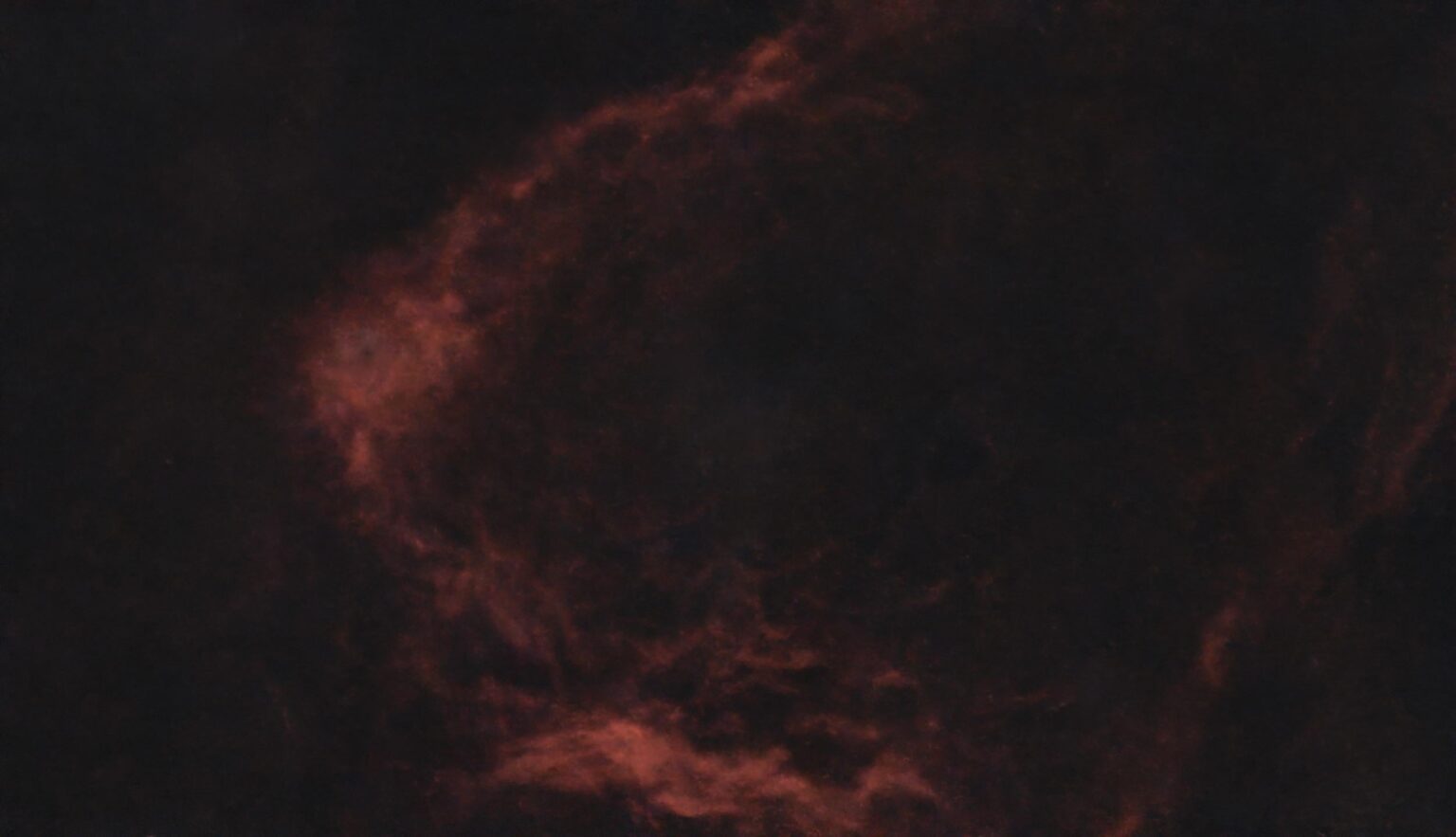
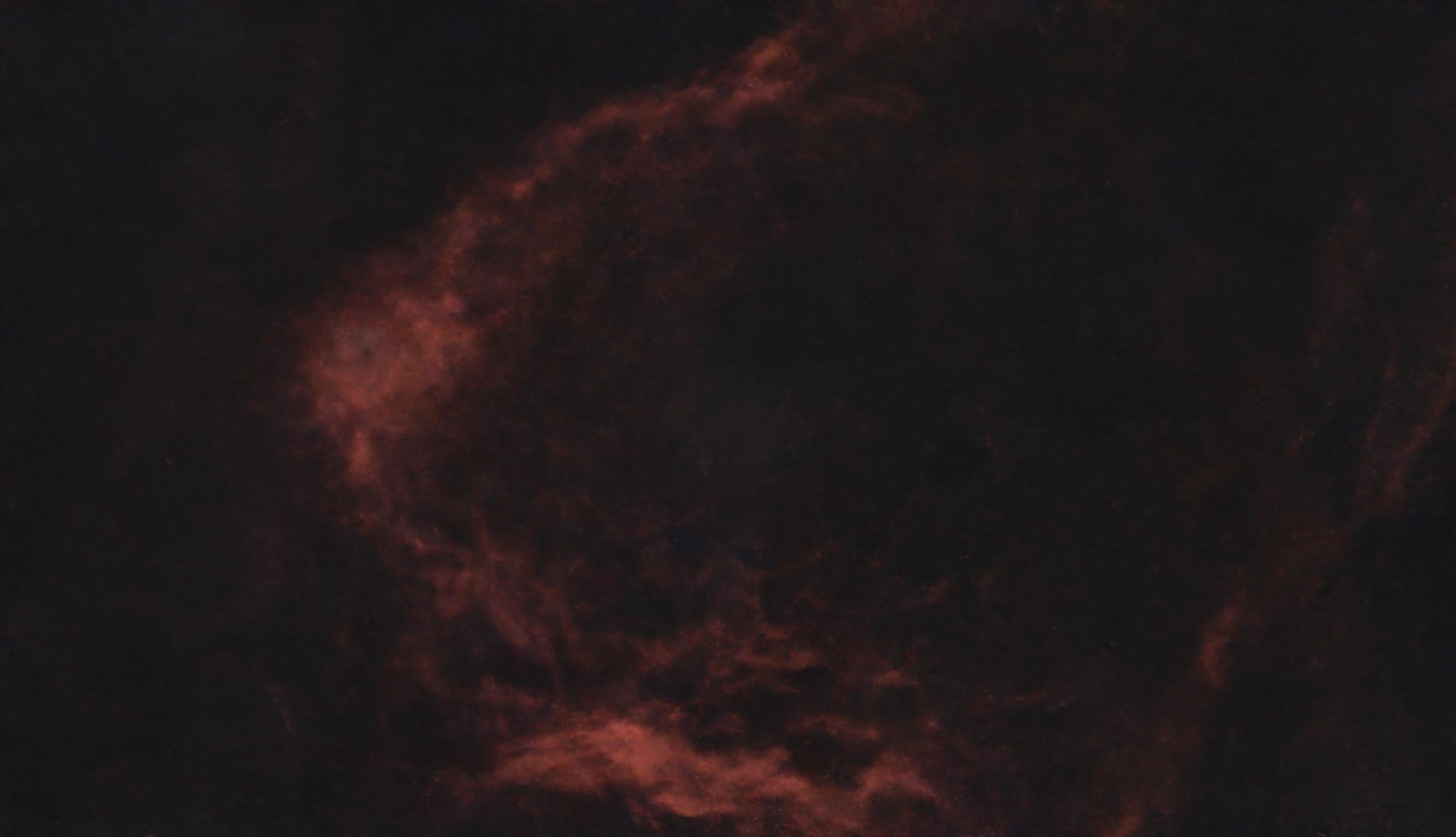
Seventeen hours and thirty three minutes on OU4 and it is a non detection, which I think is worth posting. There is a faint teal smudge near the center of my starless frame that looked like oxygen, so I tested it before believing it.
The diffuse OIII measures about 0.2 sigma above the sky background, which is just noise. Two features cross three sigma, but they sit exactly on stars, so they are star removal residuals. The red and the oxygen proxy track at 0.90 in the stretched export, so most of the blue is hydrogen crossing channels, not independent oxygen. To rule out a false positive I rebuilt the significance map, removed the hydrogen correlated part with a cubic fit, smoothed, and scaled everything to sigma above the sky measured in the corners. The smudge does not survive.
Acquisition:
DWARF 3, 35mm aperture, f/4.3, Duo-Band filter, 17h33m total integration, Bortle 6.
Processing:
Stacked in Stellar Studio, analysis on the exported image. I know the export is the weak link, an eight bit stretched file is the worst case for faint signal, so the next pass is the linear stack in Siril.
I know the gear is the limit here. This is the wrong aperture and filter combination for OU4. What did it take those of you who have landed it, aperture, filter, and hours?
Full writeup and the significance maps: https://dwarfastro.com/2026/06/23/seventeen-hours-on-the-squid-nebula-ou4-and-the-blue-i-wanted-to-see/
by AstroFanM31