
Enabling & Support
03/06/2026
876 views
3 likes
An ESA-backed study confirmed that an independent European supply of plutonium‑238 (Pu‑238), can be achieved using capabilities already in place today.
Optimum Pro, as the Endure project is known, conducted by Tractebel Engie with support from SCK CEN, examined the scientific, technical, regulatory, safety, economic and infrastructure needs of establishing a European supply chain for Pu-238. The final report confirmed that production by ESA’s Member States is mainly technically and economically feasible with key existing infrastructure and sets out a road map from now until 2039.
“Producing Pu-238 is feasible and the assets already exist in Europe,” said Brieuc Spindler, lead engineer at Tractebel Engie. He added that the studies have translated an initial idea into a robust, quantified roadmap supported by scientific and economic evidence. “It’s not a matter of capabilities, we have the raw material and reactors to irradiate it and the knowhow and systems to do so.”
The roadmap shows the powerful concept that Europe already holds all the pieces needed to build a sovereign space nuclear capability. From neptunium‑237 recovered in existing nuclear fuel cycles, to world-class research reactors such as Belgium’s BR2 and France’s upcoming Jules Horowitz Reactor, the continent possesses a ready-made ecosystem capable of supporting Pu‑238 production end-to-end.
How is nuclear fuel produced
Producing Pu-238 begins with neptunium 237, a product already being recovered from nuclear fuel reprocessing but currently sent to the waste stream, which is formed into oxide pellets and prepared for irradiation. These pellets are placed in a high neutron flux reactor where they absorb neutrons and gradually transform into Pu-238. After irradiation the material must cool for up to two years before chemical separation yields a purified product suitable for use in space power systems.
Unlike nuclear power generators these are research reactors, more often used to generate isotopes for medical research and treatments.
The study identified no major technical or safety barriers and even complex steps, such as target fabrication and isotope separation, have been successfully demonstrated at laboratory scale. The main challenges the study identified were organisational: coordinating stakeholders, securing supply chains and aligning regulatory processes.
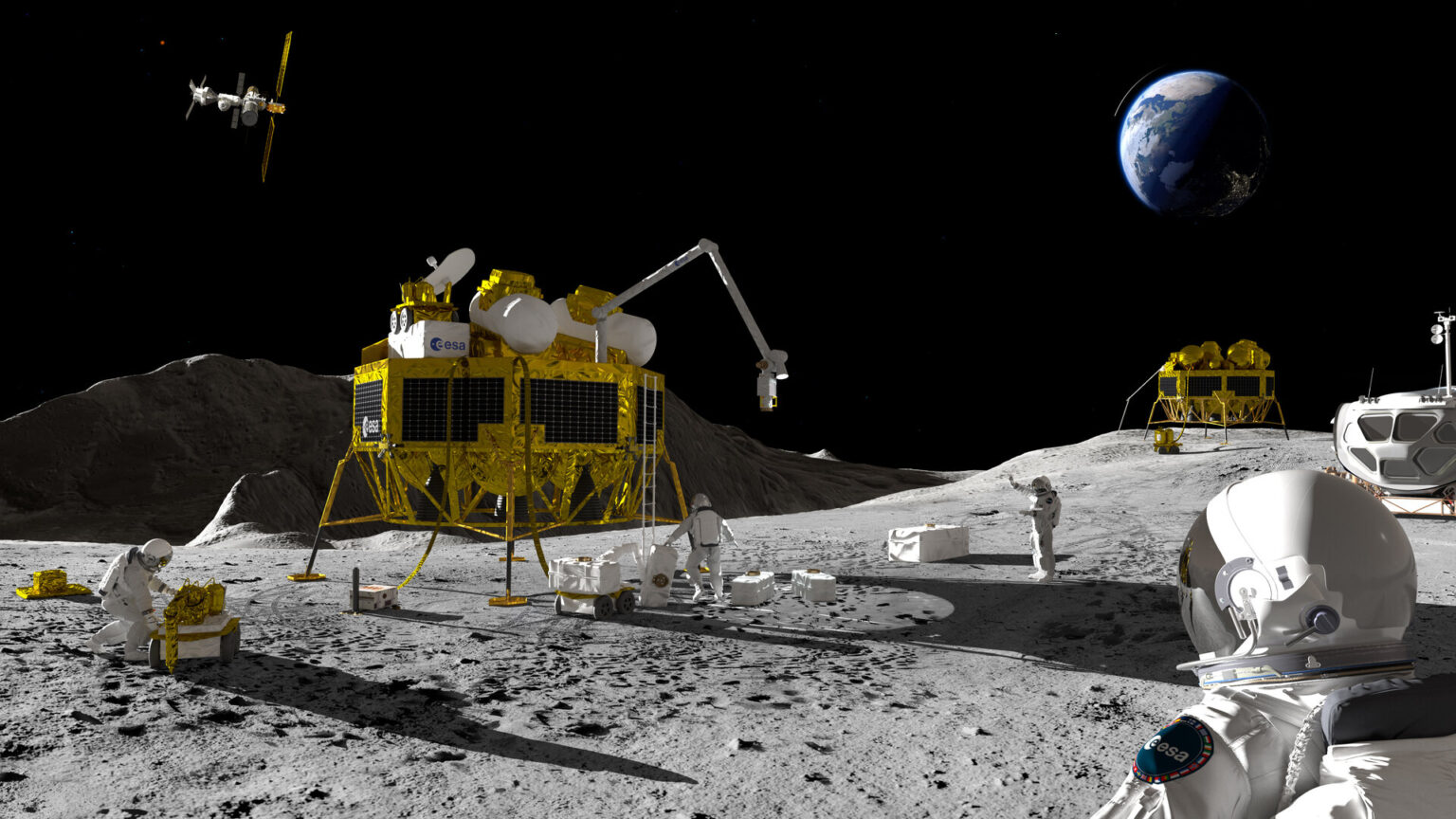
As ESA advances plans to explore low sunlight environments and develop long-term lunar and Martian presence, demand is growing for power systems that do not rely solely on solar energy. Radioisotope power systems are widely regarded as mission-critical. Some Apollo missions and Mars rovers used atomic batteries powered by Pu-238, a radioisotope produced in limited quantities in the United States and Russia.
Two sides to ENDURE
ESA’s ENDURE programme was set up to do just this. The EuropeaN Devices Using Radioisotope Energy is ESA’s programme to develop Europe’s own radioactive isotope power capability. it focuses on developing systems using americium 241 for the Exomars Rosalind Franklin rover.
“On paper, plutonium has a better ratio of power to kilograms when you compare it with americium, meaning its power systems can be lighter and less bulky. It also only produces alpha radiation. You can stop it with a sheet of paper, while americium needs to be encased in lead,” Brieuc says, detailing why plutonium has traditionally been the benchmark isotope for space mission efficiency. One of the issues foreseen with production of Plutonium-238 is that it reaches incredibly hot temperatures, which causes challenges for handling.
Lighter and more efficient
“Pu-238 may be more expensive upfront but it might make missions cheaper ultimately because it gives more power per kilogram,” explains Ruben Van Parys, a lead engineer on the project from Tractebel.
“Europe doesn’t just want to reach the Moon, others are already on that path. It wants to survive the lunar night, which would be a real differentiator. That technology doesn’t exist anywhere else. If we are on the Moon, with that capability it would set Europe apart. Having a system that can endure those extreme conditions opens the door not just for the Moon but for deep space, its exciting,” Brieuc enthuses. “But as you go further out, the power-to-mass ratio becomes critical and you have to stay as light as possible. If 1 kg to the Moon already costs around a million Euros, going all the way to the moons of Jupiter makes that constraint even more extreme. That’s where plutonium‑238 becomes a true enabler, making these ambitious deep-space missions possible.”
“It would be a miss if we don’t jump on this train in Europe, because we already have the tools and the capability to start production,” Brieuc concludes.
ENDURE was previously funded through ESA’s General Support Technology Programme, which is where this activity began. It now sits under HRE.
Like