
Agency
18/06/2026
13 views
0 likes
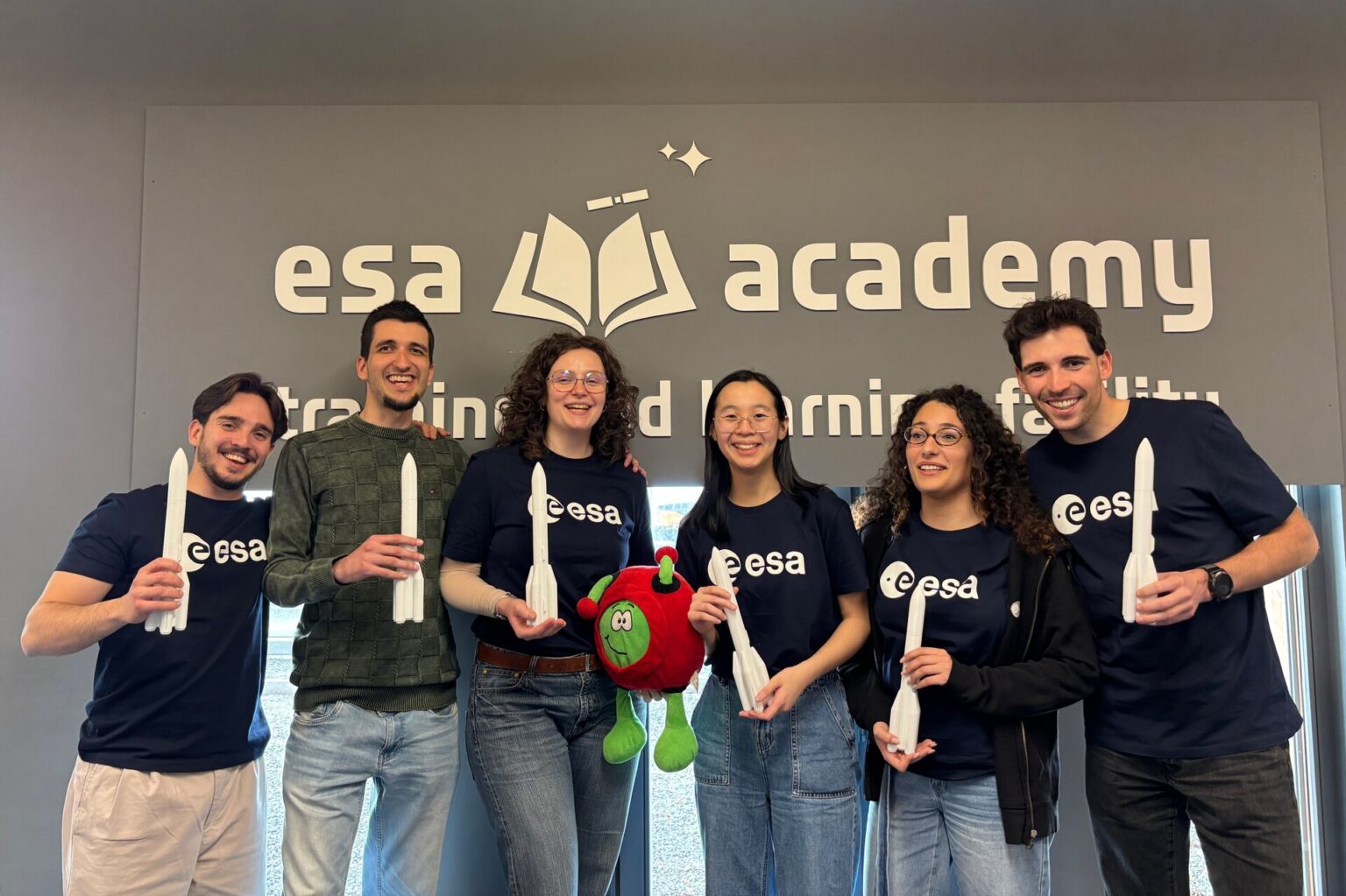
The first months of 2026 have given ESA Academy’s Training Programme a strong start, bringing together students from ESA Member States, Associate Members and Canada at ESA facilities to explore the technologies, operations, legal frameworks, and innovation shaping the future of space activities.
From technology transfer to space weather, all the first quarter courses combined expert-led lectures, hands-on exercises, team projects, and operational site visits, providing students with direct exposure to the realities of the space sector.
The year began with the Technology Transfer, Application & Innovation Workshop, held from 19 to 22 January at the ESA Education Training and Learning Facility in ESA ESEC-Galaxia, Belgium. Thirty students from 13 nationalities explored how technologies originally developed for space missions can be transformed into innovative terrestrial applications. Through practical exercises and teamwork, participants applied the technology transfer canvas methodology to develop startup concepts addressing real-world challenges using space-derived technologies. The workshop also introduced students to intellectual property management, business incubation, funding mechanisms, and commercialisation pathways. Presentations from successful startups demonstrated how space technologies can generate societal and economic impact beyond the space sector.
Students at the Ladybird Guide to Spacecraft Communications
From 9 to 13 February 2026, ESA Academy celebrated the 10th anniversary edition of the Ladybird Guide to Spacecraft Communications at ESA ESEC-Galaxia, Belgium, welcoming 30 university students from 13 nationalities. Throughout the week, students explored the fundamentals of spacecraft communications, including signal coding, transmission techniques, and operational communication challenges. Beyond lectures, participants formed Flight Control Teams and took part in realistic satellite pass simulations, gaining hands-on operational experience. A visit to the ESA ESEC-Redu site introduced students to PROBA missions and Galileo In-Orbit Testing operations, while one of the highlights of the course saw teams successfully commanding a FlatSat at ESA ESOC to capture images. The anniversary edition once again demonstrated the value of combining theory with realistic mission operations training.
Later, from 23 to 27 February, the CubeSat Concurrent Engineering Workshop brought together 30 students from across Europe at ESA ESEC-Galaxia, Belgium, for an intensive week of collaborative mission design. Working alongside ESA experts in subsystem teams, participants developed the preliminary design of a conceptual interplanetary CubeSat mission to Venus, envisioned as a piggyback payload for ESA’s future EnVision mission. Students addressed design challenges, mission trade-offs, atmospheric science objectives, and payload integration while experiencing the pace and complexity of real mission preparation. The workshop provided participants with first-hand experience of systems thinking, multidisciplinary coordination, and collaborative engineering under time pressure.
Students discussing Space Law with Paxi during the Introduction to Space Law Training Course
From 2 to 6 March, ESA Academy hosted the Introduction to Space Law Training Course at ESA ESEC-Galaxia, gathering 30 Bachelor and Master’s students from 16 nationalities. Participants explored the foundations of international space law, the UN Space Treaties, and the role of COPUOS in shaping global space governance. Through interactive exercises and case studies, students followed the legal lifecycle of a space mission, from conception to end-of-life operations. The course also introduced negotiation techniques and diplomatic processes through a Model United Nations-style group project, where participants represented national delegations negotiating international agreements related to space activities.
The Satellite Communication Systems Training Course followed from 16 to 20 March, developed in collaboration with ESA’s Directorate of Connectivity and Secure Communications. Thirty students from 17 nationalities explored satellite communication architectures, systems engineering principles, link budget calculations, antennas, optical communication technologies, security aspects, legal frameworks, and integration with terrestrial networks. Students worked collaboratively on mission design exercises addressing real-world communication challenges before presenting their concepts to ESA experts. The programme also included a visit to ESA ESEC-Redu’s operational facilities and an immersive virtual reality experience that allowed participants to observe ESA communication satellites up close.
A lecture during the Space Weather Training Course
The first quarter of 2026 concluded with the 4th edition of the Space Weather Training Course, organised jointly by ESA’s Education Office and Space Weather Office from 23 to 27 March at ESA ESEC-Galaxia. Thirty students representing 17 nationalities studied the Sun–Earth system and the impact of space weather on technological infrastructure and society. The course combined lectures, practical exercises, operational case studies, and visits to ESA’s Space Weather Coordination Centre and the PROBA Control Room at ESA ESEC-Redu. During the final group project, participants developed innovative space weather service concepts, demonstrating strong teamwork, creativity, and technical understanding.
Looking ahead, 2026 will also mark another important milestone in international cooperation through the continued collaboration between ESA and the African Space Agency (AfSA). Under the Africa-EU Space Partnership Programme (AESPP), a flagship initiative of the Global Gateway funded by the European Commission’s DG INTPA and co-implemented by ESA and AfSA, young African engineers and students will join European participants at ESA ESEC-Galaxia for upcoming ESA Academy training activities. This includes participation in the Spacecraft Testing Workshop (31 August – 4 September 2026) and the Earth Observation Satellite System Design Training Course (28 September – 9 October 2026).
Group work during the Space Weather Training Course
Across all activities delivered so far in 2026, ESA Academy has continued to emphasise hands-on learning, interdisciplinary collaboration, operational realism, and innovation. By working directly with ESA experts and engaging in realistic mission scenarios, students are gaining not only technical knowledge, but also the teamwork, critical thinking, and systems perspective required to shape the future of space exploration and space-enabled applications.
The future of space will be built by the people trained today and ESA Academy continues to place students at the centre of that journey.
Like