
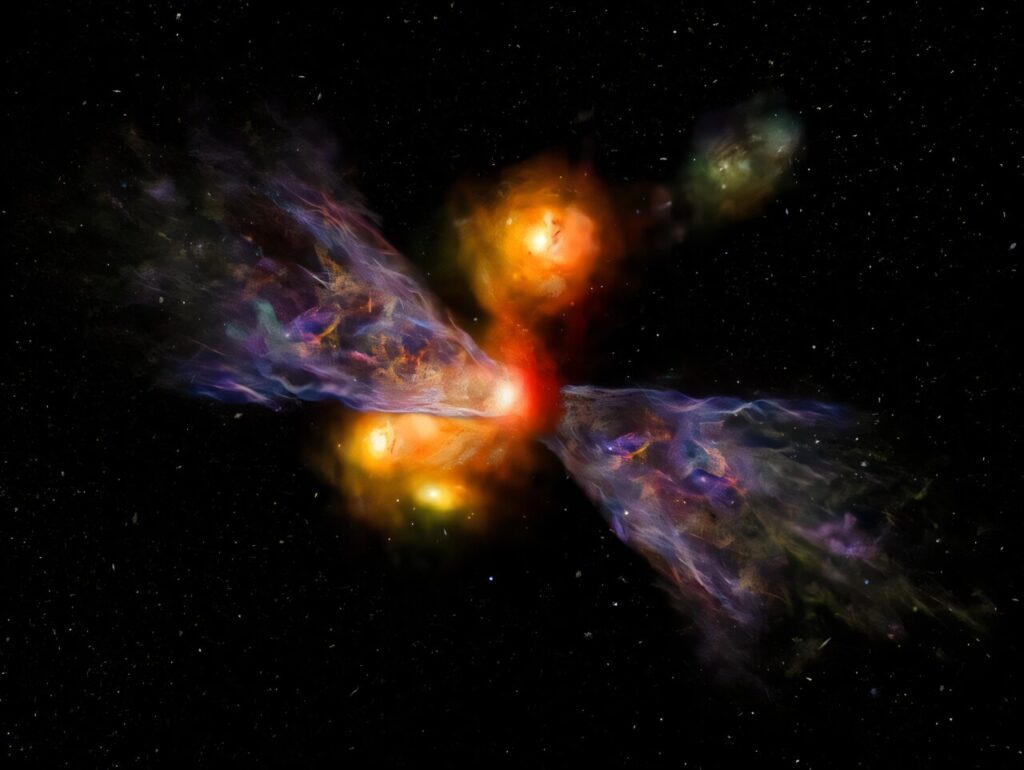
Astronomers have discovered a “galaxy-killing wind” that may explain why there are far more massive “dead” galaxies in the early universe than expected. This wind, resulting from cosmic collisions between galaxies, can quickly blow away all the fuel needed to form new stars, leaving the galaxy on the brink of death and helping to solve one of the greatest mysteries of modern astrophysics.
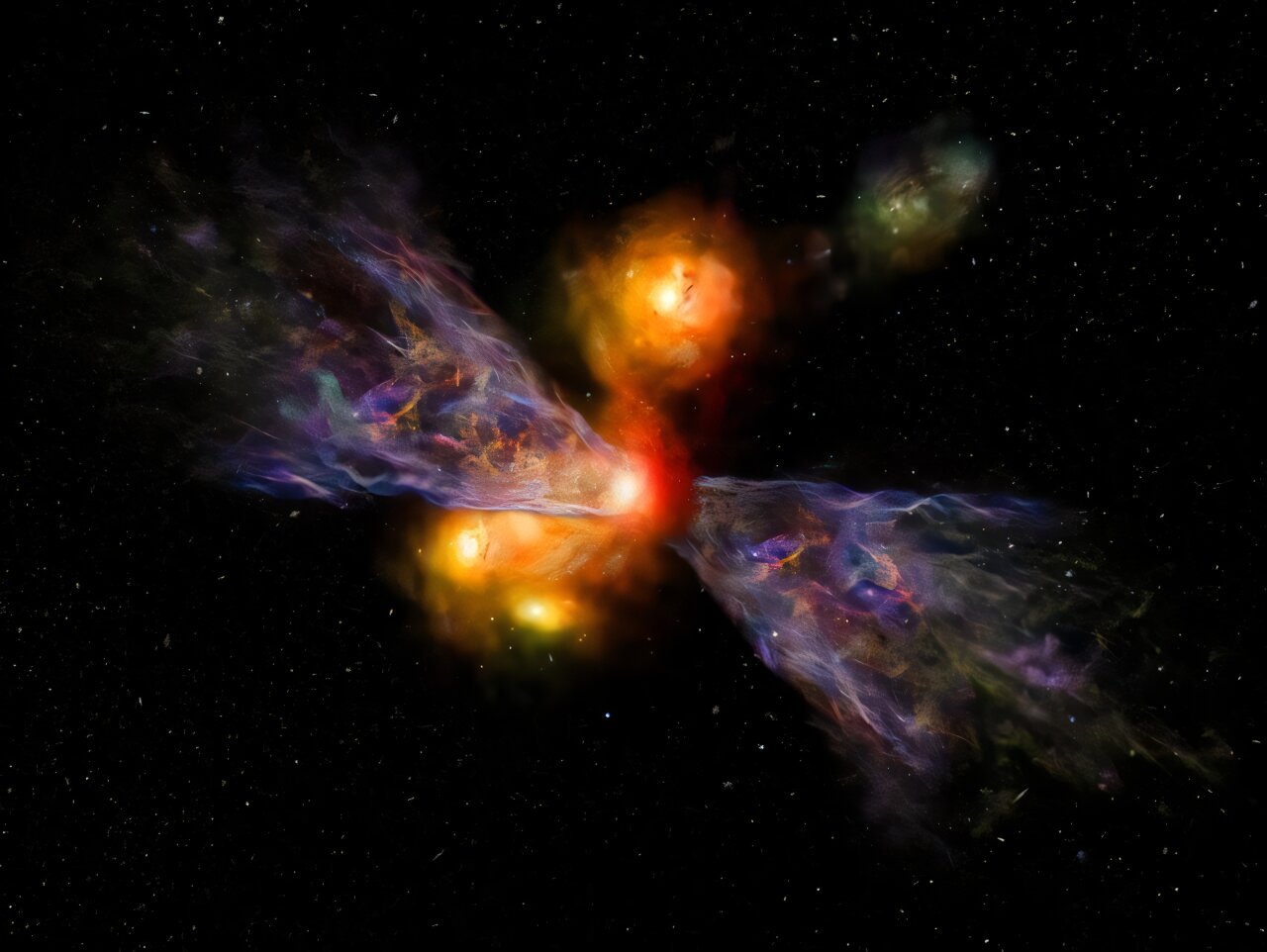 Shock waves are tearing the galaxy apart. Source: Joshua Worth via Creative Commons, CC-BY 4.0
Hypothesis about interstellar winds
The researchers behind a new study published on June 10 in the journal Monthly Notices of the Royal Astronomical Society used the James Webb Space Telescope to show that the winds that kill galaxies may be fueled by the very same intense star formation that causes galaxies to grow rapidly, explaining why these early galaxies live fast and die young.
“Dense regions of the universe are like very active cities,” said lead author Dr. Rebecca Davies of Swinburne University of Technology in Melbourne, who conducted the study alongside Associate Professor Deanne Fisher.
The scientist claims that galaxies collide with one another and undergo intense bursts of star formation. But when the largest stars burn out, they explode as supernovae, releasing powerful winds that disperse the very gas that galaxies need to form new stars.
Discovery of the CRISTAL-02 galaxy in the early Universe
Galactic winds have long been considered the prime suspects in the demise of massive galaxies, but until now, there has been a lack of supporting evidence. Using the James Webb Space Telescope and the Atacama Large Millimeter/submillimeter Array (ALMA), a team of scientists from Swinburne obtained an image of a galaxy that was in a phase of rapid growth 1 billion years after the Big Bang.
This galaxy, named CRISTAL-02, forms stars twice as fast as other galaxies of similar size. Extremely sensitive observations have revealed a massive trail of cold gas extending far from CRISTAL-02. This trail is nearly as long as the galaxy itself, a clear sign that gas is being ejected from the galaxy.
“The galaxy has a powerful wind that is ejecting material twice as fast as the galaxy forms stars,” Dr. Davies added. “If this rapid blowout continues, the galaxy could be dead in less than 50 million years, explaining the origin of the mysterious massive dead galaxies in the early universe.”
Star-forming bursts generate powerful winds
CRISTAL-02 is not a single galaxy, but a group of galaxies in the final stages of a cosmic collision. During such collisions, gas rushes toward the centers of the galaxies, triggering powerful bursts of star formation.
Dr. Davies believes that other galaxies are likely to face a fate similar to that of CRISTAL-02: they will experience violent bursts of star formation, followed by powerful winds that will lead to their demise.
“Almost half of early massive galaxies are interacting with other nearby galaxies, suggesting this isn’t a quirk but a widespread cosmic phenomenon,” she said. “If many early galaxies collide and experience rapid growth, then it may not be surprising that we see so many dead galaxies in the early universe. CRISTAL-02 offers a natural solution to the mystery of why these massive galaxies live fast and die young.”
According to phys.org