
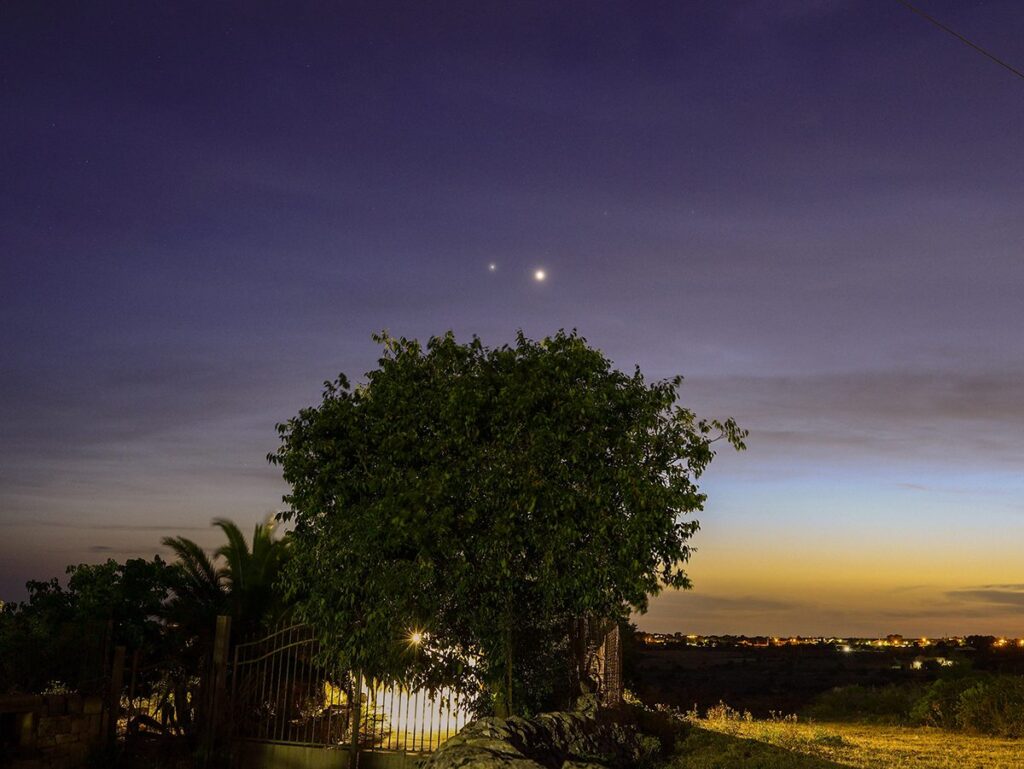
Look up at the western sky tonight just after sunset and you’ll see two bright stars shining side by side.
They’ll look like the two brightest stars in the sky, appearing at twilight before you can see any others.
But those bright points of light aren’t stars; they’re the planets Venus and Jupiter.
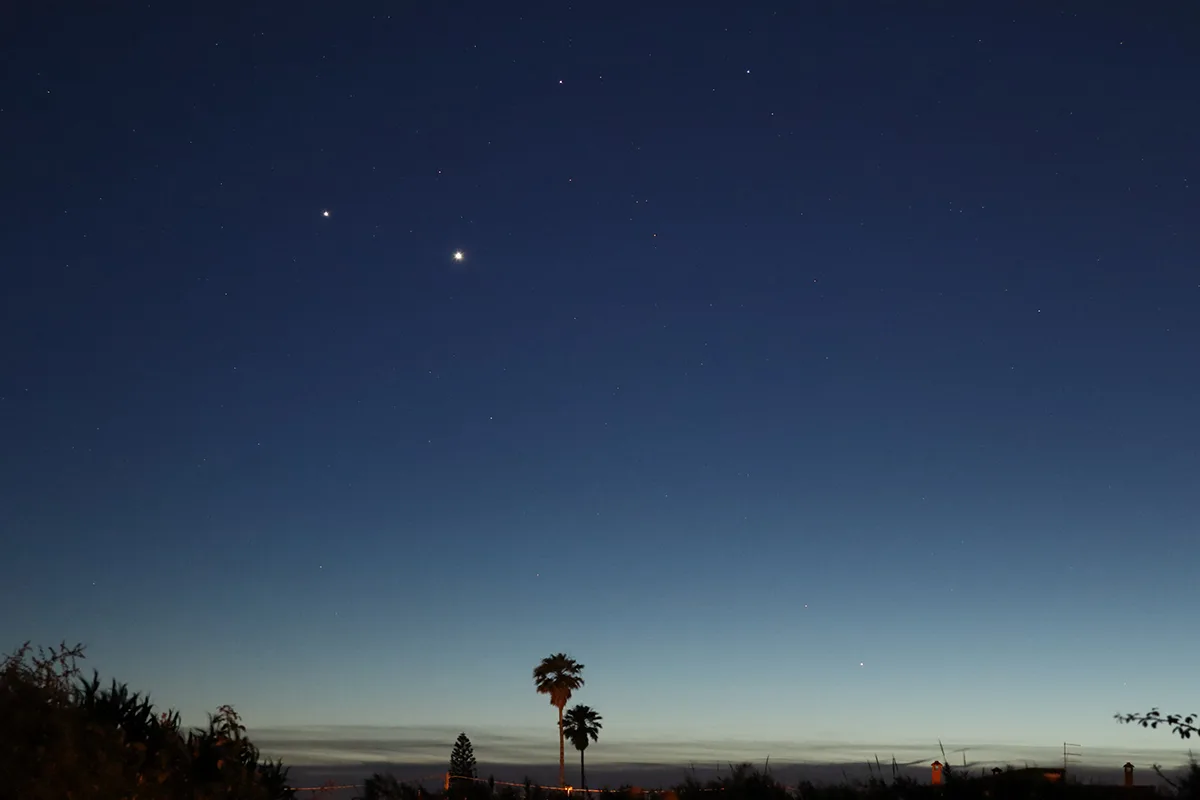 Venus, Jupiter, Mercury and Gemini are visible in this beautiful image captured by Roberto Ortu from Cabras, Sardinia, Italy, 6 June 2026, 22:03 local time
They’re currently positioned right beside each other in the night sky, which is what astronomer’s refer to as a ‘conjunction’.
enus and Jupiter have been closing in on one another for the past few weeks, and tonight, Monday 8 June, and Tuesday 9 June, is the best time to see them.
Here’s a quick, beginner’s guide to observing Venus, Jupiter and Mercury this week.
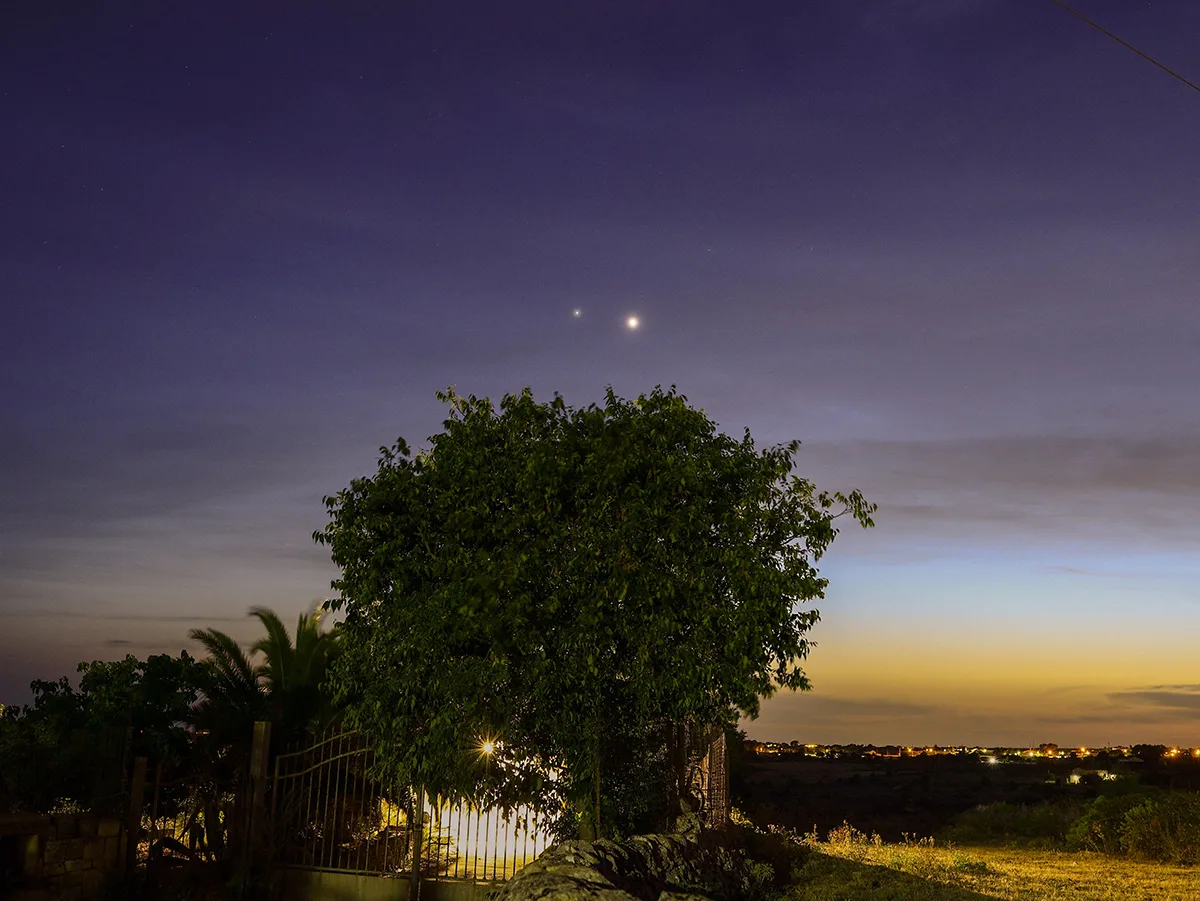 Giovanni Passalacqua captured this image of Venus and Jupiter side-by-side in the evening sky from Ragusa, Sicily, Italy last night, 7 June 2026 at 21:21 local time. Equipment: Canon EOS R DSLR camera, Sigma 35mm lens. Exposure: ISO 1250, f/4.5, 3.9s. Software: Photoshop
Where to look
Look to the west/northwest just after sunset.
It may helpful to have a clear western/northwestern horizon, because Venus and Jupiter will be relatively low in the sky
What time to look
Look about 45 minutes after sunset to catch Venus and Jupiter in the western sky, before they start setting towards the horizon.
What you’ll see
Venus and Jupiter will appear like a pair of bright stars close beside one another in the evening sky.
Of course, they’re not stars; they’re two planets of our Solar System. But they will look like small yet bright points of light.
Venus is the ‘star’ on the right and Jupiter is on the left.
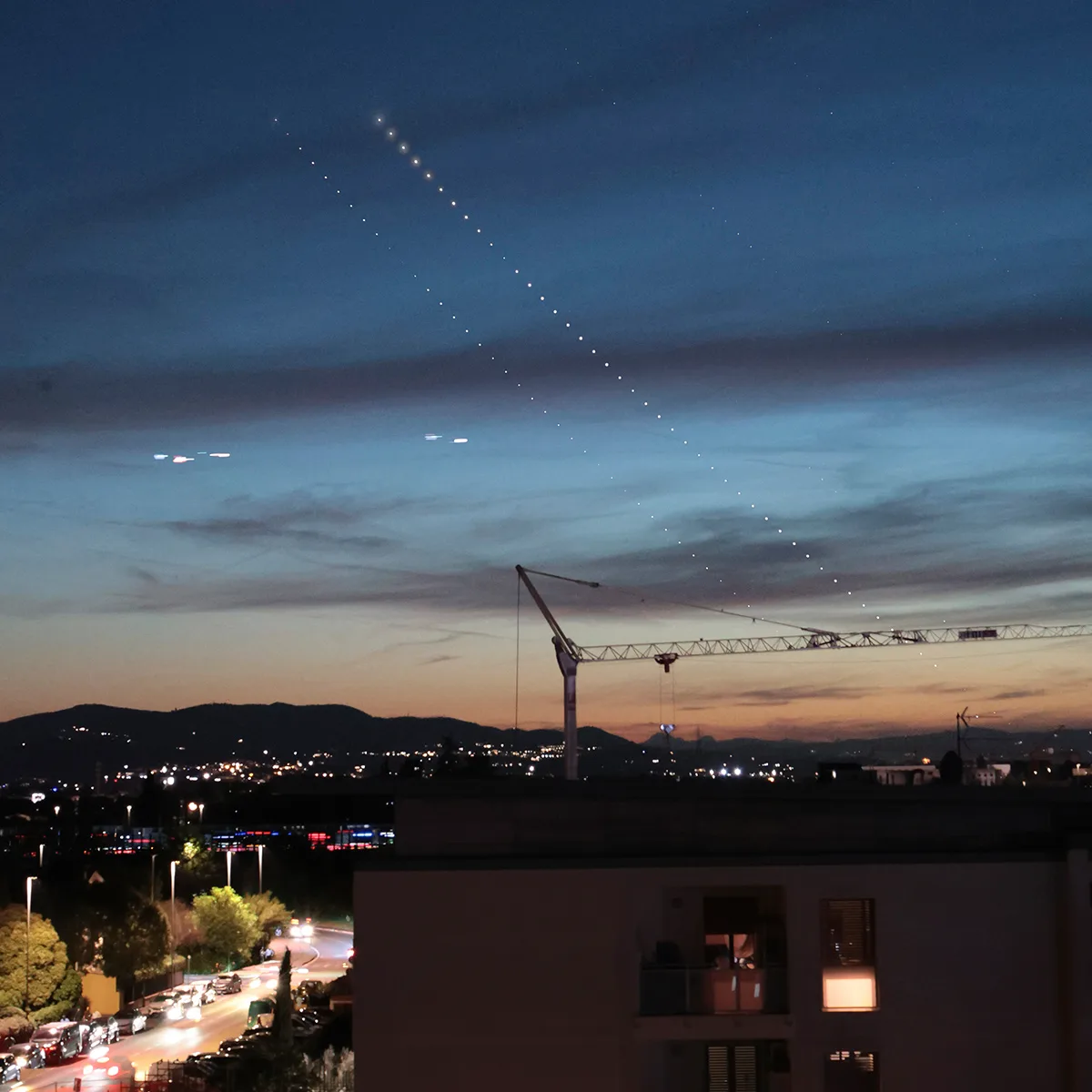 Paolo Barrella captured a composite image of Venus and Jupiter setting on the western horizon just after sunset, 7 June 2026 from Scandicci, Italy from 21:51 till 23:35, local time.
How long it will last
As soon as the Sun sets, Venus and Jupiter will be visible, but will then start sinking towards the horizon (as you can see in the composite image above).
How long Venus and Jupiter remain visible for depends on how clear and flat your northwestern horizon is.
They could be visible for up to two hours after sunset, at a prime location.
Seeing Mercury
Mercury will be visible too, but harder to see. It’s not as bright as Venus and Jupiter and is lower in the sky, meaning it could be tricky to glimpse against the glare of the setting Sun.
You’ll also need a good, flat northwestern horizon to see Mercury.
Wait until the Sun has set below the horizon, then look to the northwest and you should be able to catch Mercury looking like a slightly dimmer star.
For safety, you should only look once the Sun has set, because accidentally catching a glimpse of the Sun with your naked eye could damage your eyesight.
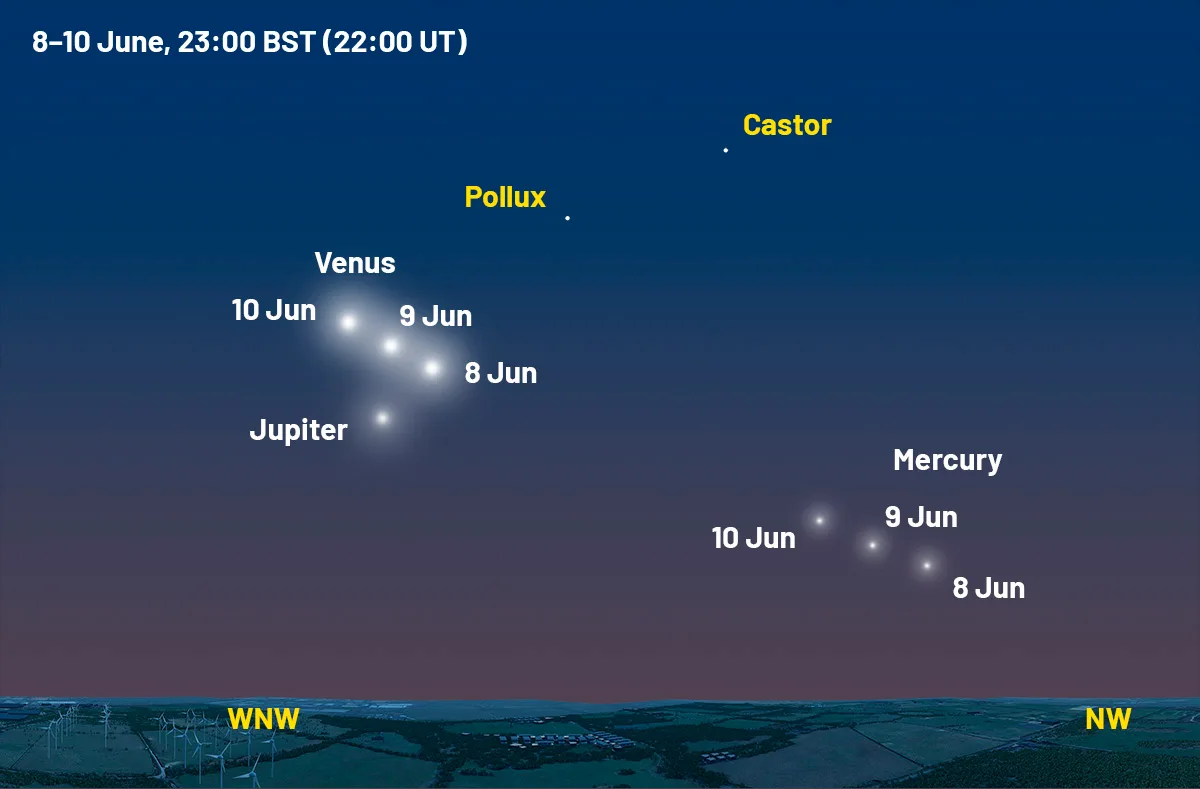 Star chart showing the positions of Mercury, Venus, Jupiter and the Moon, 8–10 June 2026. Credit: Pete Lawrence
Two stars above the planets
Two stars will be visible above Venus and Jupiter. These are Castor and Pollux, the twin stars of Gemini.
What to do if it’s cloudy
Venus and Jupiter are be visible for a week or two after the event, so tonight isn’t your one and only chance to see them.
But the period from 8–9 June, and the evenings immediately following these two night, will be the best time to see them together.
For more info, read our guide to observing Venus and Jupiter throughout June 2026.
What, no Moon?
The Moon won’t be visible near Venus and Jupiter this week, but by 16 and 17 June, a very thin crescent Moon will join the planets.
On 17 June, the crescent Moon is below and close to Venus, making for a beautiful observing and photography opportunity.
 Credit: Shimpei Yamashita / Getty Images
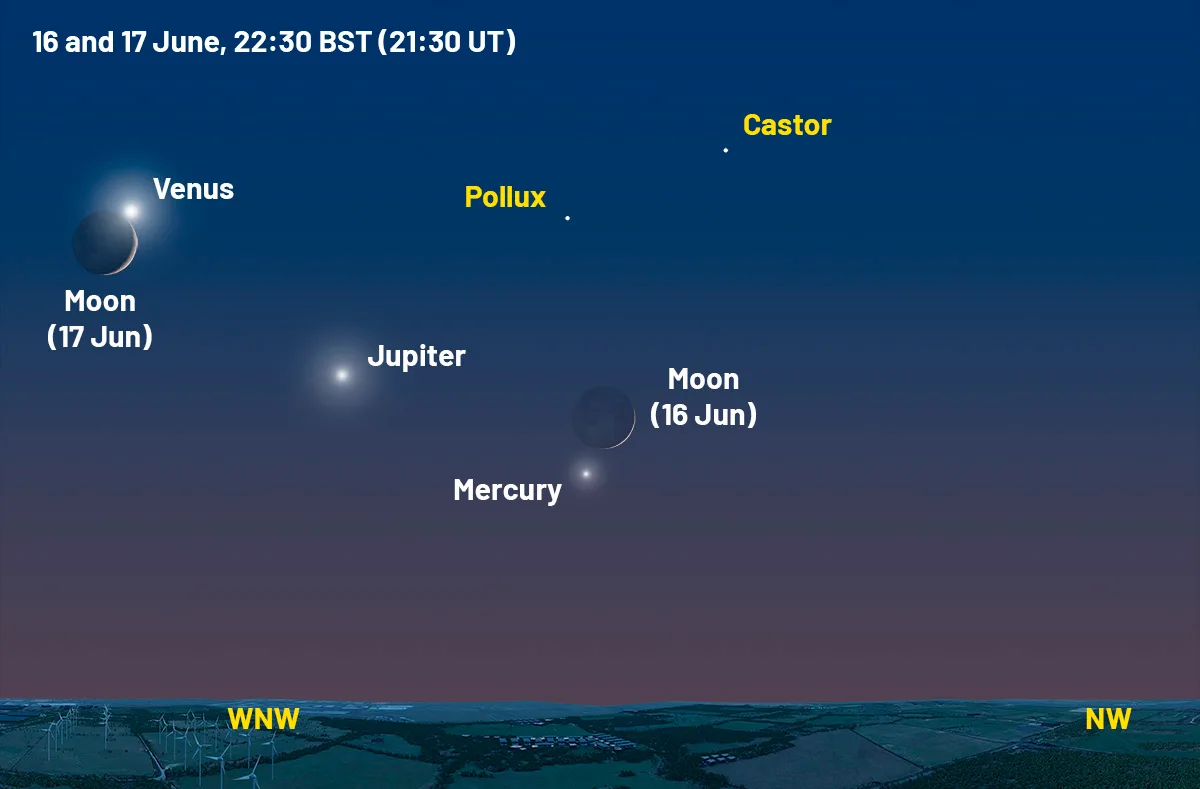 Star chart showing the positions of Mercury, Venus, Jupiter and the Moon, 16/17 June 2026. Credit: Pete Lawrence
No special kit needed
The good thing about this close encounter of Venus and Jupiter is it’s best seen with the naked eye.
Binoculars or a telescope would narrow your view and detract from the beauty of seeing two – possibly three – planets in the evening sky at once.
Also, it’s not advisable to look through binoculars or a telescope so close to sunset, as accidentally looking at the Sun through unfiltered optical equipment could seriously damage your eyesight.
Take a photo
The Venus–Jupiter conjunction is a perfect opportunity to capture a photo of the two planets beside each other. We’re sure many people across the world will be doing the same.
A smartphone or a DSLR camera would work well. For a full expert guide, read our top tips on how to photograph the Venus–Jupiter conjunction.
Share your observations and photos with us by emailing contactus@skyatnightmagazine.com