

Published on
07/06/2026 at 07:02
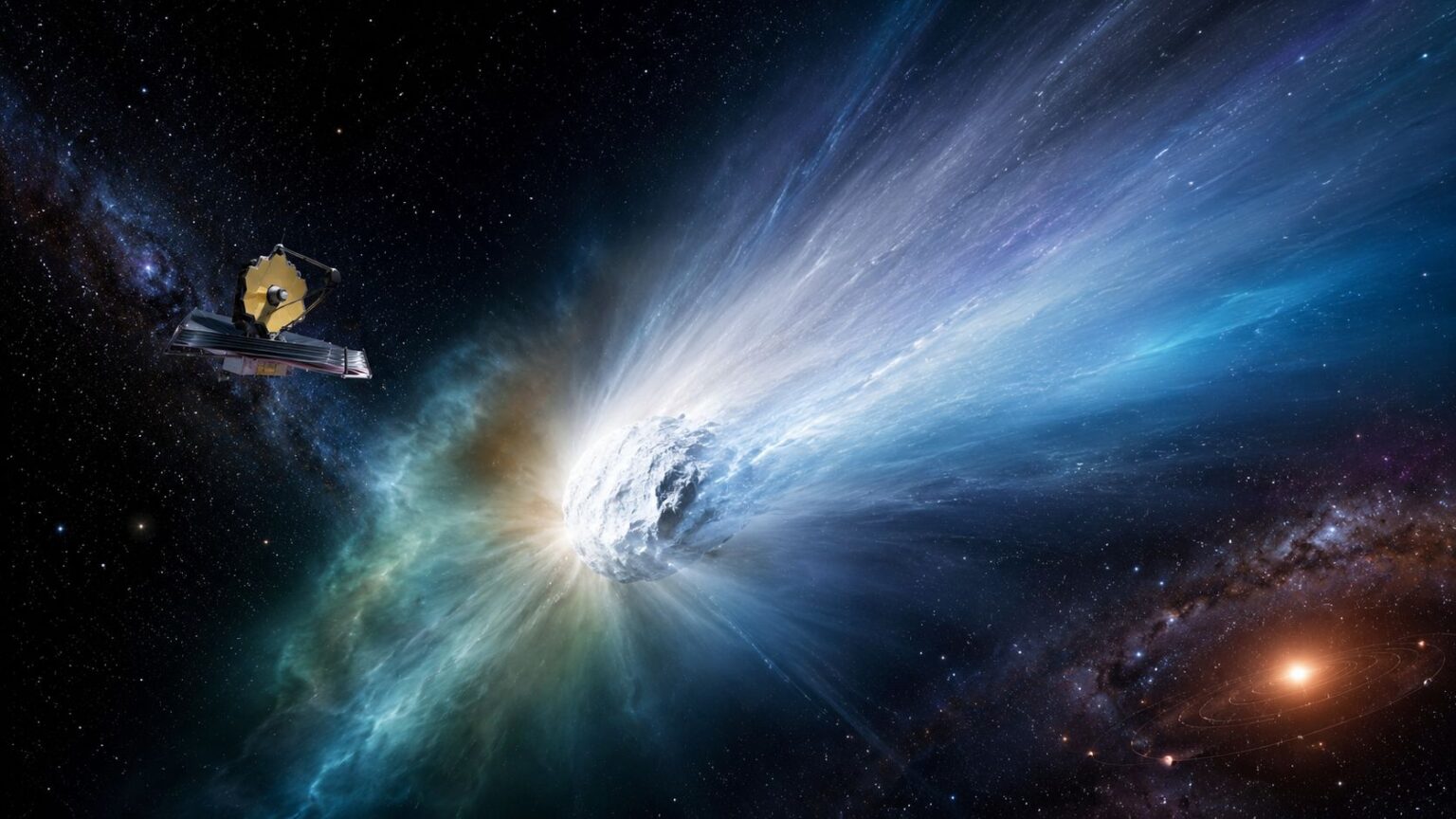
The 3I/ATLAS had the first mid-infrared chemical signature ever recorded in an interstellar object, after observations from the James Webb Space Telescope revealed unusual gases in a comet coming from outside the solar system.
Webb identifies gases in 3I/ATLAS
The observations were carried out with Webb’s MIRI, a mid-infrared instrument, on two occasions during the comet’s departure from the Sun. The work was published in the journal The Astrophysical Journal Letters.
The first round occurred between December 15 and 16, when 3I/ATLAS was approximately 329 million kilometers from the Sun. The second was conducted on December 27, when the object was already about 379 million kilometers away.
ARTICLE CONTINUES BELOW
See also
YouTuber connects 400 car batteries, creates a circuit with over 160,000 amperes, uses 450 kilograms of copper, and demonstrates a force capable of destroying metal in an impressive experiment.

Why did medieval iron resist rusting for centuries, while modern gates, grilles, and tools can deteriorate in just 2 years?

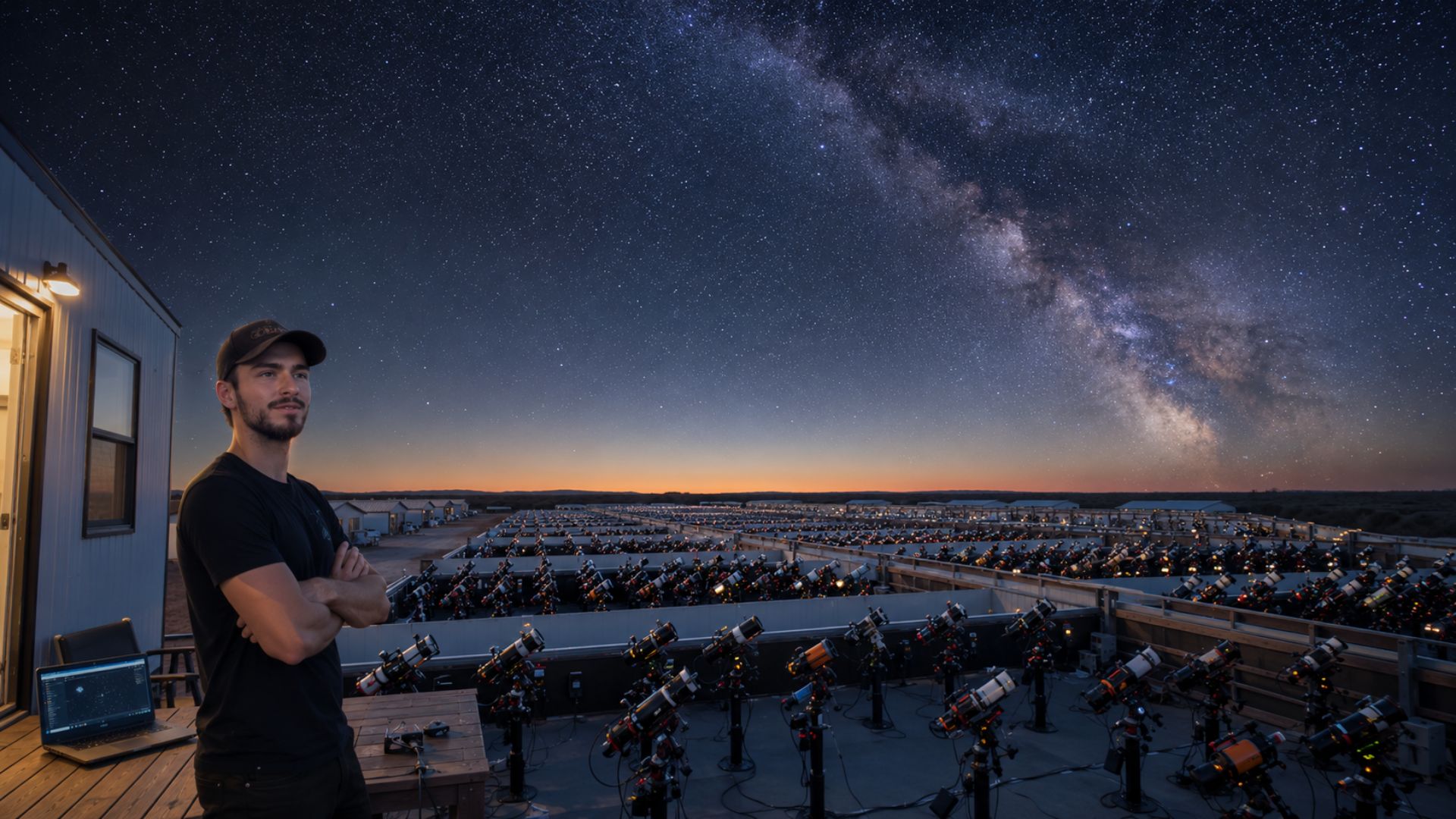
A former 27-year-old engineer gave up everything, went to live in a trailer in the middle of Texas, and created the largest telescope ranch in the world: clients from anywhere control about 550 devices bolted to concrete under a sky with no light pollution via computer.
Imagine walking into a dealership to buy a humanoid robot instead of a car: this is exactly the future that BYD is designing, leveraging the same batteries, motors, and artificial intelligence from their vehicles to create autonomous machines, although there is no release date yet.

The data allowed mapping the distribution of different gases around the comet. The water vapor appeared spread far beyond the nucleus, associated with release by ice grains present in the coma.
Meanwhile, the carbon dioxide and methane were more concentrated near the nucleus. The spectrum obtained by Webb indicated the characteristics of the gases escaping from the comet during the observation.
Methane was detected directly for the first time
The direct detection of methane in an interstellar visitor marked a novel point in observations of this type of object. The gas is extremely volatile and can quickly transition from ice to a gaseous state.
The fact that methane appeared only after the comet’s passage through the point of closest approach to the Sun suggests it was buried beneath the surface, protected from initial heating.
As sunlight advanced over deeper layers of ice, the trapped methane would have been released. The amount observed surprised scientists by its proportion relative to water.
Very few known comets from the solar system have a similar composition, making 3I/ATLAS a relevant target for comparing materials formed in distinct planetary environments.
Carbon dioxide reinforces chemical difference
The observations also confirmed exceptionally large amounts of carbon dioxide. Compared to typical comets of the solar system, 3I/ATLAS releases much more carbon dioxide relative to water.
The combination of methane and carbon dioxide at elevated levels points to a formation environment different from that associated with most known comets.
The data set suggests that the comet may have originated in a very distinct planetary system, around another star.
Comment on what this discovery indicates about the chemical diversity of interstellar objects and how Webb’s observations can help compare comets formed in the solar system with visitors coming from external regions still little known by astronomy.
Study published in The Astrophysical Journal Letters.