
When you buy through links on our articles, Future and its syndication partners may earn a commission.
Credit: CSIRO / SKA Observatory
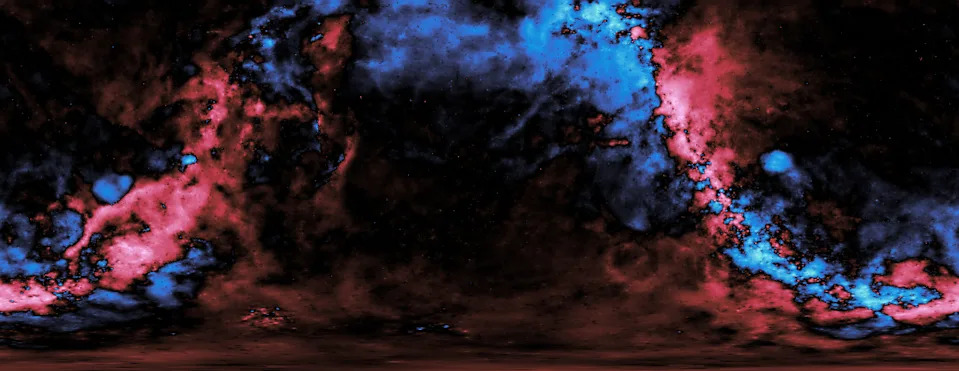
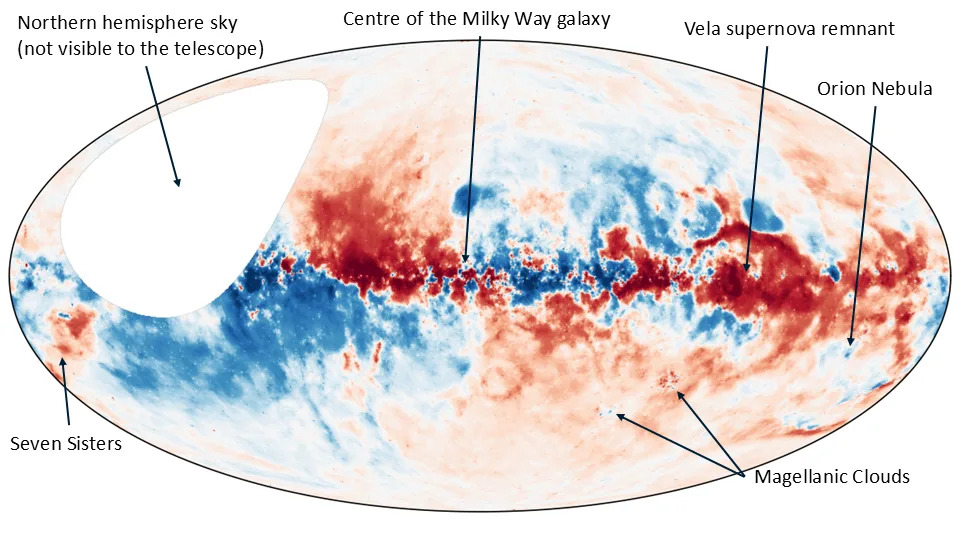
I’ve long been awed by photographs of the night sky, but one of the latest images to stop me in my tracks isn’t a “photograph” at all. A radio telescope in Australia has built the largest magnetic map of the universe yet, a colorful image five times larger than all the previous radio mapping efforts combined.
The data comes from Australia’s national space agency CSIRO and the SKA Observatory, which recently used the ASKAP radio telescope to scan the skies and build the largest radio map of the universe yet.
The ASKAP telescope doesn’t collect photographs of the universe in the traditional optical sense, but collects radio waves naturally emitted by stars and galaxies. Light is still essential to the way that the technology works, however. CSIRO explains that light twists as it passes through magnetic fields.
The telescope, which is located in Wajarri Yamaji Country in Western Australia, measured how twisted the light was, allowing the researchers to map where the magnetic fields are and note their strength.
Credit: CSIRO / SKA Observatory
The resulting magnetic map is the largest of its kind and will be used to help further understand the details of our universe. “For the first time, we can investigate fine details of the material between nearby stars, and study a huge number of distant galaxies,” said Dr. Alec Thompson, lead researcher and SKAO scientist.
Credit: CSIRO / SKA Observatory
The ASKAP telescope completed its first survey of the sky in 2020 – called Rapid ASKAP Continuum Surveys or RACS – which at the time broke records as both the fastest and largest radio sky survey.
Researchers said the latest map – dubbed the SPICE-RACS – was made possible not only by the ratio telescopes’ wide field of view and dish rotation, but also the ability to process massive amounts of data.
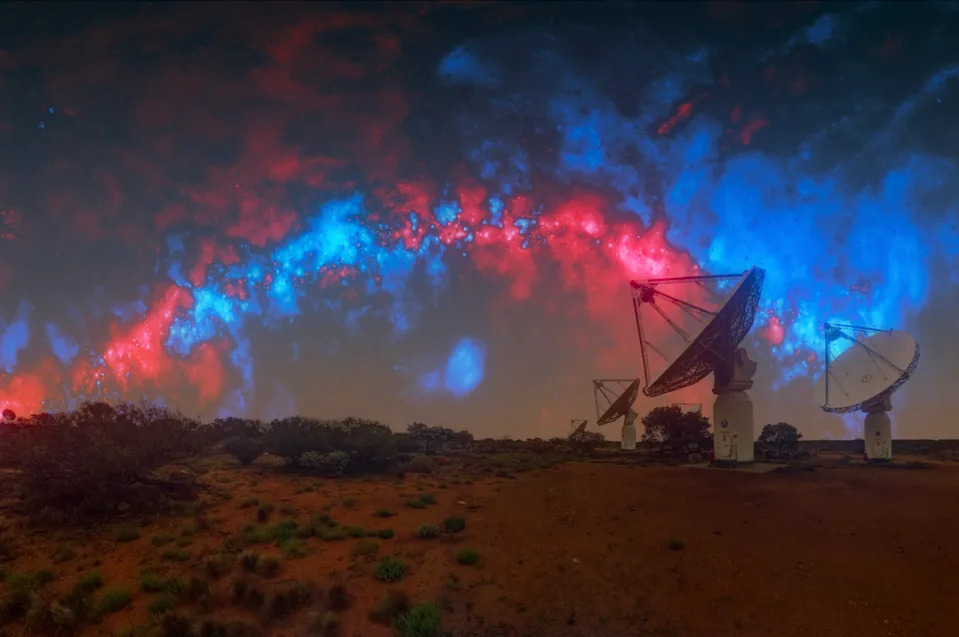
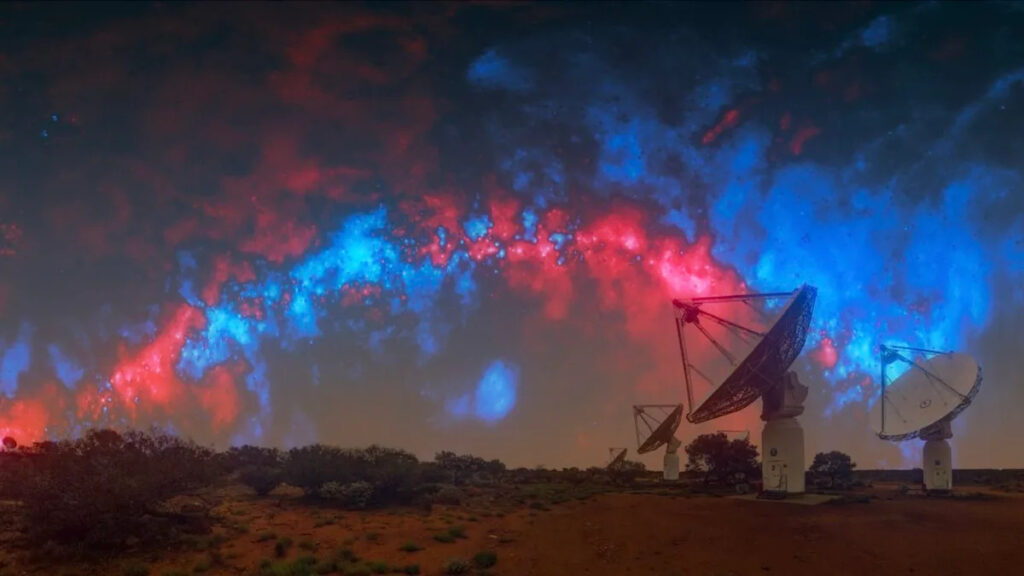
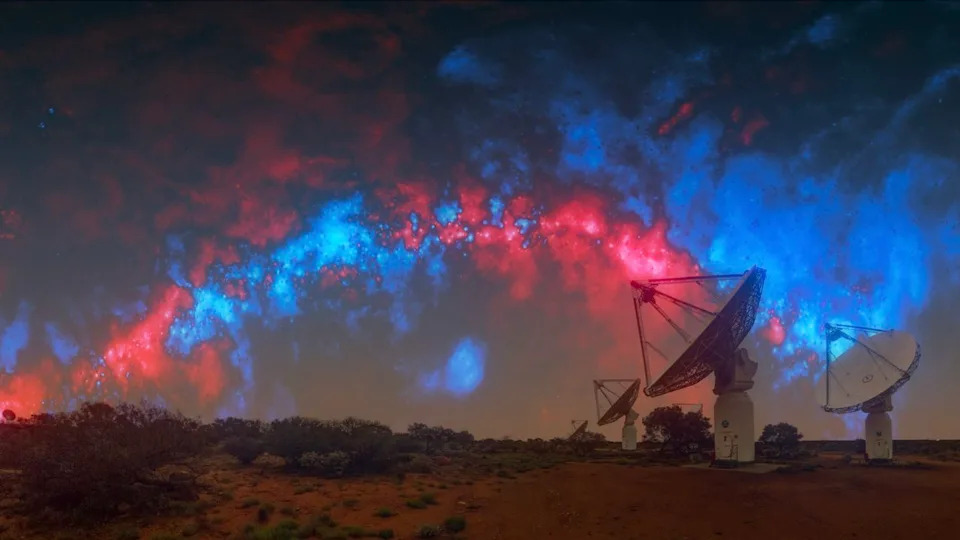
Overlaying the map on an image of the telescope and the night sky shows where these magnetic fields lieCSIRO / SKA Observatory
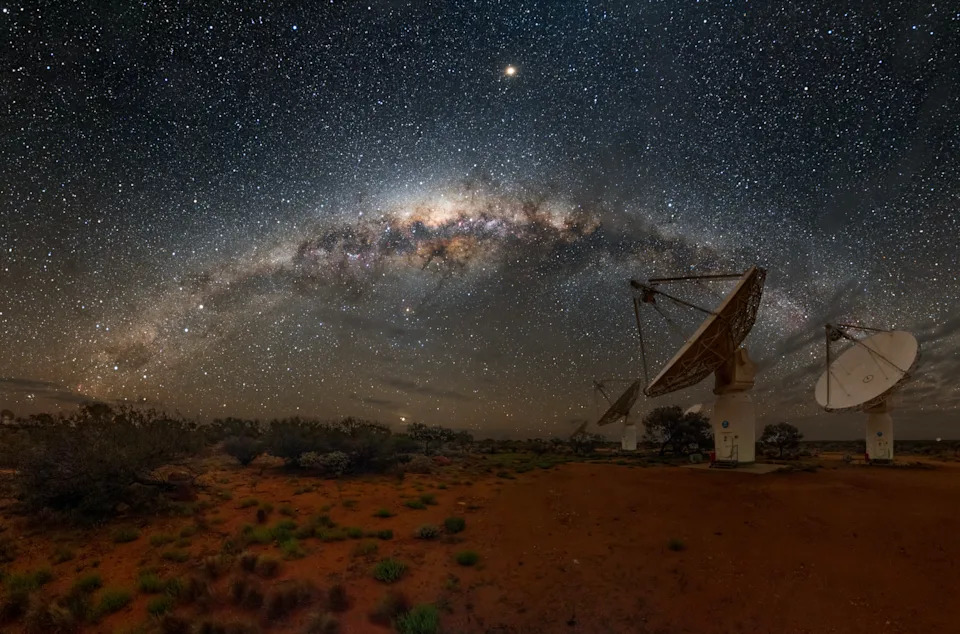
CSIRO / SKA Observatory
ASKAP will continue to build maps of the sky as researchers dive into the large amount of data from the latest map.
“With the information we now have on magnetic fields throughout the Universe, we can study things like how magnetic fields affect the galactic-scale interaction of our own Milky Way and its neighbours, the Magellanic Clouds,” said SKAO Chief Scientist and research team member Professor Naomi McClure-Griffiths. “We can even potentially find the answer to questions like when did magnetic fields first appeared in the Universe? We had once thought it would be impossible to answer these questions. I’m excited to say that is no longer the case.”
The data collected is available to researchers around the world.
You may also like…
Read about the largest camera in the world which is surveying the night sky.