
On Wednesday, NASA officially announced the completion of a landmark space mission that lasted more than 11 years. The program’s main objective was to find the answer to one of the Solar System’s greatest mysteries: why Mars, which once had a dense atmosphere and was habitable, turned into a dry and cold desert.
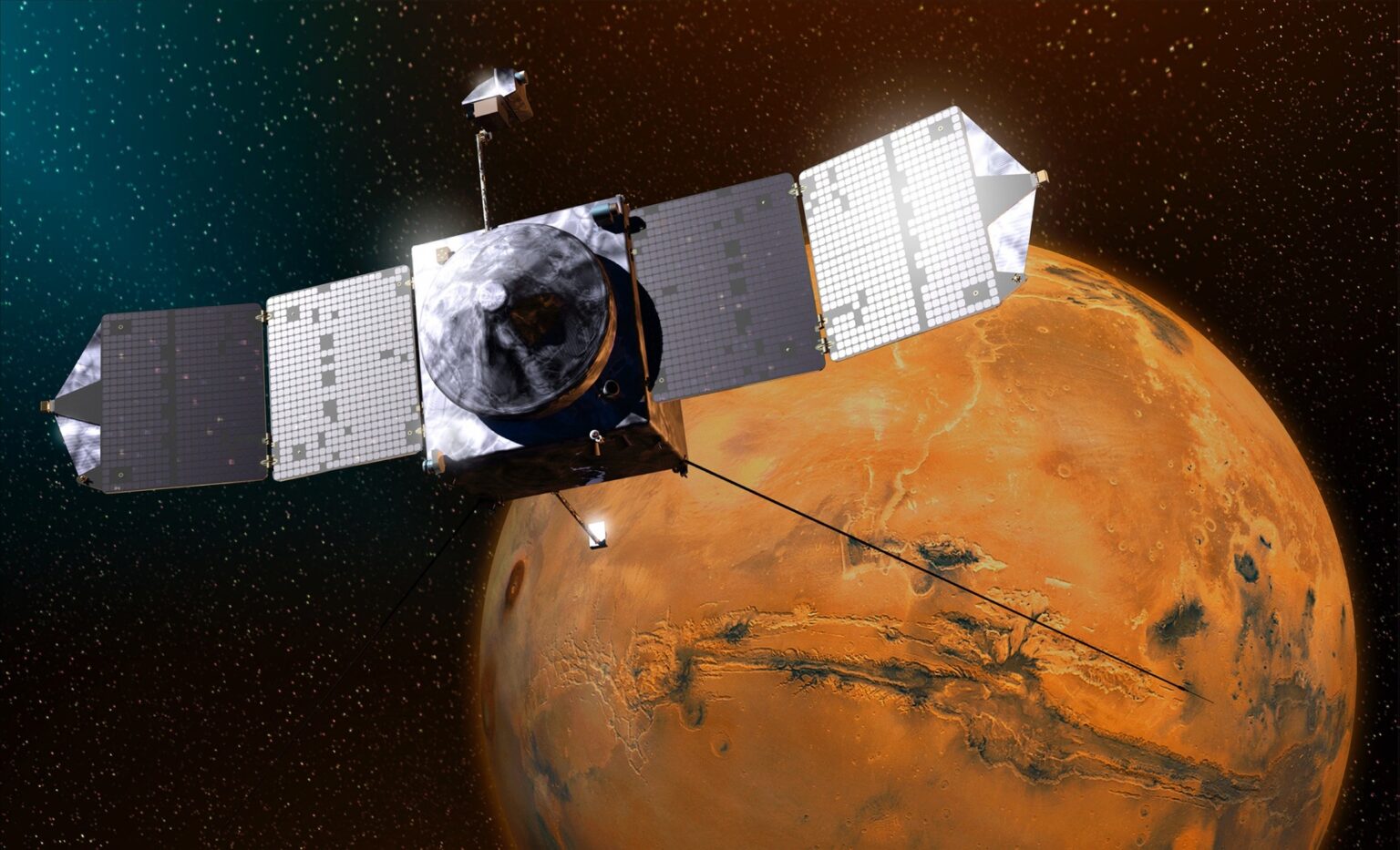 The MAVEN (Mars Atmosphere and Volatile EvolutioN) spacecraft. Image: NASA/GSSFC
The main instrument used in this research—the MAVEN (Mars Atmosphere and Volatile Evolution) spacecraft—has been orbiting Mars since 2014. The last signal from it was received on December 6, just before the probe entered the planet’s shadow, after which it stopped responding to signals from Earth.
What caused the device to “break down”?
A special investigation commission determined that MAVEN unexpectedly began spinning around its own axis at a rate of about 2.7 rpm, even though its design does not account for such behavior. This unusual behavior led to a critical rapid drain of the batteries and a complete loss of power to the communications system.
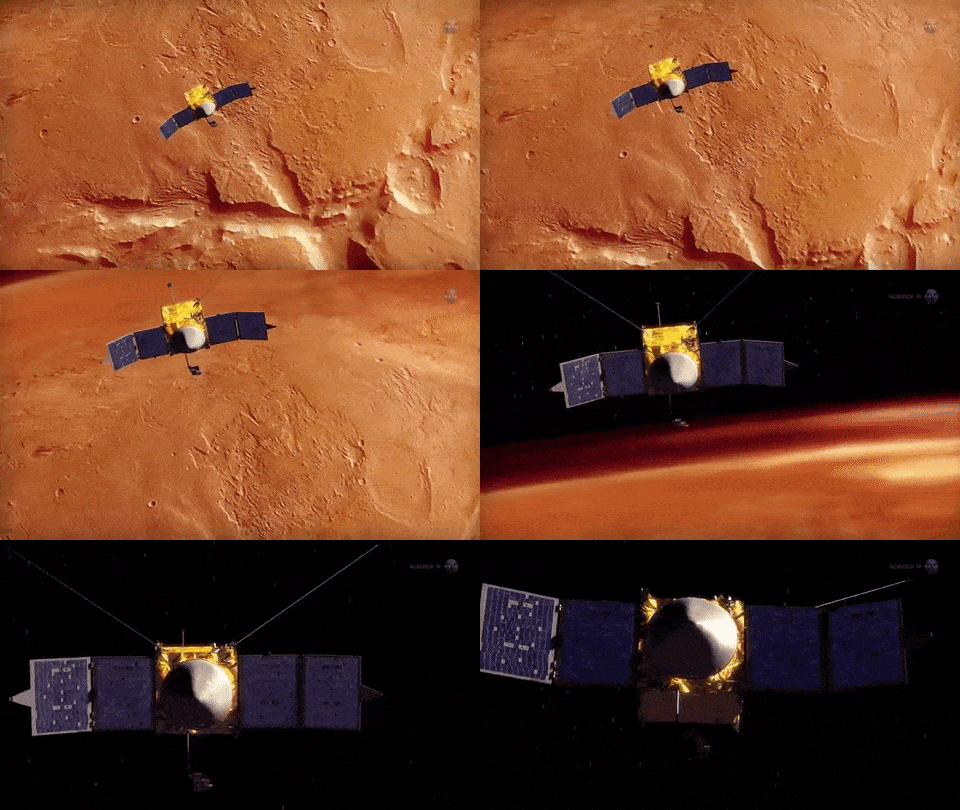
By the end of 2025, the team had made repeated attempts to reestablish contact. Experts tried to force a reboot of the onboard computer and enlisted the help of powerful ground-based radio telescopes, but their efforts proved fruitless. Ultimately, the commission concluded that the probe could not be salvaged. An official report on the root causes of this anomaly is expected later this year.
Fundamental scientific legacy
Although the MAVEN mission was originally planned to last only one year, its results have exceeded all expectations. Launched in November 2013, the spacecraft became the first to focus exclusively on studying the Martian atmosphere.
Thanks to the data collected, scientists were able to measure in detail the rate at which Martian air is escaping into space. They also discovered how the solar wind is eroding the planet’s atmosphere. In addition, the probe detected new types of auroras on Mars and even managed to capture unique images of the interstellar comet 3I/ATLAS.
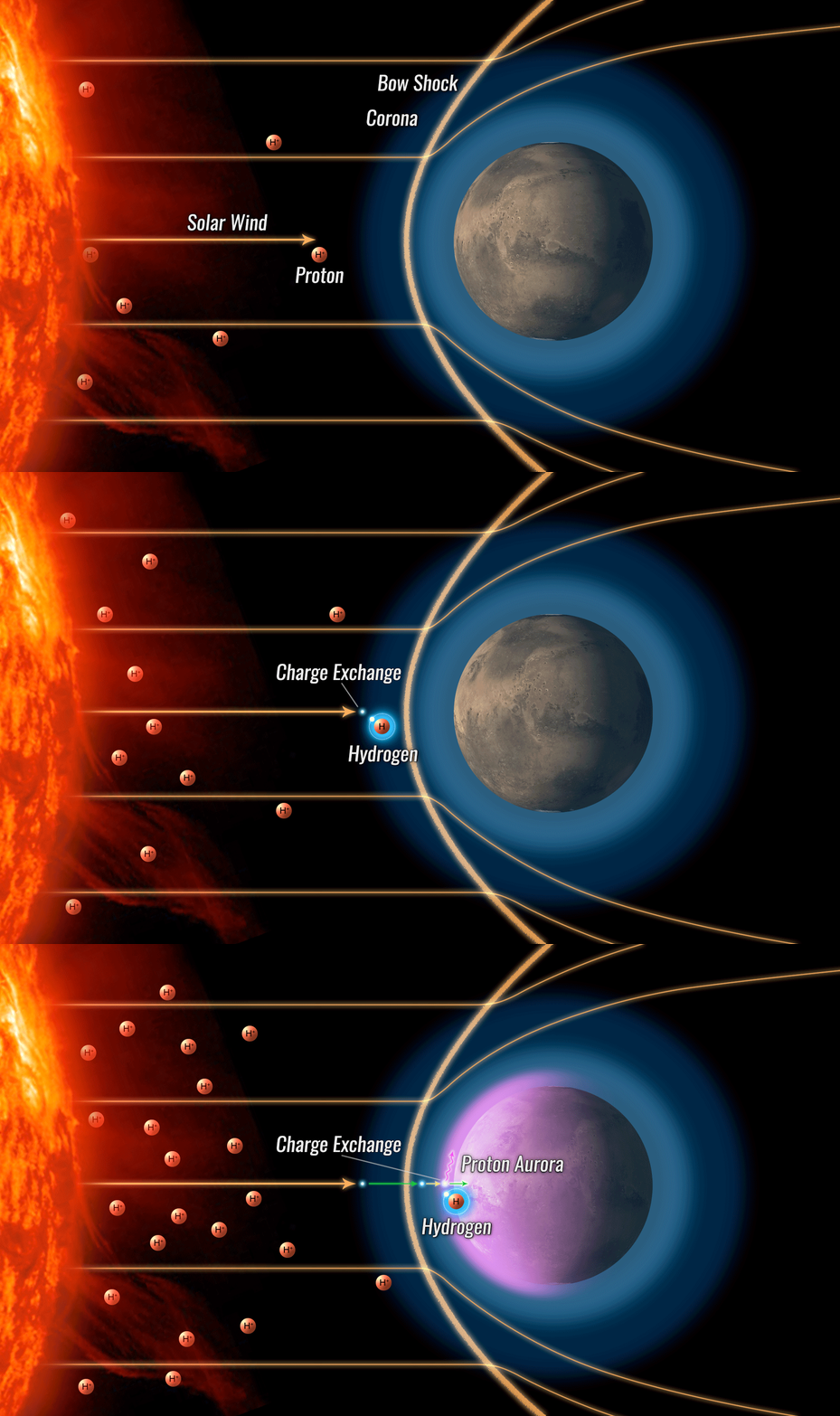 This animation illustrates proton auroras on Mars. First, a solar wind proton approaches Mars at high speed and collides with the hydrogen cloud surrounding the planet. The proton strips an electron from a Martian hydrogen atom, thereby becoming a neutral atom. The atom passes through the shock front—the magnetic barrier surrounding Mars—since magnetic fields do not affect neutral particles. Eventually, the hydrogen atom enters Mars’ atmosphere and collides with gas molecules, causing the atom to emit ultraviolet light. Source: NASA / MAVEN
 MAVEN observations of the aurora. In the top image, natural variations in the solar wind lead to periodic intense streams of solar wind protons bombarding Mars. In the bottom image, observations made with MAVEN’s ultraviolet spectrograph show an increase in ultraviolet radiation from the atmosphere during solar wind surges. Source: NASA / MAVEN
“The team is undoubtedly very disappointed by this. But at the same time, we are incredibly proud of the scientific achievements we’ve made over the past decade,” emphasized Shannon Curry, the mission’s principal investigator from the University of Colorado.
Future of Mars Exploration
The loss of the MAVEN probe complicates not only the collection of new scientific data but also communication with the rovers on the planet’s surface, as the spacecraft served as a vital relay for them. However, according to Tiffany Morgan, director of the Mars Exploration Program, this gap will be filled by other NASA and European Space Agency orbiters, albeit with a slight delay. The spacecraft will also be unable to transmit data for the new ESCAPADE mission, which launched in November.
The “silent” MAVEN is expected to remain in Martian orbit for another 50 to 100 years. Eventually, its orbit will decay, and it will burn up in the atmosphere of the planet it has studied for so long. But it will forever leave a lasting mark on the history of science.
We previously reported on how the MAVEN spacecraft experienced a malfunction in its orientation system, but was able to recover successfully and even sent back ultraviolet images of Mars.
According to NASA