
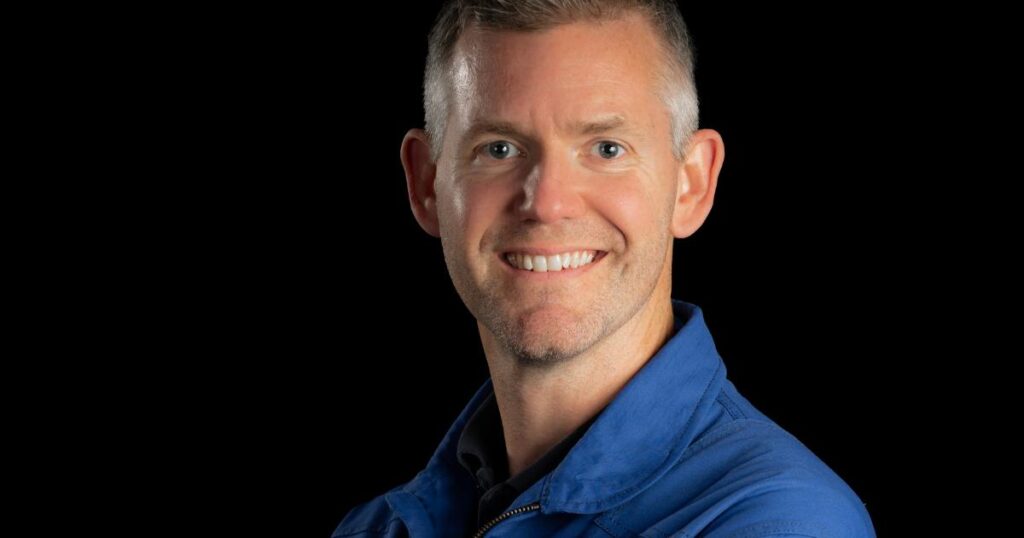
John McFall, from Fleet, is a former Paralympian and NHS surgeon who lost his right leg in a motorcycle accident at the age of 19.
He was selected by the European Space Agency (ESA) in 2022 for its Fly! Project, which is exploring how long-duration space missions could be made accessible to astronauts with physical disabilities.
British astronaut John McFall could become the first person with a physical disability to live in orbit. (Image: European Space Agency)
The UK Government has now signed an agreement with Vast, a commercial space company based in the US, to support a potential spaceflight for John.
If the mission goes ahead, he could spend time onboard Haven-1 – planned to be the world’s first commercial space station, scheduled for launch in 2027.
John, a member of the ESA Astronaut Reserve, said: “Signing this agreement with Vast is incredibly exciting.
“If we can make this mission happen, it won’t just be a milestone for human spaceflight, it will send a powerful message about what people with disabilities are capable of, and that there should be no limit to what you can achieve – on Earth or in space.”
During the mission, John, who has worked in hospitals in Basingstoke and Winchester, could lead research spanning human physiology and prosthetics performed in microgravity, with the findings expected to inform the design of lighter, more adaptable prosthetics and rehabilitation techniques on Earth.
He could spend time onboard Haven-1, planned to be the world’s first commercial space station. (Image: Vast)
Space Minister Liz Lloyd said: “John McFall’s story is one of extraordinary determination – as a Paralympian, a surgeon, and a pioneering astronaut.
“This agreement with Vast brings us one step closer to making history, and to showing the world that space is for everyone.”
Tim Peake, the first UK astronaut to travel to space during his Principia mission in 2015/16, has also praised the plans.
He said: “John McFall is an inspiration – not just to the space community, but to everyone who has ever been told there are limits to what they can achieve.
“This agreement is a landmark moment for inclusive human spaceflight, and I hope it brings us one step closer to seeing John in space.”
Vast is developing its ‘Haven’ programme of commercial space stations, beginning with Haven-1, a state-of-the-art, human-centric space station, home to an innovation lab for both private astronauts and government missions.
Max Haot, chief executive of Vast, said: “The potential opportunity for John McFall to join a future Haven-1 mission is another example of how commercial space stations can expand access to space, support greater crew inclusivity, and enable meaningful medical research that benefits humanity.”