
Agency
04/06/2026
20 views
0 likes
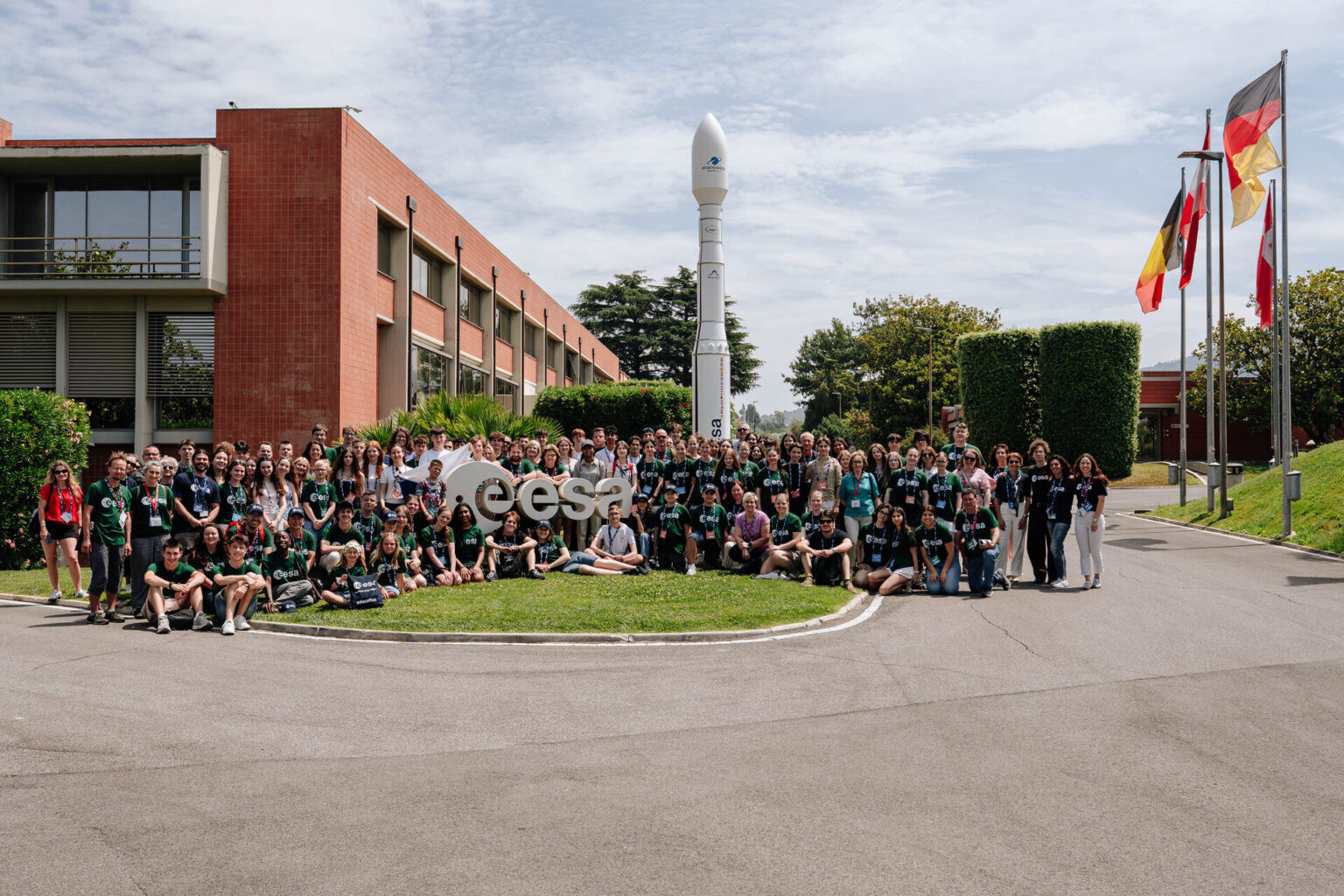
For three days, students stepped into the role of Earth observation scientists at ESA’s Climate Detectives Summit 2026. From 27 to 29 May, 120 secondary school students and their teachers from 21 countries across Europe took part in the event at ESA’s centre for Earth observation, ESRIN, exploring how satellite data, science and technology are used to better understand and protect our planet.
During the summit, students showcased their own investigations, engaged directly with ESA experts and took part in a range of hands-on educational EO-related activities. They explored how artificial intelligence supports Earth observation and were encouraged to connect local environmental questions to global Earth systems and space-based solutions. The summit marked the final event of the 2025–2026 edition of the Climate Detectives project, bringing together students, teachers and experts to celebrate learning, collaboration and real-world scientific inquiry through the power of space.
“This was one of the most inspiring experiences I’ve had — a powerful reminder that we all have the ability to shape a better future and make a real impact on the climate. It left me feeling hopeful, motivated, and genuinely excited about what we can achieve together!”, commented one of the students.
The Climate Detectives Summit 2026 concluded the Climate Detectives 2025–2026 edition, an ESA Education project delivered in collaboration with the national European Space Education Resource Offices (ESEROs). Throughout the school year, around 9,000 students across Europe investigated local climate and environmental issues using scientific data and inquiry-based learning approaches.
From these participants, 21 student teams, accompanied by their teachers, were selected by their national ESEROs to attend the summit at ESA ESRIN in Frascati, Italy. The event offered a unique opportunity for students to move from local investigations to a broader understanding of how Earth observation supports science, decision-making and environmental action at a global scale.
Students presented their projects during an engaging poster session
Students presenting their projects during an engaging poster session
The three-day event opened with a welcome session by ESA Education and Francesca Cipollini, Head of ESA Ground Segment and Data Management Division, followed by an interactive poster icebreaker session, inspired by professional scientific conferences. Students presented their investigations, explaining their research questions, methods and findings in their own words.
The poster session quickly became a lively space for discussion and exchange. Students compared approaches, shared ideas and reflected on how communities across Europe are experiencing and responding to environmental change. Conversations continued well beyond the posters themselves, reinforcing the value of collaboration and communication in scientific work.
Looking into the future of Earth observation and understanding the role of artificial intelligence
Students exploring how artificial intelligence is shaping the future of satellite data analysis
During the event, students explored how Earth observation is evolving and how artificial intelligence (AI) is shaping the future of satellite data analysis. During a hands-on activity, students trained a teachable machine to recognise objects in images, before analysing real satellite imagery showing different landscapes and natural phenomena.
The session was followed by a talk from ESA Earth observation AI experts, who shared insights into how artificial intelligence supports faster data processing, improved monitoring and new scientific discoveries. For many students, this offered a first glimpse into how emerging technologies connect data with real-world environmental decisions.
How to become a ‘real’ Climate Detective?
Students taking part in the “Guess the Earth Observation Pro” activity
Throughout the summit, students engaged in interactive sessions with ESA Earth observation experts, asking questions about satellites, data analysis and working on real space missions. Experts from different fields like forest and ocean applications, air pollution and agriculture, as well as ESA’s Climate Change Initiative shared how their work contributes to understanding Earth as a connected system.
To highlight the diversity of career paths in Earth observation, students also took part in an engaging “Guess the Earth Observation Pro” session. Meeting professionals working in areas such as artificial intelligence, remote sensing and data visualisation at ESA helped students see how their interests — whether in science, engineering, coding or communication — could shape future studies and career choices, possibly aiming at working in the space sector.
“ESA does so much more than I had ever imagined. The Earth observation researchers and specialists were incredibly approachable and inspiring, and they truly made our imagination soar with the satellites. Thank you for this mind-blowing experience!”, said one of the teachers attending the event.
Learning through play: exploring Earth observation in action
Students explored ESA’s interactive Φ-Experience exhibition, discovering how satellite data is used to monitor land ecosystems, vegetation, water and the air we breathe. Through hands-on exploration, they learned how Earth observation supports scientists in detecting environmental change at both local and global scales.
This learning continued through a geo-caching activity using Earth observation data. Working in teams, students solved riddles and completed challenges linked to Earth sciences while moving through different thematic activities. The activity combined problem-solving, movement and scientific thinking, reinforcing how data can be transformed into understanding and action.
Designing Earth observation missions
Students learning how Earth observation satellites are collecting data
During the afternoon sessions, students took part in a role-play activity on Earth observation mission design, developed by ESA Education. Taking on roles ranging from scientists to policy makers, students debated mission objectives, selected sensors and discussed how their mission could contribute to the United Nations Sustainable Development Goals.
By stepping into these roles, students experienced first-hand the challenges of planning a space mission — balancing scientific ambitions with technical requirements, societal needs and budget constraints. Through discussion and compromise, each group worked towards a shared vision of how Earth observation can support a more sustainable future.
The space journey does not end at the summit
After three intensive days of hands-on activities, discussion and exchange, students returned home with new knowledge, inspiring memories, new friendships and renewed motivation to continue exploring space-based solutions, climate and environmental challenges — and their own role in addressing them.
About Climate Detectives
Climate Detectives is an ESA Education project run and implemented nationally by the ESEROs, empowering students to investigate real climate and environmental issues while developing skills such as critical thinking, teamwork, scientific research, system thinking and problem-solving.
Climate Detectives invites European students aged 12 to 19 to design and carry out their own investigations on topics ranging from droughts, deforestation biodiversity, and much more.
For children aged 6 to 12, Climate Detectives Kids, the project’s beginner category, offers pre-defined, hands-on STEM activities that explore Earth’s environment.
Like