
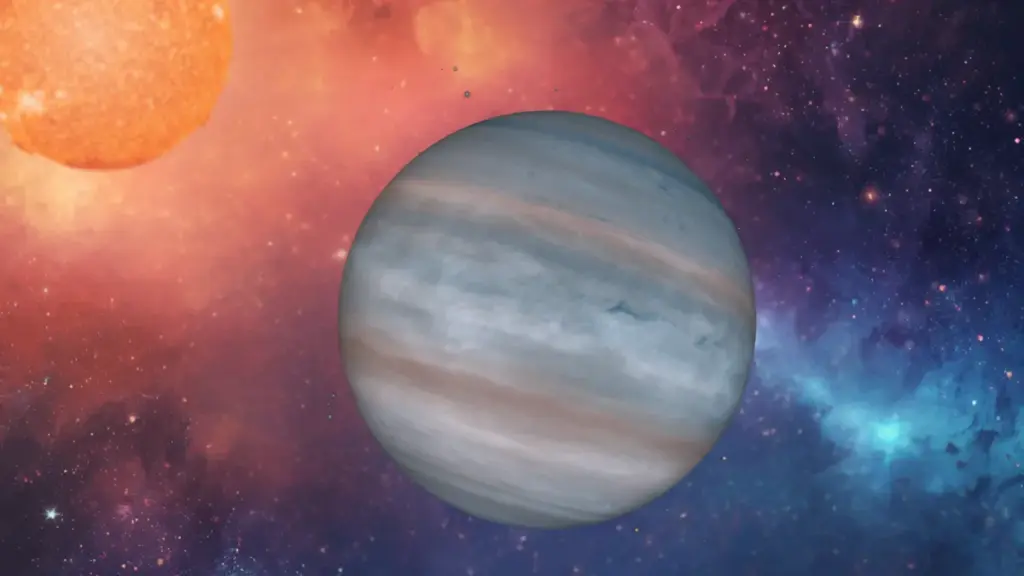
Astronomers have found a way to determine the masses of exoplanets that cannot be observed directly. The method is based on the analysis of dust rings that form around young stars. Planets leave distinctive imprints in these rings, and it is these imprints that reveal the properties of these invisible worlds.
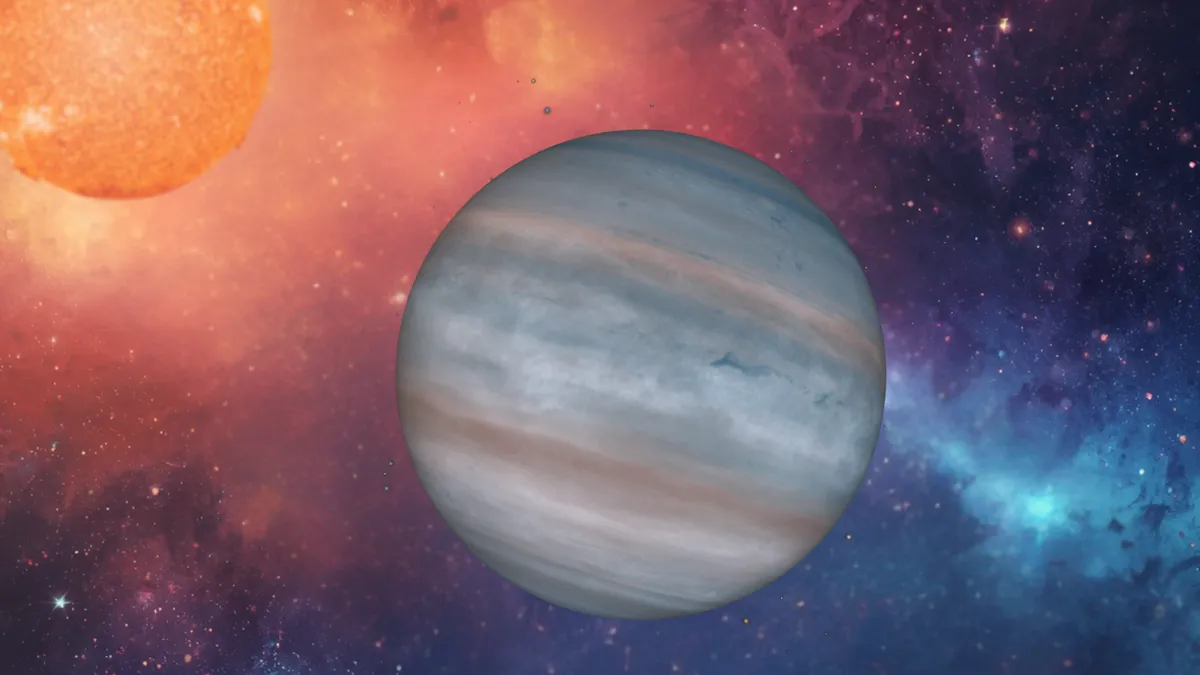 Illustration of the planetary system PDS 70 with a protoplanetary disk around a young star. Source: space.com. Credit: Robert Lea
How planets and rings are formed
Planets form from dust, gas, and small solid particles that surround young stars. In the early stages of their existence, newborn worlds are still immersed in this material, which swirls in flat structures known as protoplanetary disks. As they orbit their parent star, planets carve out paths through these disks, and dust accumulates beyond their orbits in the form of bright rings.
Until now, such structures had been used only as an indication of a planet’s presence. New work by Amena Faruqi’s team at the University of Warwick (UK) has opened up the possibility of understanding much more. “By reading between the rings, we’ve found a way to reconstruct the masses of the planets that create them, even if the planets themselves are too faint or obscured by the disk to be observed directly,” the researcher explained.
Method and its verification
Computer simulations have shown that the width of the dust ring and the location of its brightest region are key to estimating the mass of the planet that created it. Importantly, this relationship does not change depending on the wavelength range in which the system is observed or the size of the particles within it.
The method was tested on the real planetary system PDS 70, located approximately 370 light-years away. The observations were conducted using the ALMA radio telescope array, consisting of 66 antennas in northern Chile. The presence of at least two exoplanets has been confirmed in the PDS 70 system. Using the new method, the mass of one of them, PDS 70 c, was estimated to be approximately 7.5 times that of Jupiter, which is consistent with existing data.
Unexpected results
Simulations have also shown that more massive planets are capable of accumulating up to 20 Earth masses of dust in their rings. This confirms earlier conclusions based on ALMA observations, but at the same time leaves unanswered the question of why no new forming planets have yet been detected in such clusters of material. Researchers suggest that the concentration of material is sufficient to trigger planet formation. This opens the door to new observations and theoretical work.
The method could help us understand what the early Solar System looked like approximately 4.6 billion years ago. According to team member Farzana Meru, combining dust analysis with measurements of gas pressure in the disks will open up new possibilities for studying hidden planets and forming systems. The study’s findings have been published in The Astrophysical Journal.
According to space.com