

The search for alien life has captured the popular imagination for decades. Are they friendly… intelligent… green?
The average person may conceive of alien life as anything from the large-brained villains of Mars Attacks! to the haunting and ghostly apparitions of Arrival, but what might aliens really resemble?
Professor Jon Willis is an astronomer and science writer, based at the University of Victoria, British Columbia.
In his most recent book, The Pale Blue Data Point, he examines what alien life might really look like, and how we can use Earth as a magnifying glass to help us in our search for extraterrestrial intelligence.
 Professor Jon Willis has spent years searching for aliens. Credit: Quoc Phuong Tran
What misconceptions do you think people have about alien life?
The biggest misconception people have is that aliens are going to look like they do in the movies.
That alien life will exist on a scale where humans can tangibly appreciate it with their primary senses.
Our experiences on Earth tell us that alien life is more likely to be quite primitive, analogous to single-celled organisms.
Almost all life on Earth is in the form of single-celled creatures. In terms of biomass, the story of life is vanishingly small: it’s in the form of relatively ‘basic’ creatures.
So, if we’re looking for the story of what aliens might look like, we should start by looking for basic life forms.
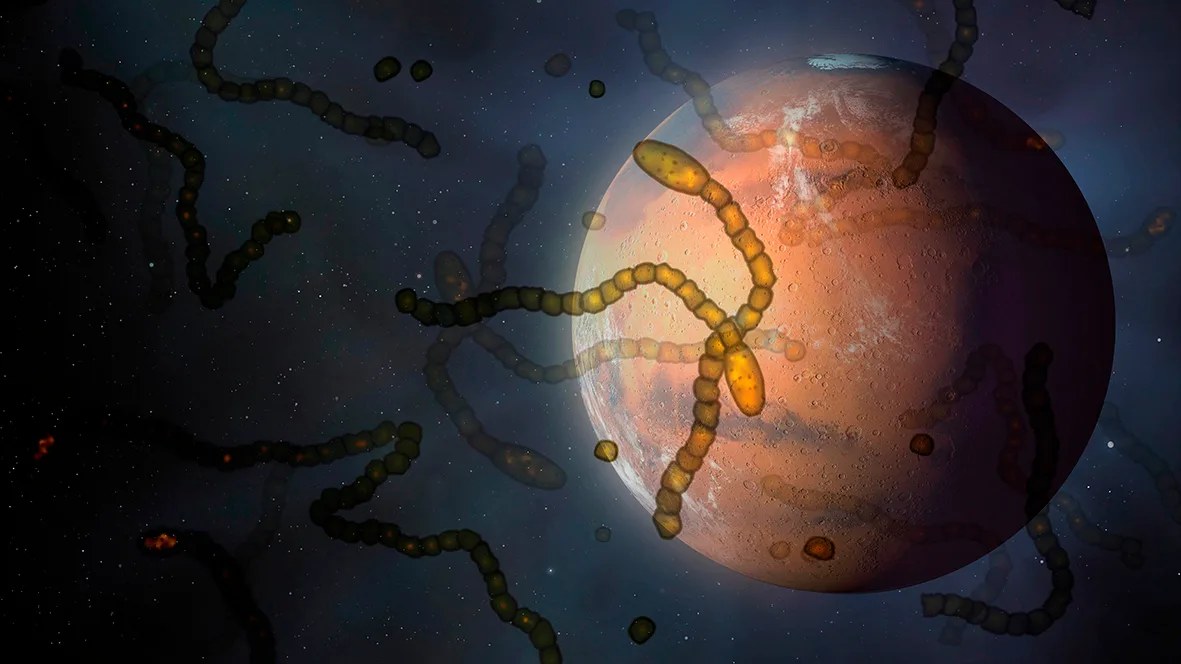 Any alien life forms we encounter may well be simple, single-celled organisms. Credit: Mark Garlick, Science Photo Library, Alamy
What kind of tests might we devise to find this type of life?
When you look up ‘Life’ on Wikipedia, as I often ask my students to, you won’t find the answer to one important question: what is life? Life is a process.
When we look for life, we should look for unique phenomena that life undertakes. Descartes famously said, “I think, therefore I am”.
What if you said instead, “I am ordered, therefore I am”; or perhaps “I metabolise, therefore I am”?
If we think in terms of these questions, we can build a reductionist view of searching for life. It may not be the only approach, but it could be a way of scientifically organising the search for life.
Is the best approach?
There’s no way of knowing that. Much of our approach to searching for alien life is speculation, but speculation is a vital part of doing science.
As long as it opens doors, speculation is useful. When speculation is used to close doors, that’s when it gets dangerous.
If we use speculation as a tool for asking whether something might be worth investigating, that’s a very rich field of scientific inquiry.
We should also remember that the history of science has proven to us time and time again that nature is far smarter than we are. When we ask if something can or can’t be possible, we should remember that nature often defies our expectations.
One additional, more anecdotal point about the search for life. When we discuss, say, looking for biomarkers in exoplanet atmospheres, people will often ask: what molecule should we look for?
I answer this question by saying: Can I get back to you when we’ve studied our first thousand exoplanet atmospheres?
Once we have that information, we still may have found nothing, but we may have far more understanding of what the proverbial needle in the proverbial haystack might look like.
As we conduct the search, we learn more about the search. It’s worth remembering how quickly science can progress. In 1995, we only knew about one exoplanet; now, 30 years later, we’re up to something like 6,000.
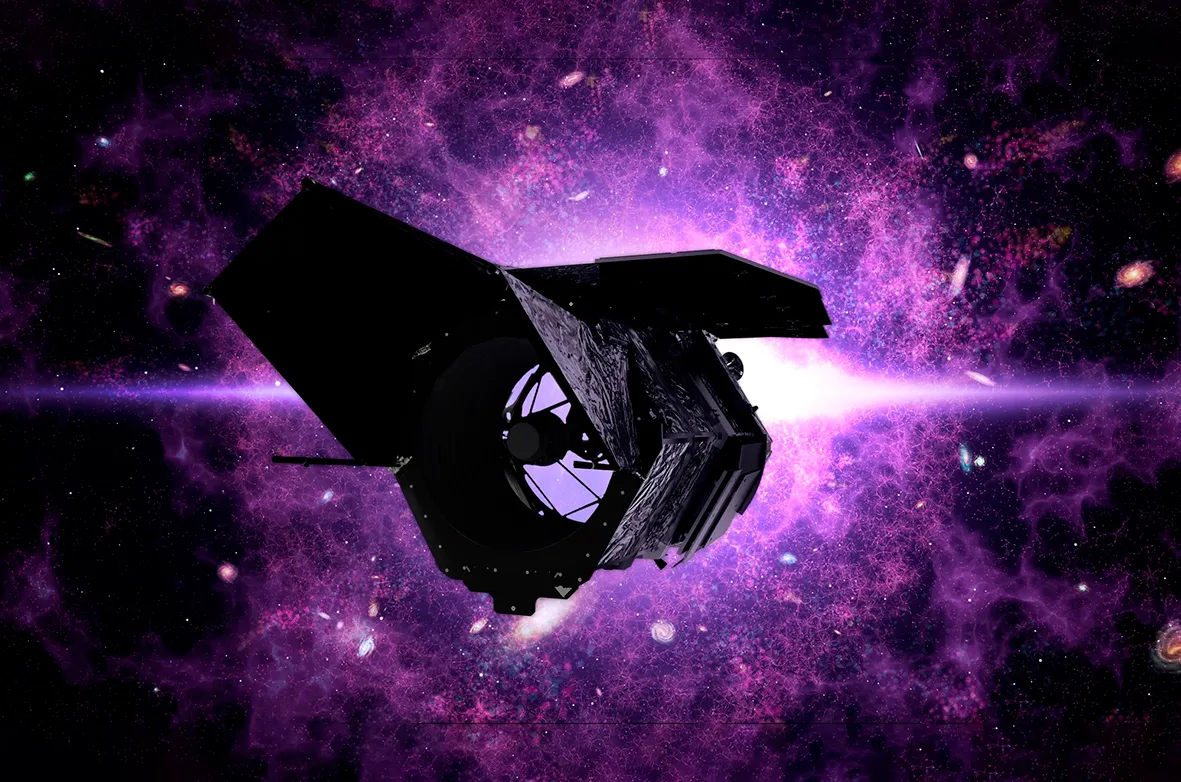 The Nancy Grace Roman Space Telescope, planned for launch in 2026, will study exoplanets in ever greater detail – but what should we be looking for? Credit: NASA’s Goddard Space Flight Center
What about searches like SETI, that look for signals from intelligent aliens? Are we too early into the search?
I think it comes down to the idea of what constitutes a comprehensive search. One thing we should be aware of is any claim that we think like aliens do.
Let’s imagine that to an alien mind, a signal that flashes on and off once every 10,000 years is utterly unmistakable on the time scales they’re interested in. Those are the time scales on which that civilisation operates. Where would that put us?
The Universe could be teeming with these beacons, on different time scales, sent with different particles, and we simply wouldn’t see them.
The search for life is far more speculative than that in many ways, we are learning as we go. In a sense, it is the ultimate quixotic quest.
What does an astrobiologist draw on to help us search for alien life?
Almost all of our astrobiology research is being done on Earth. The furthest humans have travelled from planet Earth right now is a few hundred miles above it. That’s it. So, astrobiologists are dedicated to telling us about life in space using the tools we have on Earth.
There are different facets to this process. Partly, astrobiology prepares us to look for life elsewhere by drawing analogies to what we can observe on our planet. There are places in the Solar System that we think might have relevant habitats to support life, but it’s obviously difficult for us to go to those places.
 Credit: Artur Didyk / Getty Images
Instead, on Earth, we go to analogous places. From these, we might learn something about what techniques we could use to investigate life, about how life organises itself in those extreme habitats.
On the other hand, astrobiology is also about people programming remote space missions and sending sample return missions to various parts of the Solar System. It’s important that people realise astrobiology is a tangible thing – there’s information we can learn about alien life here on Earth.
How do astronomers use life on Earth to search for aliens?
There are so many brilliant examples. One of the most incredible, tangible analogues is using Earth as a way of exploring the incredible ocean environments underneath the ice sheets on moons like Europa and Enceladus.
In terms of basic physics, Earth’s oceans are a good analogy to these moons. On these moons, our observations tell us that there a solid, hot rocky core, liquid water, and then solid water in the form of ice.
On Earth, we have the solid, hot rocky core, liquid water, and then a gaseous atmosphere. But it’s the interface between the warm rock and liquid water that gives rise to the interesting things happening for life on Earth.
In deep-ocean hydrothermal vents, we see short circuits between heat flows in Earth’s core that give rise to energy which powers reactions between rocks and the water at the seafloor.
There are places on Earth which I think are like scientific cathedrals. Places where, as a scientist, you can experience a true sense of awe and grandeur. In my opinion, you also experience that sense of quiet reverence in the dome of a telescope.
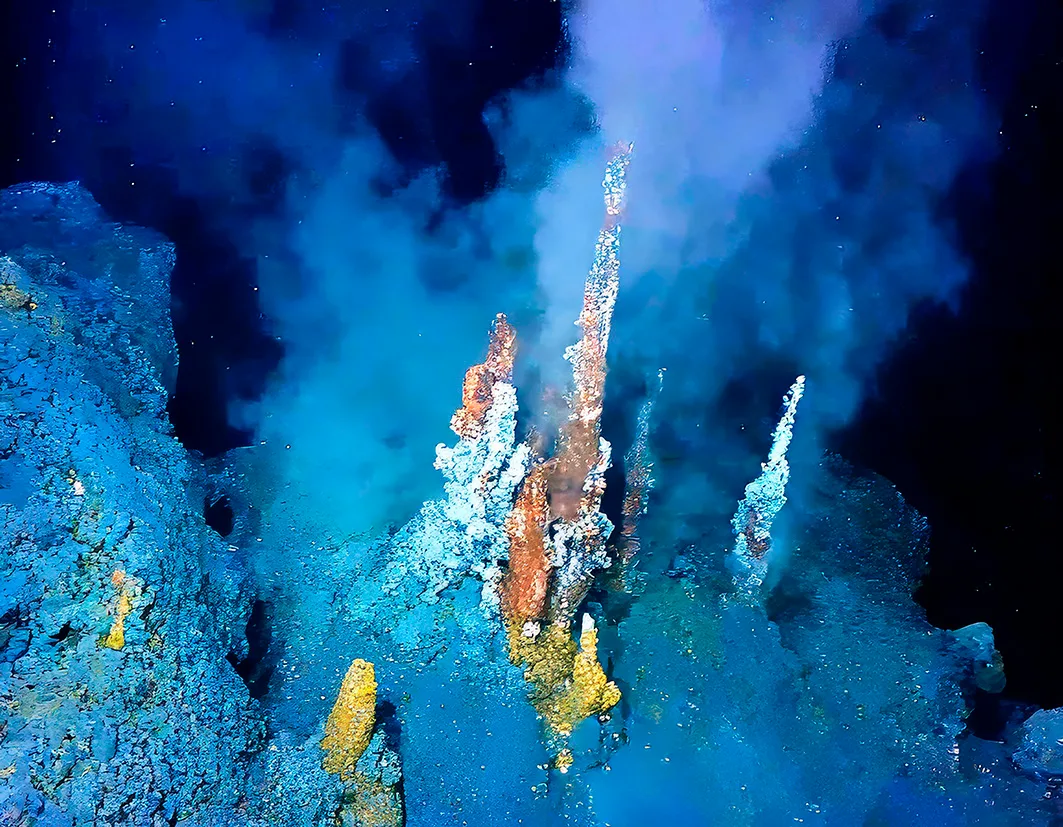 On Earth, underwater vents support life in seemingly hostile conditions – which proves that life can exist in, and adapt to, a wide range of environments. Credit: Galih, Alamy
What do you think alien life could look like?
Perhaps I’ve already given away my premise, but I believe it’ll be something equivalent to a single-celled creature. It will be different from those organisms on Earth, but it will have to follow the same rules. We believe the laws of chemistry and physics are the same throughout the Universe.
These laws tell us how atoms fit together. Once you get to a few atoms, the calculations you need to make to understand what’s going on get rather complicated.
The way molecules form is not random. We metabolise sugars because the molecules fit together in a specific way, allowed for by the rules of the atomic game. While not every form of life out there may use the same molecules, there are some molecules that may be more important than others.
Think of it like Lego bricks, some are more useful than others; they allow you to fit things together and solve problems. I don’t think there are an infinite number of these useful blocks in nature. And looking for these blocks on Earth might give us a template for starting the search.
It might not be every kind of life – there may be life that uses silicon as its base, for example – but to me, this is a very sensible place to start.