
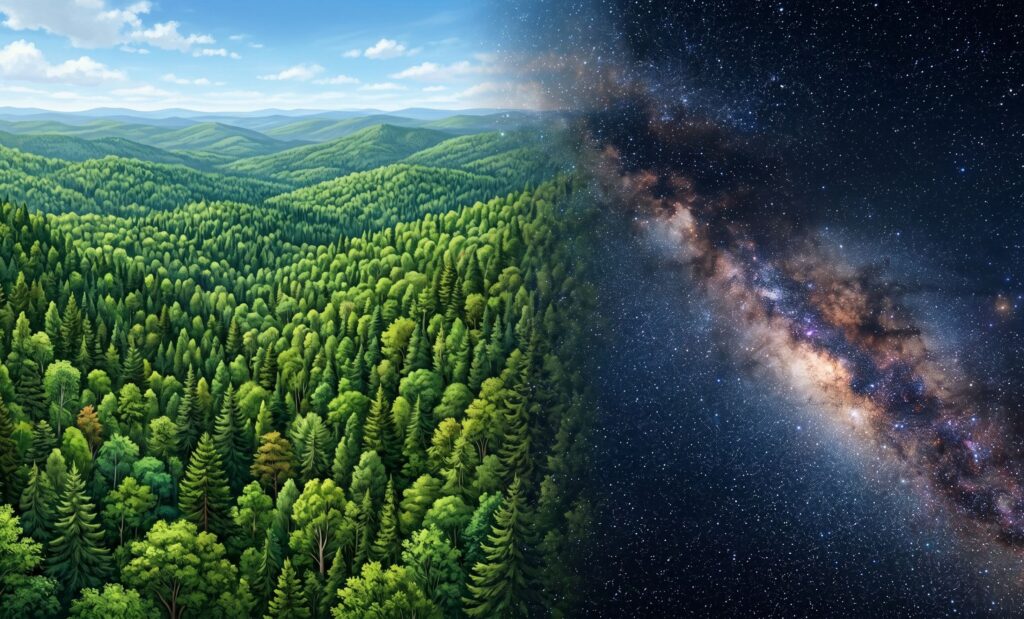
Imagine a clear night sky, densely studded with countless stars. It seems that space is absolutely boundless, and the number of stars in it is beyond calculation. However, modern science presents us with a somewhat paradoxical fact: there are significantly more trees growing on our home planet than there are stars in our entire Milky Way galaxy.
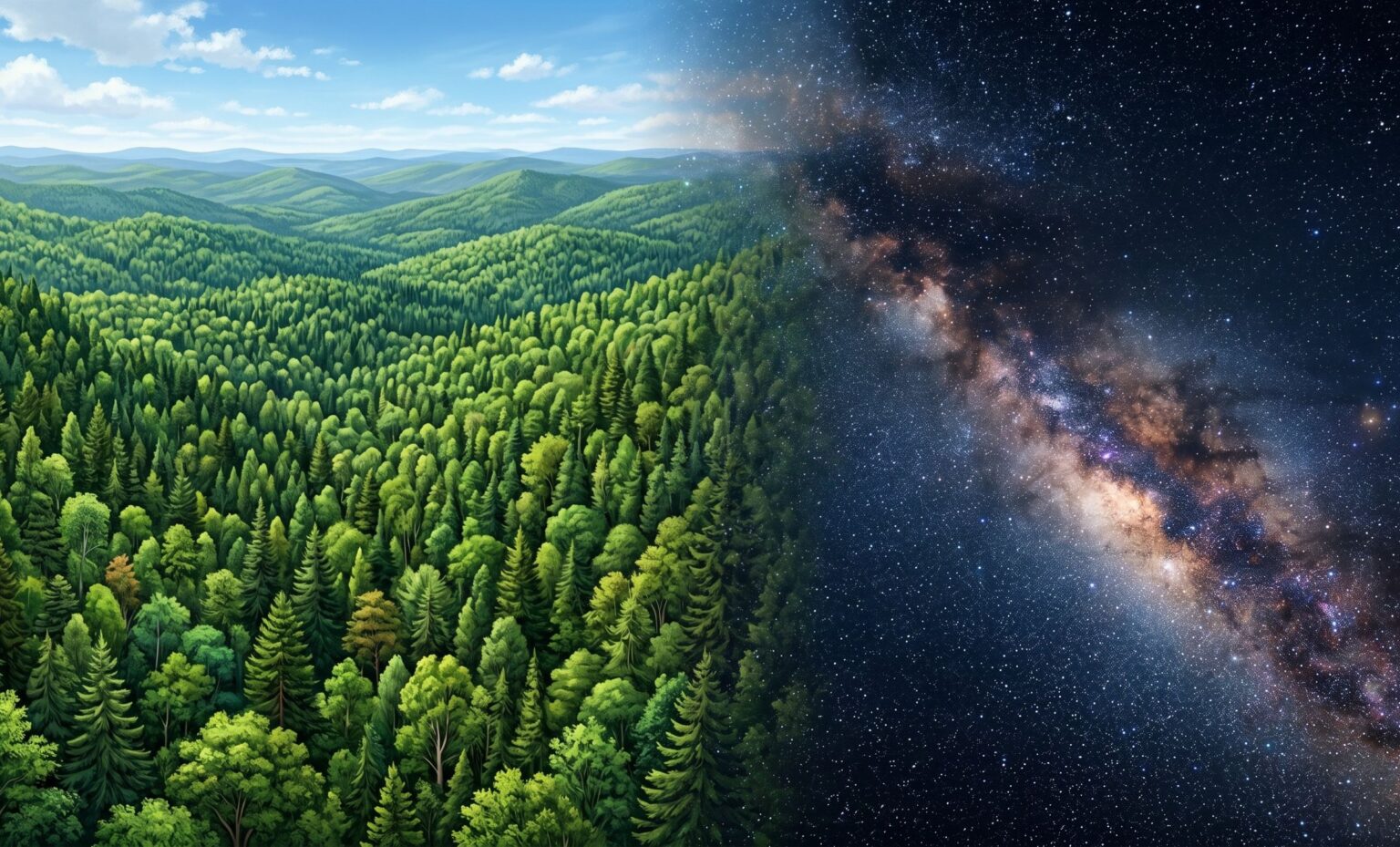 There are seven times more trees on Earth than there are stars in the Milky Way. Illustration generated by Gemini AI
According to NASA estimates, the number of stars in our galaxy ranges from 100 to 400 billion. In contrast, the total number of trees on Earth reaches an incredible 3×10¹² (three trillion). This is more than seven times the upper limit of astronomical estimates. However, the most interesting aspect lies not so much in the comparison itself as in how the researchers arrived at such staggering figures, since none of them is the result of a literal count of individual items.
Where did the three trillion trees come from?
The figure of three trillion has sparked a true revolution in our scientific understanding of Earth’s biosphere. It emerged from a large-scale study led by ecologist Thomas Crowther, the results of which were published in the prestigious scientific journal Nature. What is most striking is the extent to which this figure has transformed previous scientific assumptions.
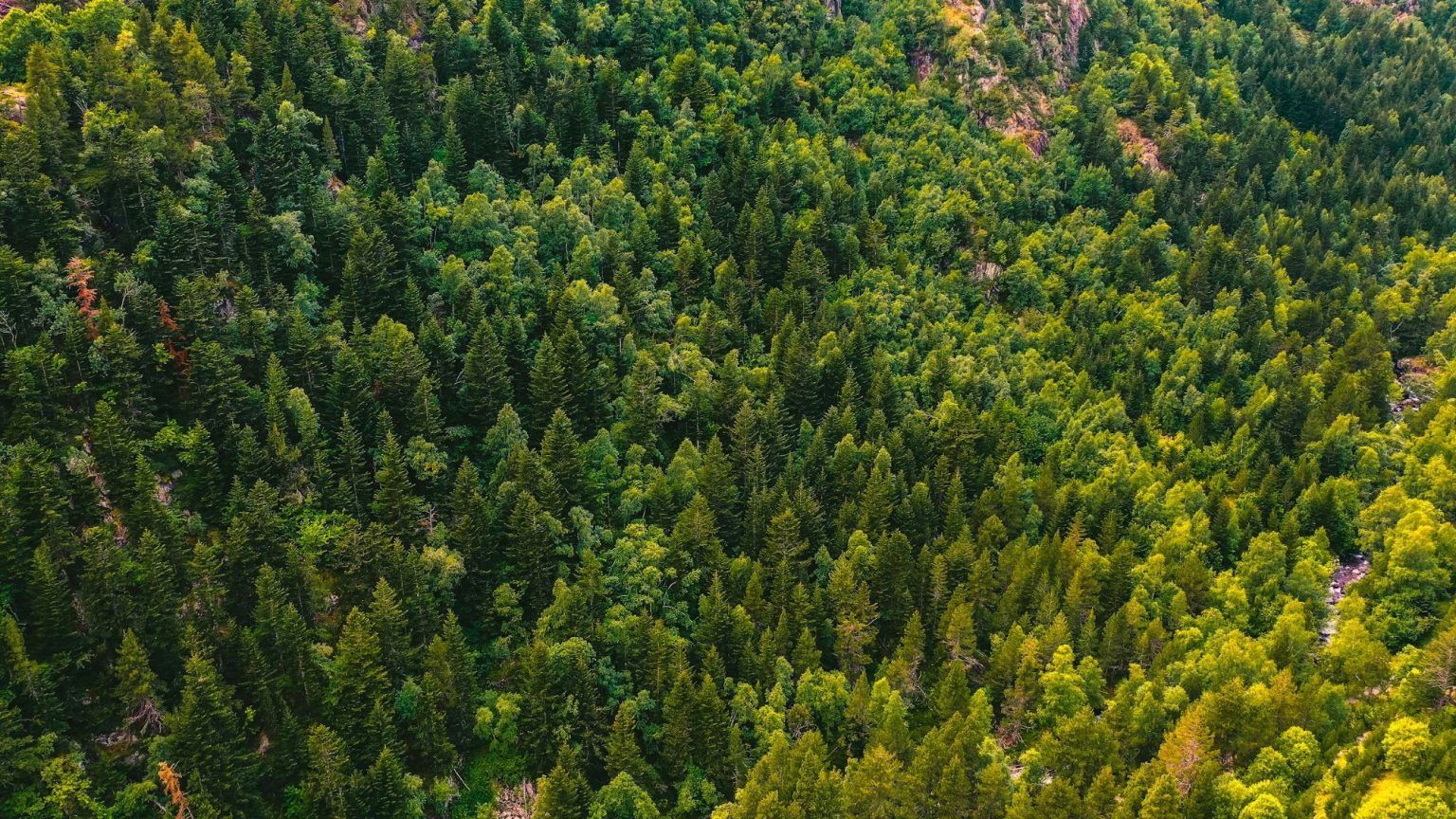 There are approximately 3 trillion trees on Earth. Photo: Unsplash
Prior to this study, it was believed that there were only a few hundred billion trees on the planet. Previous estimates were based primarily on an analysis of forest area using satellite imagery. Crowther’s team refined the method: they combined satellite data with over 400,000 ground-based measurements of tree density from all corners of the globe. It turned out that viewing the Earth exclusively from space significantly underestimated the actual density of forests on the ground. The number of trees didn’t suddenly increase overnight—it’s just that the counting method became much more accurate. Therefore, the current figure should be viewed as the best scientific estimate, which has a certain margin of error, rather than as nature’s final balance sheet.
Mathematical range
When it comes to counting stars, the situation is even more complicated, and the huge gap between 100 and 400 billion is not due to any negligence on the part of astronomers. The fact is, we can’t simply look at a galaxy and count its stars. Huge clouds of interstellar dust block our view of a significant portion of the Milky Way, and the incredible distances involved make it impossible to distinguish individual stars.
So astronomers take a roundabout approach: they calculate the total mass of our galaxy, determine the fraction accounted for by stars, and divide it by the mass of an average star. It is precisely at this stage that uncertainty arises. The most common stars in the universe are dim red dwarfs—low-mass stars that emit so little light that they are very easy to overlook.
Even the European Space Agency’s advanced Gaia space observatory, which has created an extremely precise 3D map of the locations of over a billion stars, is unable to detect the faintest ones. That is why the number of stars in our galaxy remains within a wide theoretical range.
Scale of the Universe: Where the triumph of trees ends
It is important to understand that the dominance of Earth’s trees over the stars is strictly limited to the boundaries of our own galaxy. If we broaden our perspective to encompass the entire cosmos, the situation changes dramatically.
According to data obtained by the Hubble Space Telescope, the observable universe may contain approximately 2 trillion individual galaxies. Thus, according to NASA estimates, the total number of stars in the universe could reach 1,024 (a septillion). Against the backdrop of this vast astronomical expanse, the 3 trillion trees on Earth seem like nothing more than a negligible mathematical rounding error. So while the comparison is entirely accurate, it holds true only within the “narrow” confines of the Milky Way.
Bitter ecological truth
While we are captivated by this striking scientific fact, we often overlook another, far more alarming aspect of the study.
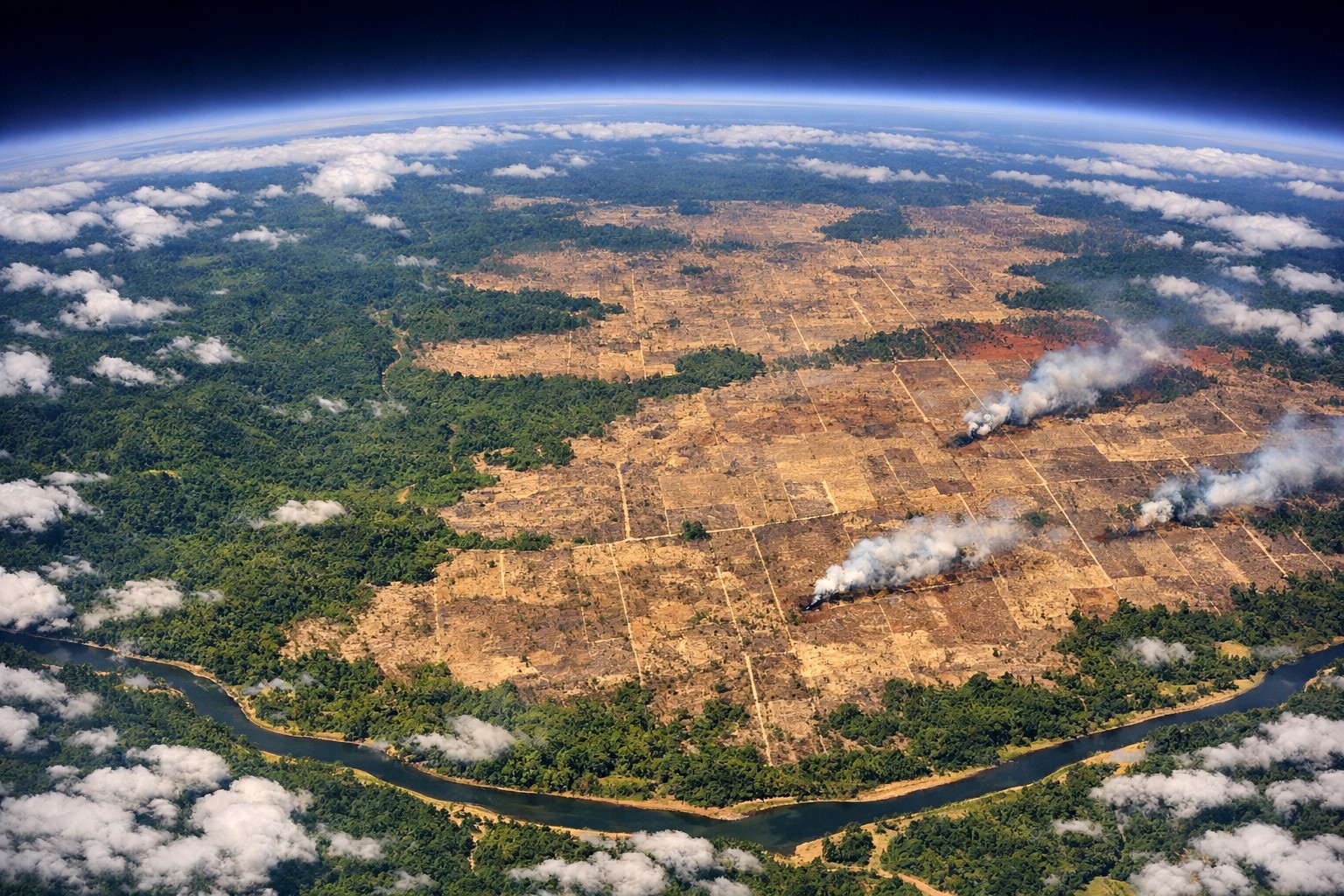 The amount of forest cover on Earth has decreased by 46% since the dawn of human civilization. Illustration generated by Copilot AI
In the same study by Crowther, it was estimated that since the dawn of human civilization, the number of trees on Earth has declined by a staggering 46%. Therefore, the figure of 3 trillion—which seems impressive at first glance—is only half of the forest cover that once blanketed our planet. Moreover, every year humanity destroys more than 15 billion trees. This beautiful, optimistic fact about forests outnumbering stars actually masks a bitter reality: our activities are continuously and rapidly depleting the Earth’s green resources.
 Human activity is rapidly depleting the Earth’s green resources. Photo: Unsplash
Earlier, we calculated how many planets could fit between Earth and the Moon.
According to spacedaily.com