
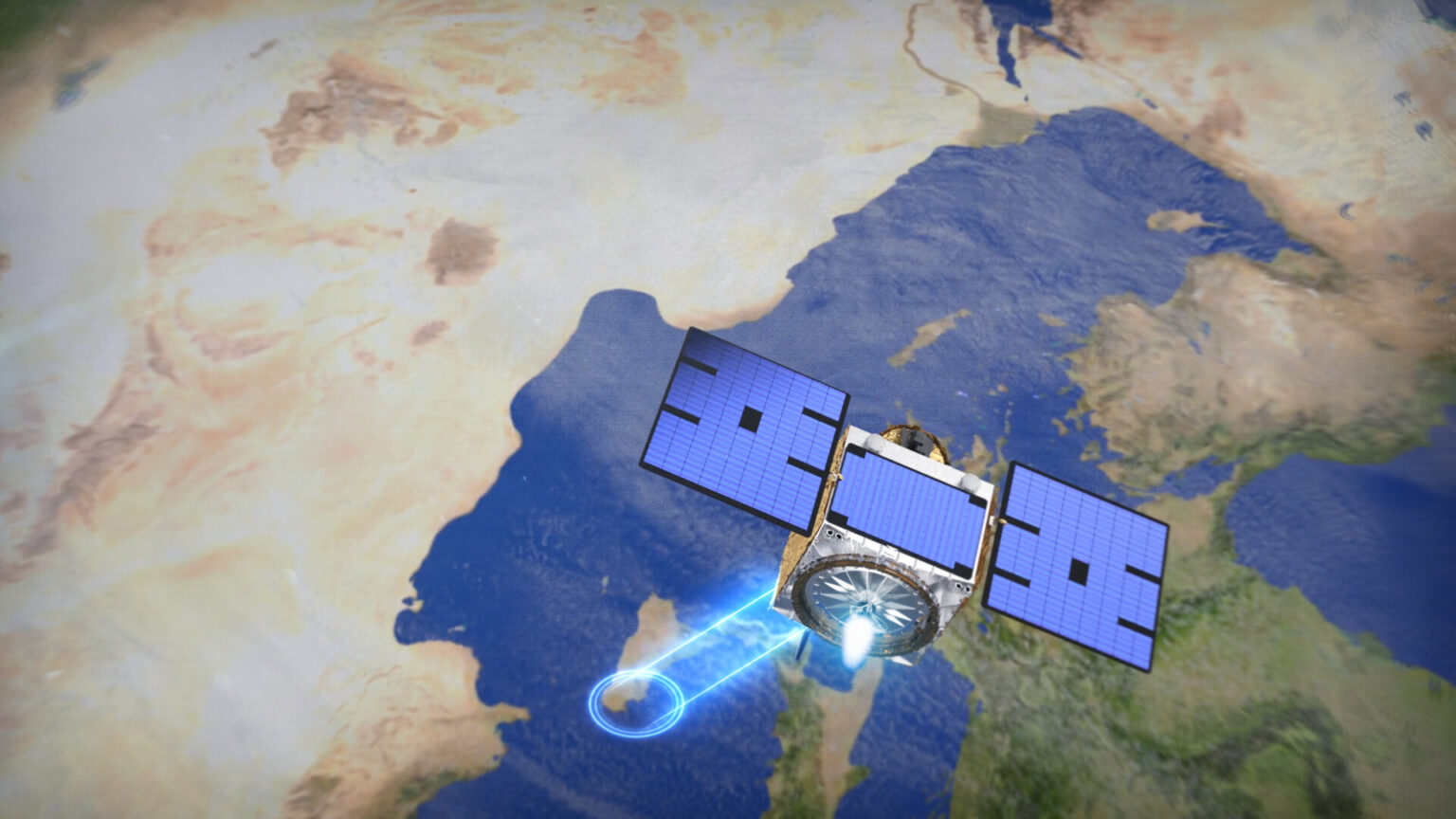
After a 10-month competition between four concepts, ESA has selected Hibidis and SOVA-S as its newest Scout missions. The projects will strengthen the agency’s growing fleet of rapid-development Earth observation satellites.
Fast & Affordable Science
Scout missions complement ESA’s larger Earth Explorer programme by adopting a faster, more cost-effective development model inspired by New Space principles.
“The ESA Scout missions show that achieving groundbreaking Earth science doesn’t always require large budgets and long development times,” said Simonetta Cheli, ESA’s Director of Earth Observation Programmes. “By moving fast, embracing innovation and empowering emerging ideas, these missions demonstrate how agility and creativity can accelerate progress.”
Hibidis to Map Forest Biodiversity
The Hyperspectral Biodiversity Scout (Hibidis) mission will use a hyperspectral imaging instrument to study biodiversity hidden beneath forest canopies. Its unique observing strategy involves viewing selected areas from three different angles. This approach will allow scientists to distinguish between the forest canopy and the understory, providing new insights into ecosystem health and biodiversity. Italian aerospace company SITAEL will lead the mission using its new Empyreum satellite platform.
According to SITAEL CEO Chiara Pertosa, Hibidis will generate data that are currently unavailable, creating new opportunities for monitoring terrestrial ecosystems. The project also includes contributions from AMOS, VITO, and the University of Zurich.
SOVA-S to Study Atmospheric Gravity Waves
The second mission, SOVA-S (Satellite Observation of Waves in the Atmosphere – Scout), will focus on atmospheric gravity waves. These are a key but poorly understood driver of Earth’s climate system. Using a shortwave infrared imager, the satellite will observe faint airglow emissions at altitudes between 80 and 120 kilometres. These measurements will enable near-global daily monitoring of atmospheric gravity waves. Often compared to ocean waves moving through the atmosphere, these disturbances transport energy from lower atmospheric layers to higher altitudes, influencing circulation patterns across large regions.
Scientists expect SOVA-S data to improve climate models, enhance space weather forecasting, and support more accurate GNSS positioning services for aviation and other industries. The mission is led by the Czech aerospace company OHB Czechspace. Managing Director Vít Pavelec described SOVA-S as “the largest satellite ever built in the Czech Republic.”
Expanding the Scout Fleet
Hibidis and SOVA-S join a growing family of Scout missions. These include HydroGNSS, which was launched in November 2025 to monitor hydrological climate variables. NanoMagSat is currently in development and will investigate magnetic field dynamics as well as solar influences on Earth’s atmosphere. Tango will measure methane, carbon dioxide, and nitrogen dioxide emissions from major industrial sources.
Together, the missions demonstrate ESA’s commitment to delivering high-impact Earth science through smaller, faster, and more cost-effective satellites.