
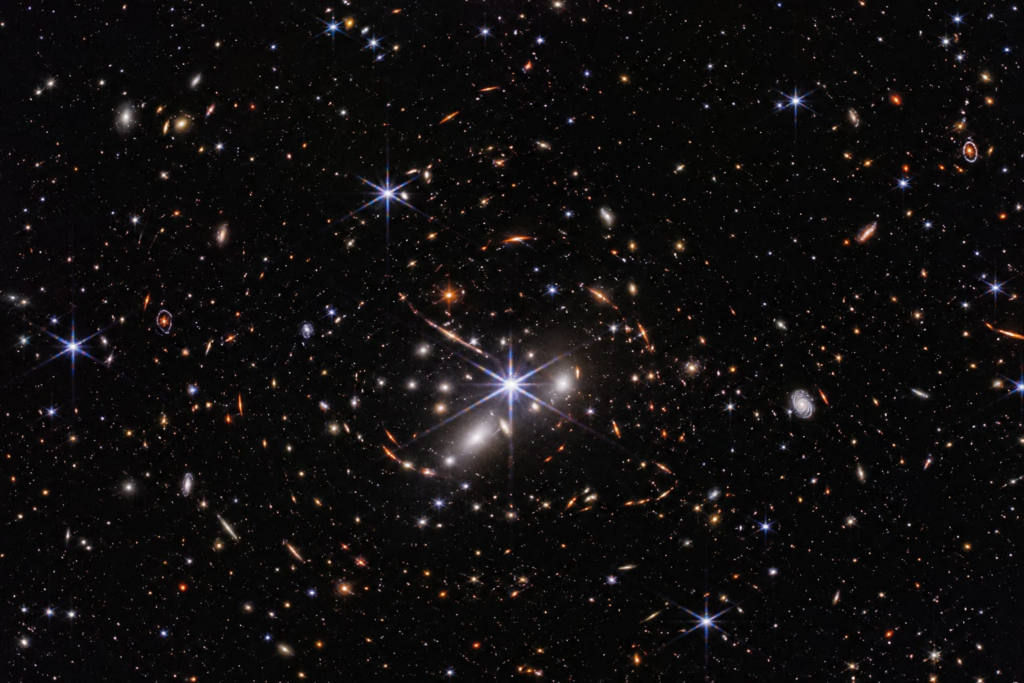
When the James Webb Space Telescope was launched into space, scientists expected it to deliver sharper images of distant galaxies, dying stars, and cosmic dust clouds. What they did not expect was that it might force astronomers to rethink some of the biggest assumptions about how the Universe formed.
But that is exactly what is happening.
The telescope, often called JWST, has already revealed objects so massive, bright, and mature that many researchers are struggling to explain them using traditional models of cosmology. In simple terms, the early Universe suddenly looks far more complicated than scientists predicted.
What Scientists Expected to Find
For decades, the standard model of cosmology painted a fairly clear picture of the early Universe after the Big Bang.
The process was supposed to be gradual. First came simple clouds of hydrogen and helium. Then the first stars ignited. Small primitive galaxies slowly formed, merged together, and eventually evolved into the giant spiral and elliptical galaxies we see today.
Think of it like building a city from scratch. You would expect a few scattered houses first, then villages, then towns, and finally massive skyscraper-filled cities after a very long time.
But JWST appears to be showing the cosmic equivalent of fully developed megacities appearing almost overnight.
Ancient Galaxies That Look Too Mature
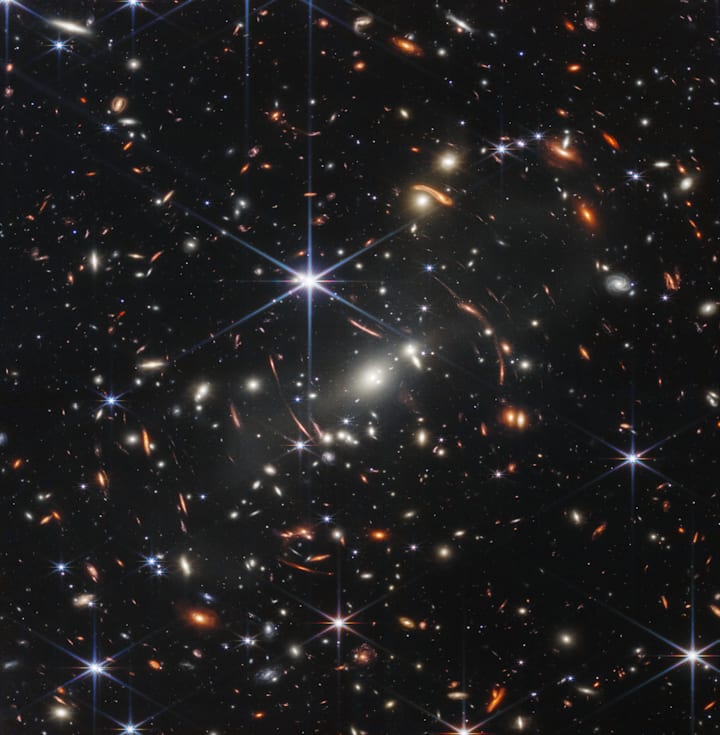
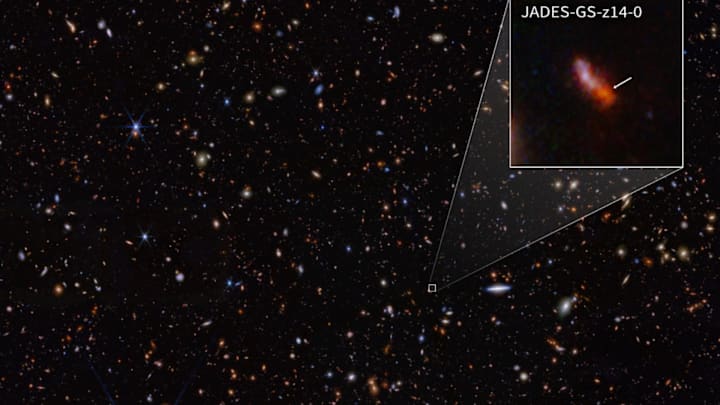
One of the telescope’s biggest surprises is the discovery of enormous galaxies that existed only a few hundred million years after the Big Bang.
According to older theories, galaxies during that era should have been tiny, chaotic, and relatively dim. Instead, JWST found galaxies that already seem highly organized and packed with stars.
Some of them appear so massive that astronomers are struggling to explain how enough material could have gathered together so quickly.
To understand why this matters, imagine finding a fully grown forest just days after planting seeds. The timeline simply does not make sense according to previous expectations.
This discovery has sparked intense debates among cosmologists. Are our measurements wrong? Did galaxies grow much faster in the early Universe? Or is there something fundamentally missing from our understanding of cosmic evolution?
The Mystery of the “Little Red Dots”
Among JWST’s strangest discoveries are objects scientists nicknamed “Little Red Dots.”
These tiny red objects appear extremely bright despite existing in the very early Universe. They are compact, mysterious, and unlike many objects astronomers expected to find.
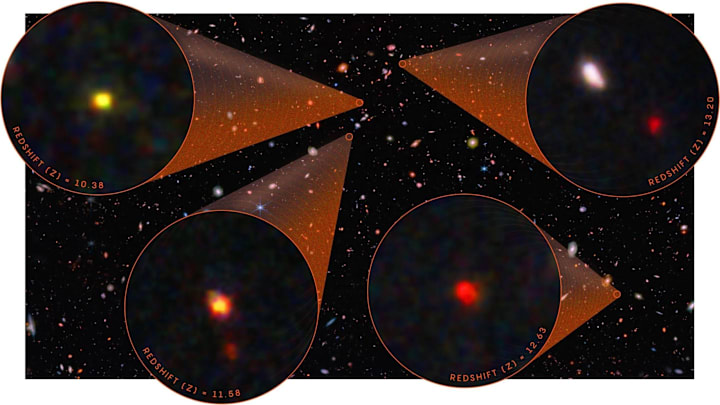
Researchers are still debating what these objects actually are. Some scientists believe they may contain rapidly growing supermassive black holes. Others think they could represent an entirely new category of early galaxy formation.
What makes these objects especially puzzling is their apparent size and brightness. If some estimates are correct, certain black holes in the early Universe may have reached millions or even billions of times the mass of the Sun far earlier than current theories allow.
That creates a serious problem.
Black Holes Growing Too Fast
Traditional astrophysics suggests that supermassive black holes grow slowly over enormous periods of time.
The basic idea is simple:
A massive star dies.A black hole forms.
The black hole gradually absorbs gas, dust, stars, and matter over billions of years.
But JWST is revealing giant black holes in a Universe that was still incredibly young.
This would be similar to discovering a fully grown adult in a kindergarten classroom. Something about the growth timeline appears deeply unusual.
Scientists now face several possibilities:
Black holes formed through unknown mechanisms.Early black holes consumed matter at impossible speeds.Conditions in the early Universe were radically different from what we expected.Any of these explanations could reshape modern cosmology.
Maybe the First Stars Were Different
JWST is also providing hints that the first generation of stars may have behaved differently from modern stars.
Some researchers suspect that early stars may have been:
far larger than today’s stars;hotter and brighter;shorter-lived;capable of producing massive black holes very quickly.
If true, this could help explain why the early Universe evolved faster than predicted.
Imagine comparing a candle to an industrial furnace. If the first stars were dramatically more powerful, they may have accelerated galaxy formation across the cosmos.
Is the Standard Model Incomplete?
The biggest question raised by JWST is whether the current cosmological model is missing something important.
Modern cosmology is largely based on the ΛCDM model:
Λ (Lambda) represents dark energy;CDM stands for cold dark matter.
This model has successfully explained many observations, including:
the expansion of the Universe;the distribution of galaxies;the cosmic microwave background radiation.
However, JWST’s observations are creating growing tension within that framework.
Why JWST Challenges Older Cosmology Models
Major observational tensions created by early JWST discoveries.
The telescope keeps finding:
galaxies forming earlier than expected;structures that appear too evolved;black holes that seem impossibly ancient.
As a result, some scientists are exploring alternative theories involving new forms of dark matter, modified physics, or unknown processes in the early Universe.
Does This Mean the Big Bang Was Wrong?
Not necessarily.
JWST has not disproved the Big Bang theory. In fact, the telescope strongly supports the idea that the Universe had a beginning and evolved over time.
What the telescope is challenging is our detailed understanding of how quickly that evolution happened.
Science works by constantly testing theories against new evidence. When observations fail to match predictions, models are refined or replaced.
That is not a failure of science — it is exactly how scientific progress happens.
A New Era of Cosmic Discovery
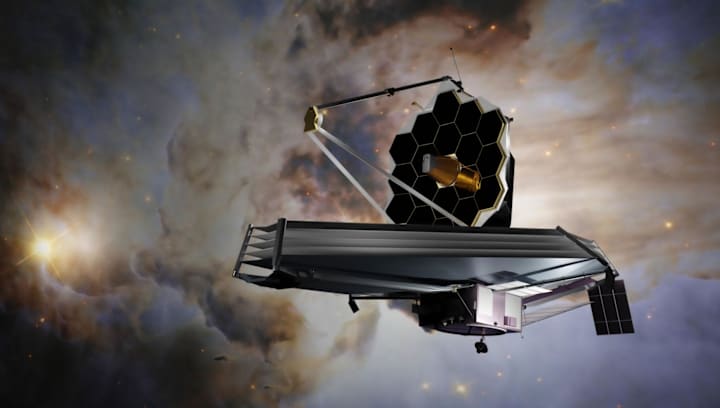
The James Webb Space Telescope is essentially a time machine. Because light takes billions of years to travel across space, JWST allows humanity to look directly into the distant past.
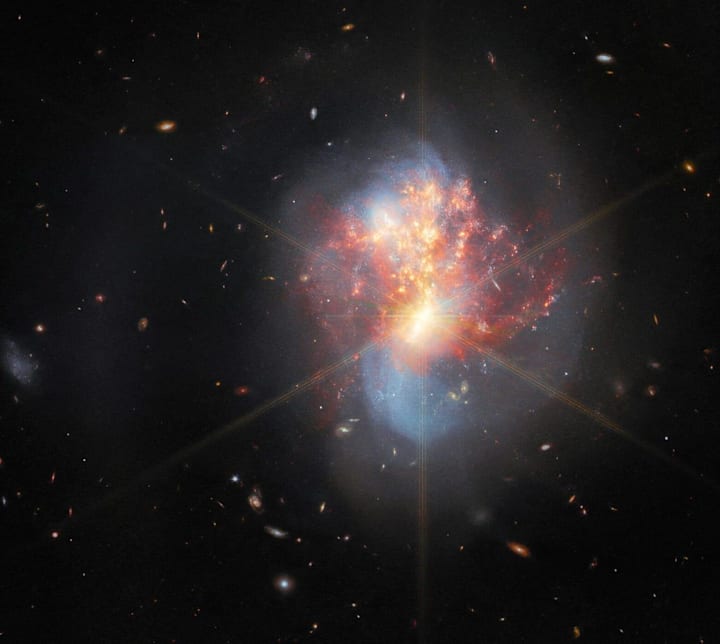
And the deeper it looks, the stranger the Universe becomes.
Astronomers may eventually find explanations that fit within current theories. But there is also a possibility that we are standing at the beginning of a major scientific revolution — one that could transform our understanding of space, time, matter, and the origins of the cosmos itself.
For now, JWST continues to do exactly what great scientific instruments are meant to do: reveal that the Universe is far more mysterious than we imagined.