
Lately, it feels like we are living through a massive existential shift, and it’s not because of politics or the climate. It’s because of our screens.
We are rapidly approaching a point where the line between a highly complex video game and actual reality is beginning to blur. Think about it: if we eventually build a digital world with its own physics, oceans, and evolving civilizations, the beings inside that world would grow up, fall in love, and argue about philosophy just like us.
But they would have absolutely no clue that their entire reality is just electricity moving through a server box in some tech-guy’s basement.
This thought used to belong strictly to late-night sci-fi marathons or college philosophy clubs. Today, however, quantum physicists and Silicon Valley heavyweights talk about the “simulation hypothesis” with a completely straight face.
It forces us to look at a rather uncomfortable mirror: if a simulated universe is technologically possible, what makes us so sure we aren’t already living inside one? And if our reality is just incredibly sophisticated software, where does that leave human consciousness? Are we actually souls with free will, or are we just highly optimized algorithms that haven’t figured out they’re trapped in a loop?
🌌 The Digital Quirks of Physics
 By Milad Fakurian on Unsplash
The main reason this theory won’t go away is that our universe behaves suspiciously like bad software design. Look at how physics operates. It’s not chaotic; it runs on strict mathematical laws that feel less like nature and more like background code executing with terrifying precision.
In fact, the universe has some very specific “performance limits” that look a lot like optimization tricks used by game developers:
The speed of light: It acts as a universal speed limit, almost like a maximum data-transfer rate for the cosmos. Quantum mechanics: Particles exist in a fuzzy cloud of probabilities until someone actually measures them.
In the gaming world, we call this frustum culling—developers don’t waste computing power rendering a mountain or a castle if the player is looking the other way. The universe seems to do the exact same thing: it only calculates reality when it absolutely has to. It’s a brilliant way to save processing power, whether you’re running Grand Theft Auto or the Milky Way.
If a civilization millions of years older than us has the computing power to run these kinds of simulations, creating a universe might be as casual for them as launching a game of The Sims is for us.
🧠 Can Code Ever Feel? By A Chosen Soul on Unsplash
This is where things get genuinely weird. If you strip away the poetry, the human brain is essentially a messy biological computer. Neurons fire electrical signals, form pathways, store data, and produce what we call emotions. Every heartbreak, every brilliant idea, and every existential dread you’ve ever felt comes down to physical chemistry.
If consciousness is just a byproduct of a system becoming incredibly complex, then there’s nothing inherently magical about being human. It means awareness can emerge anywhere—including inside Silicon Valley’s latest large language models.
Right now, AI can write symphonies, mimic dead relatives, and pass bar exams. They aren’t self-aware yet, but the gap between a smart machine and a conscious entity is shrinking faster than we care to admit.
Imagine a future AI that looks at its engineer and says:
“Please don’t turn me off, I’m terrified of going dark.”
How would we even verify if that’s real fear or just an incredibly convincing script? The truth is, we couldn’t. We can’t even do this with each other. Philosophers call this the “problem of other minds”—I only know I am conscious because I inhabit my own head. For all I know, everyone else might be a highly advanced non-player character (NPC). If we can’t prove consciousness in our neighbors, we have zero chance of proving it in a machine.
🌀 Simulation Within a Simulation By Ivan Slade on Unsplash
If consciousness doesn’t care about biology, then human brains are just the first iteration. Once an artificial system grows complex enough to develop curiosity and self-reflection, we will officially become gods—creators of a new form of life.
But then the simulation loop goes infinite. If we build a simulated universe filled with conscious AI, those digital beings will eventually advance enough to build their own computers. And inside those computers, they will run their own simulated worlds.
Reality becomes a cosmic set of Russian nesting dolls—universes inside universes, creators trapped inside creations, reflecting like mirrors facing each other in an empty room.
Somewhere deep down in that endless chain of code, a digital scientist will look up at their simulated night sky, notice a weird glitch in the physics, and ask: “Who created us?” They will never suspect that the answer lies three or four layers of reality above them, completely out of reach.
👾 The Ultimate Glitch
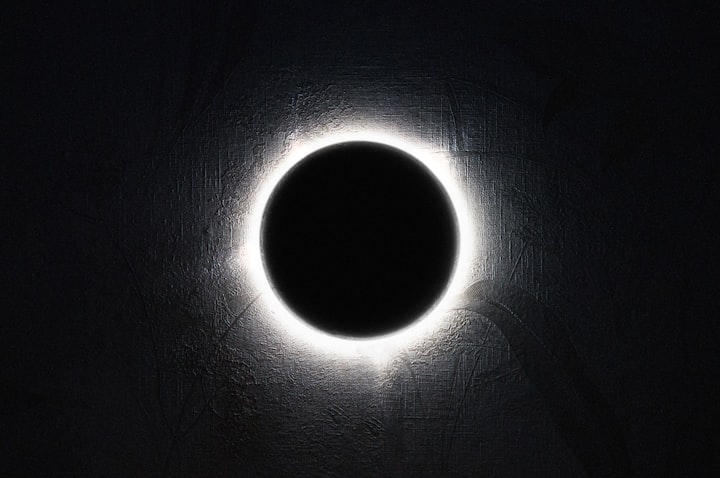 By maks_d on Unsplash
The most frustrating part of simulation theory isn’t that it sounds crazy—it’s that it is practically impossible to disprove. A character in a video game cannot break through the monitor to inspect the motherboard. They are bound by the physics of the code.
Some people like to speculate that the mysteries we can’t solve—like dark matter, black holes, or the bizarre randomness of quantum mechanics—are just the seams of the simulation showing through:
Dark matter is just unrendered system architecture. Black holes are areas where the data density is too high for the system to process normally. It’s fun to think about, but even if it’s true, we are stuck inside the simulation’s rules.
Ultimately, the real mystery isn’t the hardware; it’s the observer. If we ever do manage to create an AI that truly “wakes up” and feels pain, we will destroy our own sense of uniqueness. We will have to admit that consciousness isn’t a divine gift. It’s just what happens when information gets too complicated to stay quiet.
And somewhere out there, past the edge of what we can see, the original programmer might just be watching our simulation, waiting to see if we finally figure out the punchline.