
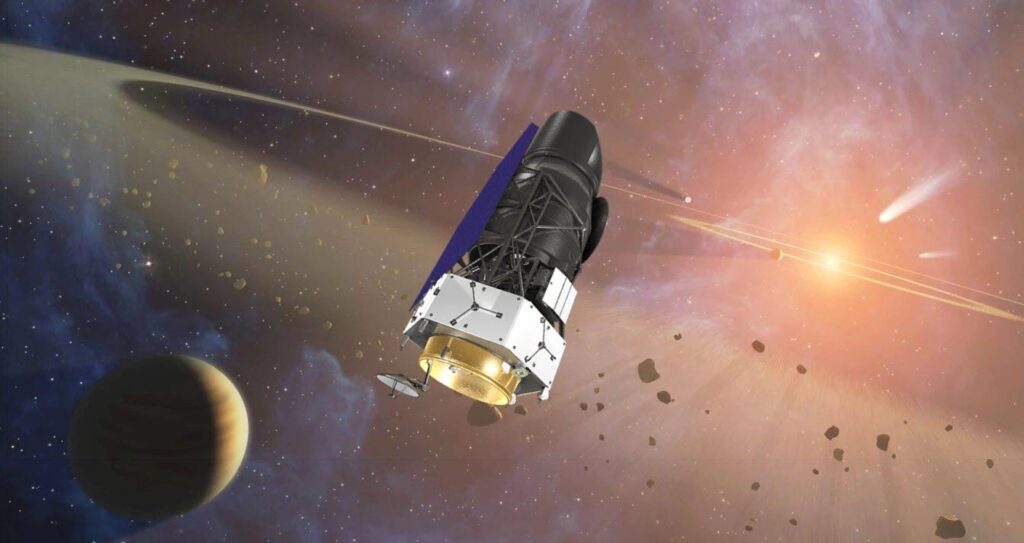
NASA is launching the Nancy Grace Roman Space Telescope as early as September 2026, ahead of schedule. It will scan billions of galaxies and search for exoplanets and dark matter. Over the course of five years, it will collect more data than any previous mission.
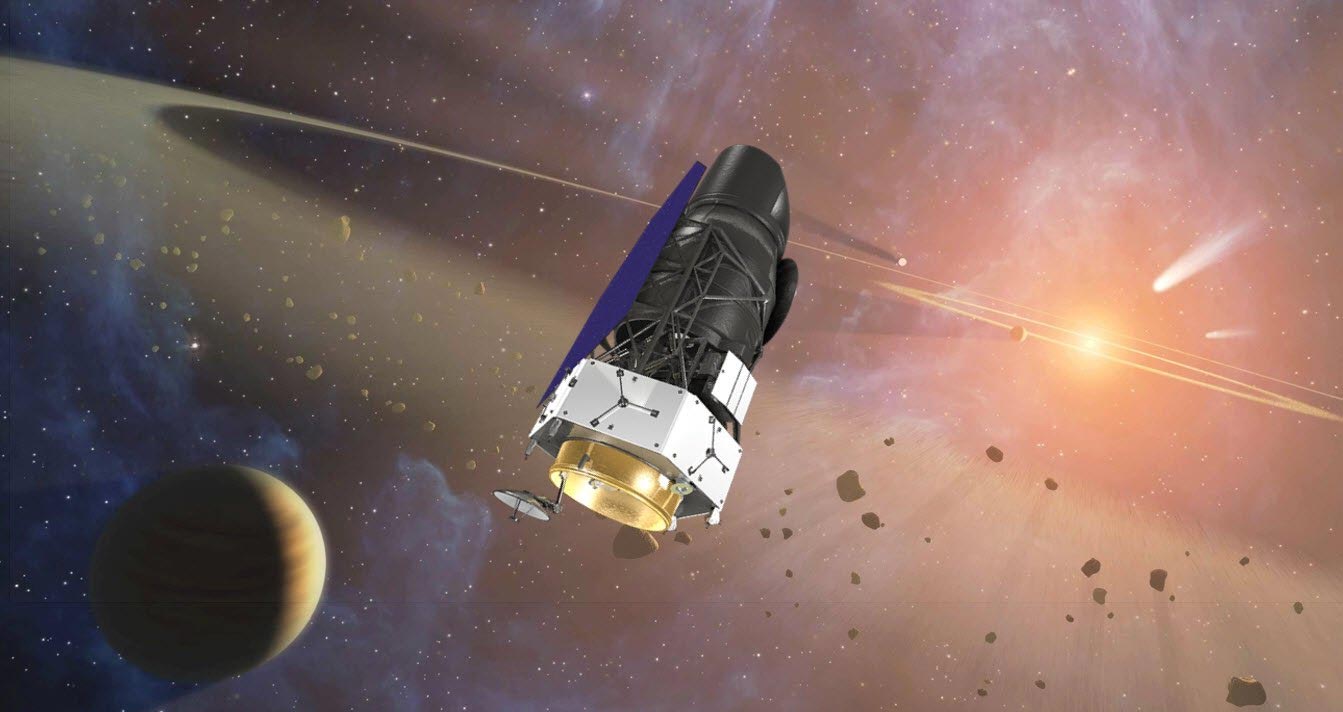 Artist’s impression of the Nancy Grace Roman Telescope, which could be launched into orbit as early as 2026. Source: NASA
Accelerated schedule
NASA had previously committed to launching the telescope no later than May 2027, but the launch is now scheduled for early September 2026. NASA Administrator Jared Isaacman called the accelerated development an example of what can happen when government investment, institutional expertise, and private business come together for missions that change the world.
The telescope will be launched into orbit by a SpaceX Falcon Heavy rocket from Launch Complex 39A at the Kennedy Space Center in Florida. NASA and SpaceX will announce the exact launch date at a later time.
A broad view of the Universe
The Nancy Grace Roman Space Telescope is designed to survey vast swaths of the sky in the infrared spectrum at high resolution. The combination of a wide field of view and sensitive instruments will allow astronomers to explore the universe on a scale that was previously virtually unattainable.
The mission’s primary objectives are dark energy, dark matter, and planets orbiting distant stars. Scientists also hope that the telescope will help detect rare cosmic phenomena that have never been observed before.
Data and scope
Over the course of its five-year primary mission, Roman is expected to collect approximately 20,000 terabytes of scientific data. This will be enough to study roughly 100,000 exoplanets, hundreds of millions of galaxies, and billions of stars. Scientists hope that large-scale surveys of deep space will reveal unusual objects and events that will force a reevaluation of our current understanding of the structure of the universe.
The Nancy Grace Roman Space Telescope mission is led by NASA’s Goddard Space Flight Center. The project also involves NASA’s Jet Propulsion Laboratory, Caltech/IPAC in Southern California, the Space Telescope Science Institute in Baltimore, and researchers from several scientific institutions.
According to scitechdaily.com