
Pollution is not just a problem on Earth anymore. Today, satellites help people watch movies, use GPS, check the weather, and get internet service.
Thousands of satellites now orbit the planet, and more are being launched every year.

But a new study says this growing wave of satellites could create a serious environmental problem that most people still are not talking about.
Satellite launches and air pollution
Scientists say pollution from massive satellite networks called “megaconstellations” could make up nearly half of the climate impact caused by the space industry before the decade ends.
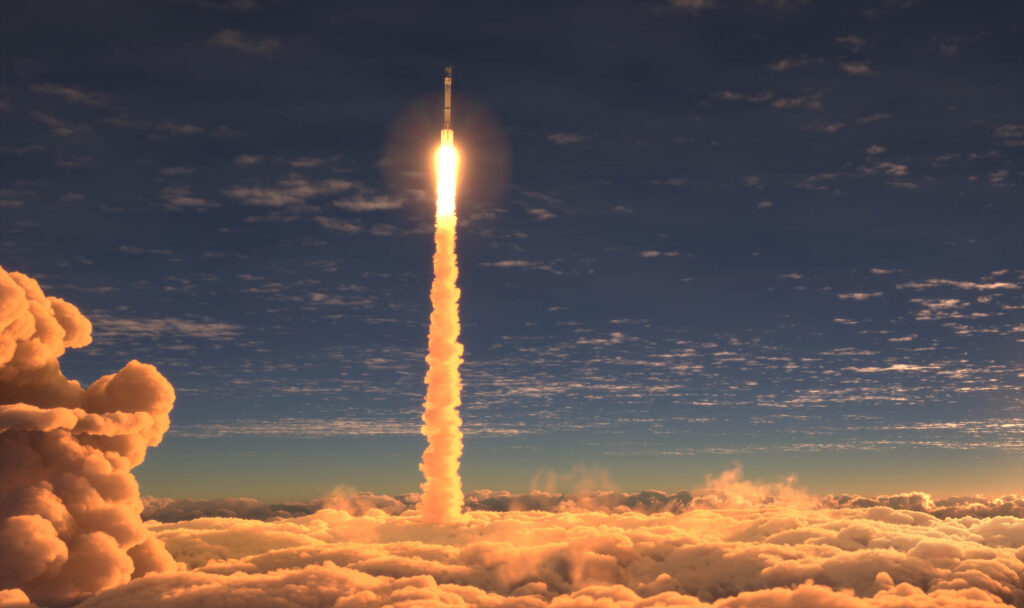
The problem is not only the rockets launching into space. Old satellites and leftover rocket parts also create pollution when they fall back to Earth and burn up in the atmosphere.
Researchers at University College London (UCL) studied rocket launches and satellite deployments from 2020 through 2022.
The team also looked ahead to see how pollution levels could grow by 2029. The results suggest the atmosphere above Earth is changing faster than many people realize.
Upper atmosphere soot
Most people think of pollution as something closer to the ground.
Car exhaust, factory smoke, and wildfire ash usually stay in the lower atmosphere, where rain and weather eventually clear much of it away. Rocket pollution behaves differently.
The soot released by rockets rises into the upper atmosphere, where it can stay for years because air circulation moves much more slowly there.
According to the researchers, this makes the black carbon from rockets about 540 times more effective at affecting climate than soot released near Earth’s surface.
By 2029, the space industry could release around 870 tons of soot into the atmosphere each year. That is close to the amount produced annually by all passenger cars in the United Kingdom.
The study found that megaconstellations already contributed roughly 35% of the total climate impact from the space sector in 2020. By 2029, that number is expected to climb to 42 percent.
Satellites in low-Earth orbit
The growth has been explosive. Megaconstellations are giant networks made up of hundreds or thousands of satellites operating in low-Earth orbit.
The best-known example is SpaceX’s Starlink internet system, which already has nearly 12,000 satellites in orbit. Rival systems from Amazon and China are also expanding quickly.
The pace of launches has surged with them. Annual rocket launches jumped from 114 in 2020 to 329 in 2025, driven mostly by SpaceX Falcon 9 missions.
Researchers say earlier estimates predicting another 65,000 satellites by the end of the decade may already be too low.
The Falcon 9 rocket uses kerosene-based fuel, which produces soot particles during launch. Those particles remain suspended high above Earth far longer than pollution from ground transportation or power plants.
“Rocket launches are a unique source of pollution, injecting harmful chemicals directly into the upper layers of the atmosphere and contaminating Earth’s last remaining relatively pristine environment,” said study lead author Dr. Connor Barker.
“Though this soot’s impact on climate is currently much smaller than other industrial sources, its potency means we need to act before it causes irreparable harm.”
An unexpected cooling effect
One of the study’s most surprising findings is that this pollution may temporarily cool parts of the planet.
The accumulating soot and particles reduce the amount of sunlight reaching Earth’s surface.
By 2029, researchers say the effect could resemble some proposed geoengineering methods designed to cool the planet by blocking sunlight in the upper atmosphere.
“The cooling effect from the reduction in sunlight that we calculate with our models may sound like a welcome change against the backdrop of global warming, but we need to be extremely cautious,” explained Professor Eloise Marais from UCL.
A geoengineering experiment
Scientists have argued for years over the idea of geoengineering. Some plans involve releasing particles into the atmosphere to bounce sunlight away from Earth and cool the planet.
Supporters say it could help slow global warming. Critics worry it could also affect rainfall, farming, weather systems, and ecosystems in ways nobody can fully predict yet.
According to the researchers, satellite pollution is creating a similar effect accidentally and without regulation.
“The space industry pollution is like a small-scale, unregulated geoengineering experiment that could have many unintended and serious environmental consequences,” said Professor Marais.
“Currently the impact on the atmosphere is small, so we still have the chance to act early before it becomes a more serious issue that is harder to reverse or repair. So far there has been limited effort to effectively regulate this type of pollution.”
What about the ozone layer?
The study also examined the ozone layer, which shields Earth from harmful ultraviolet radiation.
Rocket launches can release chemicals such as chlorine that damage ozone directly. Tiny particles produced during launches and re-entries can also speed up ozone-depleting reactions.
Right now, the researchers say the impact remains relatively small. By 2029, all rocket launches combined are expected to reduce global ozone by just 0.02 percent.
For comparison, ozone-depleting chemicals controlled under the Montreal Protocol caused about 2% ozone depletion.
Still, scientists say the future depends heavily on what kinds of rockets are used next. Some newer satellite projects may rely on rockets that release chlorine-containing emissions.
Amazon’s planned internet constellation, known as Leo, will use a mix of launch providers. China’s growing Guowang satellite network may also depend on rockets using chlorine-containing solid fuels.
Together, those systems could place tens of thousands of additional satellites into orbit over the next several years.
Satellite launch pollution is a climate threat
For decades, rocket launches were rare enough that few people worried about their environmental effects. That era is over.
Private companies now launch rockets weekly, sometimes several times in just a few days. Satellites are becoming cheaper to build and faster to replace.
Some are designed to last only a few years before burning up and being replaced by newer models.
The study suggests that space pollution is moving from a niche concern to a real environmental issue. The atmosphere above Earth may seem distant, but what happens there does not stay there.
The full study was published in the journal Earth’s Future.
—–
Like what you read? Subscribe to our newsletter for engaging articles, exclusive content, and the latest updates.
Check us out on EarthSnap, a free app brought to you by Eric Ralls and Earth.com.
—–