
NEED TO KNOW
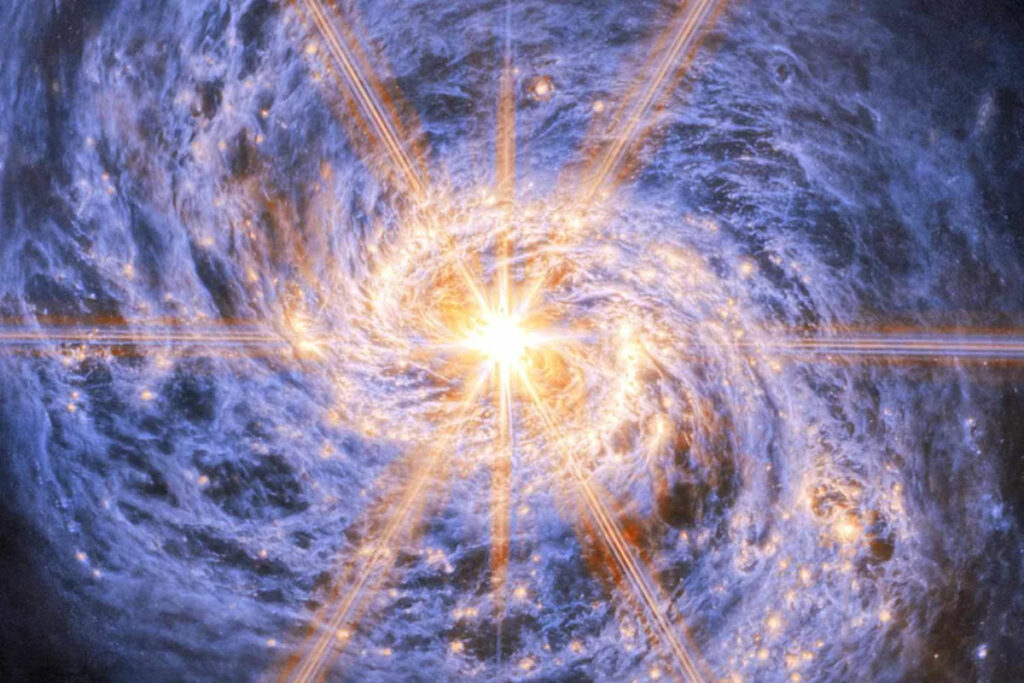
NASA’s James Webb Space Telescope captured a dazzling new infrared image of Messier 77, a spiral galaxy located 45 million light-years from Earth
The galaxy, nicknamed the “Squid Galaxy,” contains a supermassive black hole that is eight million times more massive than the Sun
Scientists use information gathered by the Webb telescope to study major cosmic mysteries, including the Big Bang and the possibility of life beyond Earth
The latest Picture of the Month from NASA’s famed James Webb Space Telescope features a dazzling spiral galaxy.
The galaxy, called Messier 77 (M77), is located 45 million light-years from Earth in the Cetus constellation, according to the European Space Agency, which partners with NASA on the James Webb Space Telescope mission.
A single light-year is approximately 6 trillion miles.
The new image was captured using infrared technology and reveals the shape and structure of M77 — known as the Squid Galaxy due to its curling “tentacles” — more clearly than ever.
The center of M77 consists of a supermassive black hole that is eight million times more massive than the Sun. As gas spirals rapidly around the black hole, it heats up and releases enormous amounts of energy and radiation.
M77 is also frequently forming new stars, meaning it is constantly changing and evolving.
There are four types of identifiable galaxies: spiral, barred spiral, elliptical and irregular. Approximately 60% of all galaxies are believed to be spiral galaxies (including the Milky Way, which contains Earth), and spiral galaxies contain most of the stars in the universe, per ESA.
Never miss a story — sign up for PEOPLE’s free daily newsletter to stay up-to-date on the best of what PEOPLE has to offer, from celebrity news to compelling human interest stories.
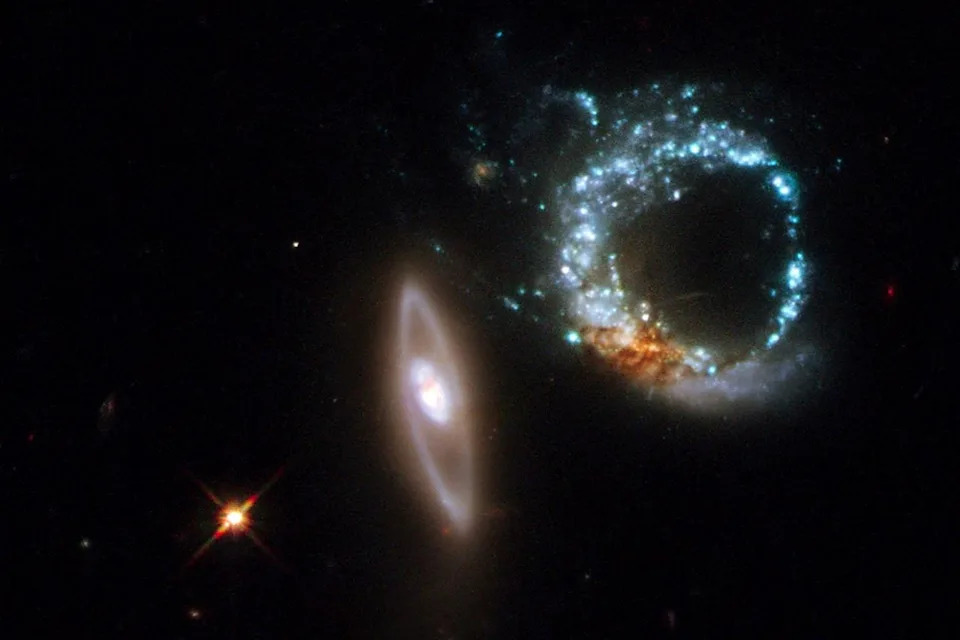
A pair of gravitationally interacting galaxies called Arp 147, photographed on October 27-28, 2008
Credit: LIVIO/NASA-ESA/AFP via Getty
The Webb Telescope was first launched into space in December 2021 and orbits the Sun at a distance of 1 million miles from Earth, according to NASA.
Information gathered by the telescope gives scientists around the world insight into a wide range of mysteries about the universe, including the Big Bang, the formation of solar systems and the possibility of life beyond Earth.
Read the original article on People