
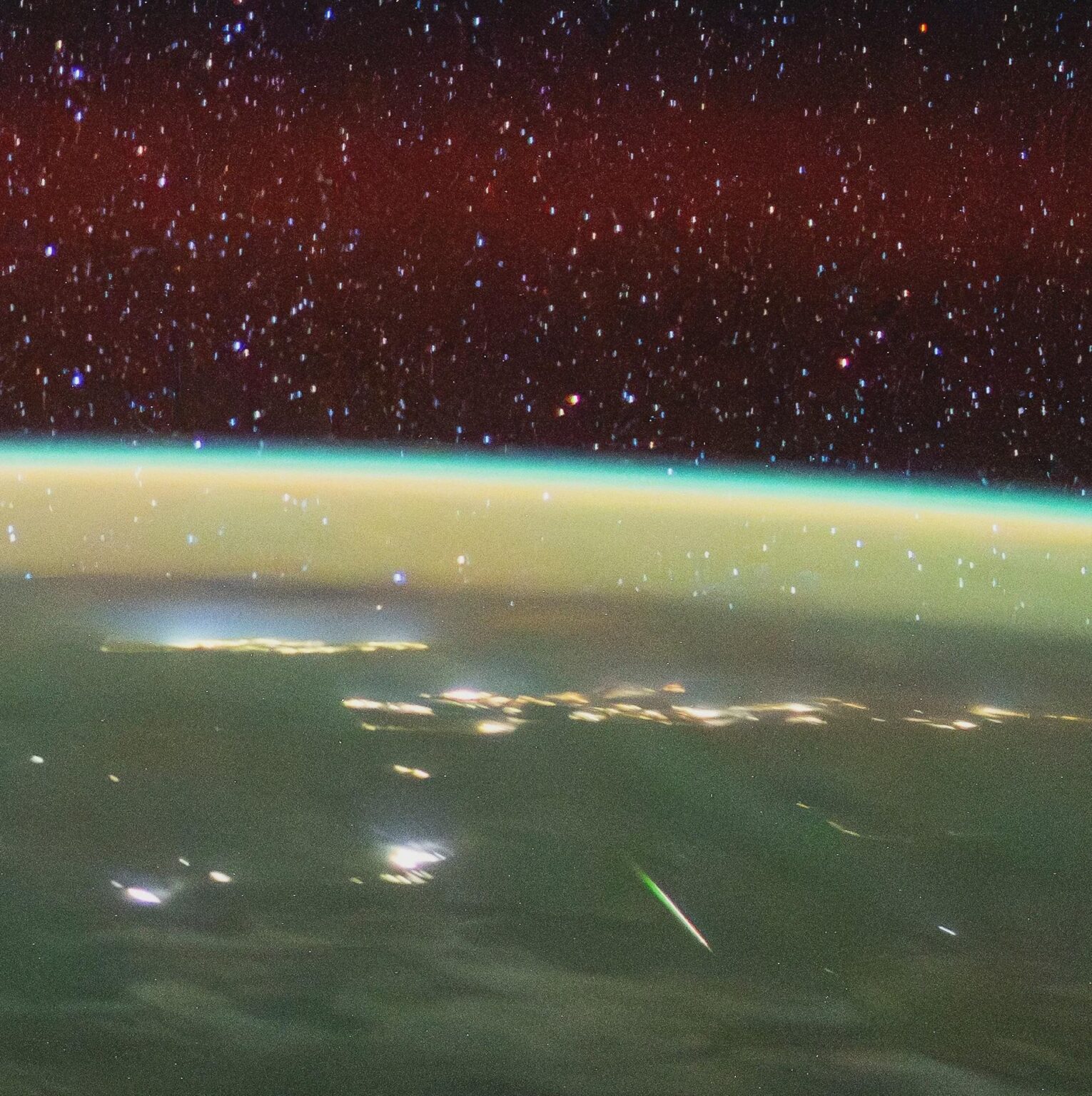
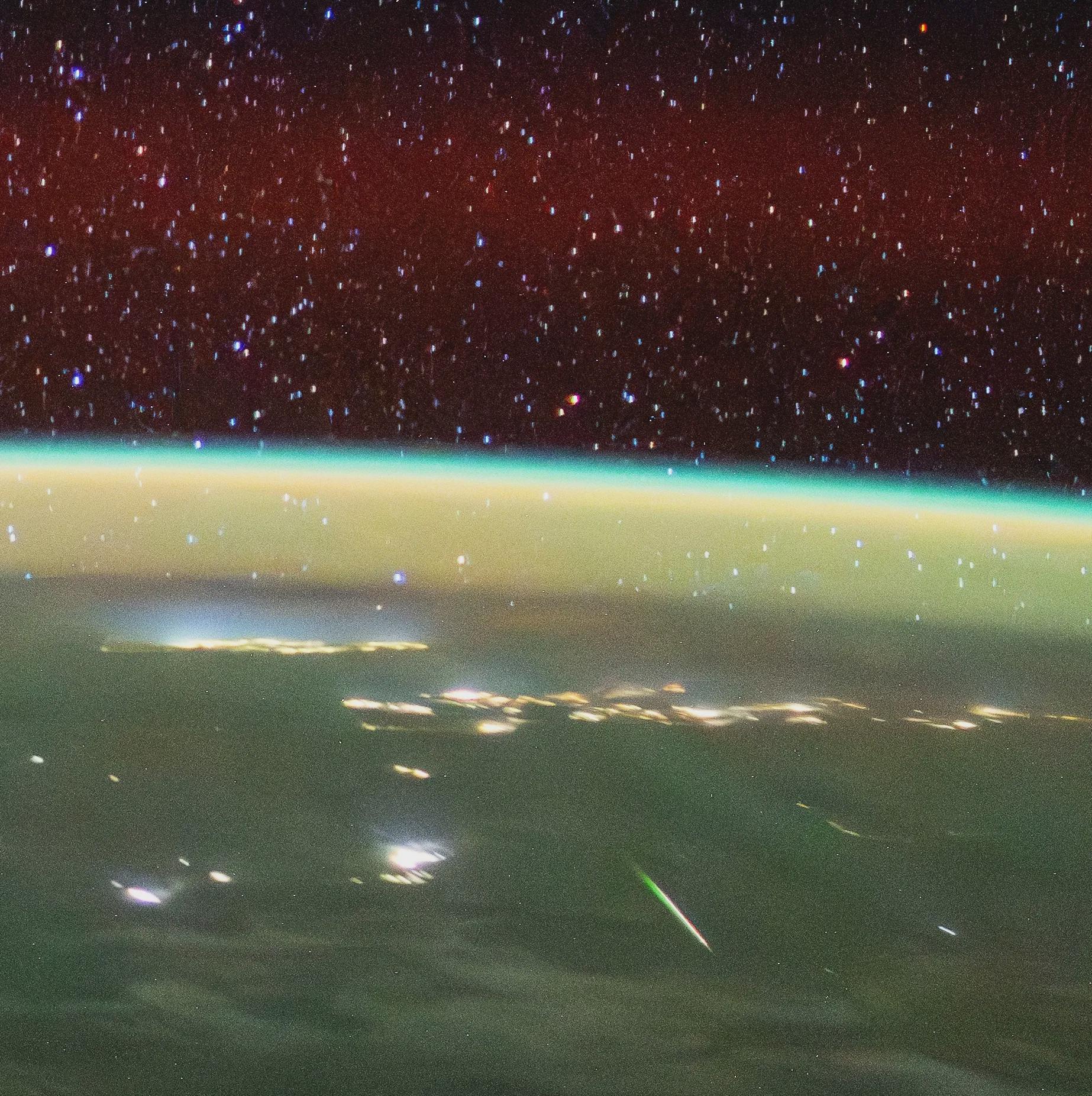
Timelapse, at about 0:42 left center
https://www.youtube.com/watch?v=gU8qYIWAQ0o
.
The Expedition 74 crew on the International Space Station turned into meteor chasers as Earth passed through a cloud of dust and small debris left behind by comet Thatcher in 1861.
Each year in mid-April, as some of these fragments enter Earth’s atmosphere, heating up and leaving a bright trail behind them, humankind looks up – or down, in the case of the Station’s crew – to catch of glimpse of these shooting stars.
ESA astronaut Sophie Adenot set up a camera to automatically record thousands of images in the hope of catching a shooting star, an elusive event that often lasts only a fraction of a second. She successfully captured two on camera, and the images were combined into a timelapse, offering a beautiful, if accelerated, view of Earth at night from orbit.
“In scientific terms, a shooting star is actually a meteor: a tiny fragment of rock or dust from space that disintegrates as it enters Earth’s atmosphere, after travelling astronomical distances. For those with their heads full of dreams, seeing a shooting star often feels like the perfect moment to make a wish… just in case!” says Sophie.
https://www.esa.int/ESA\_Multimedia/Images/2026/05/A\_Lyrid\_meteor\_from\_orbit
by Neaterntal